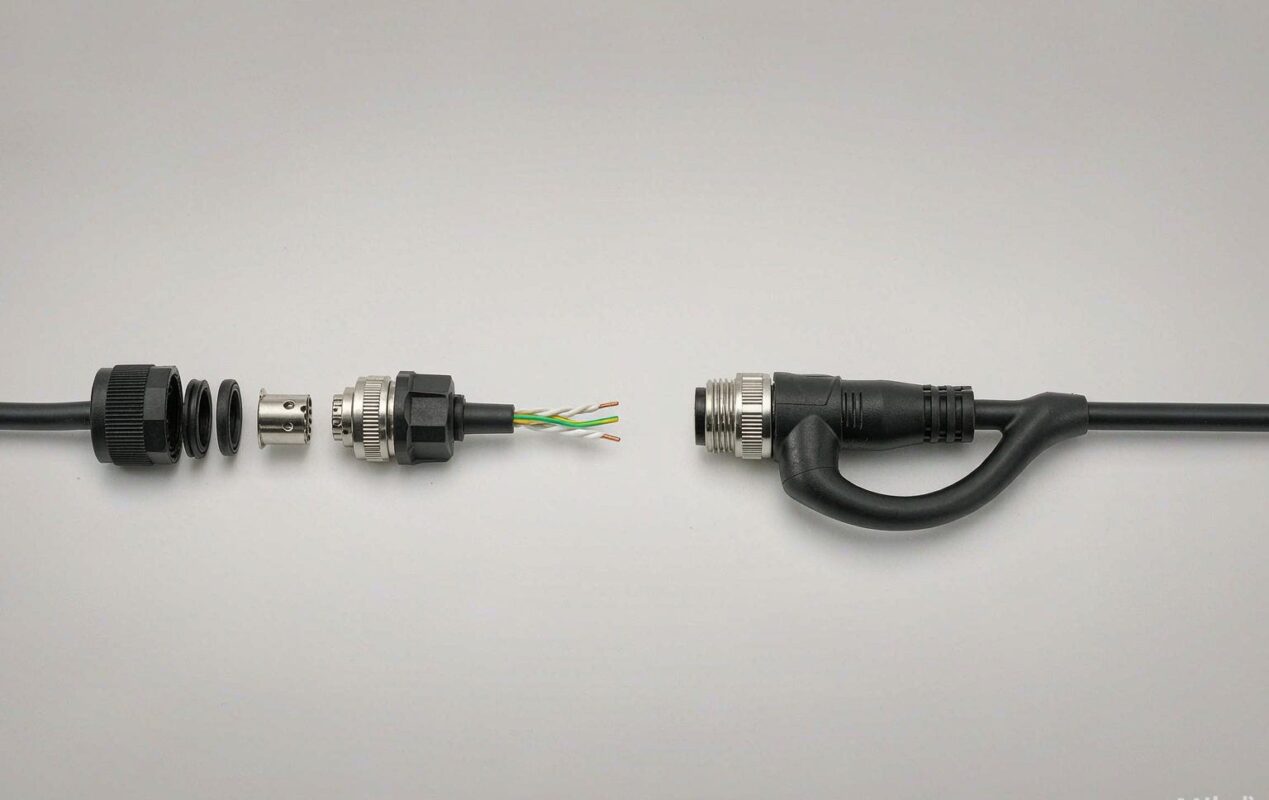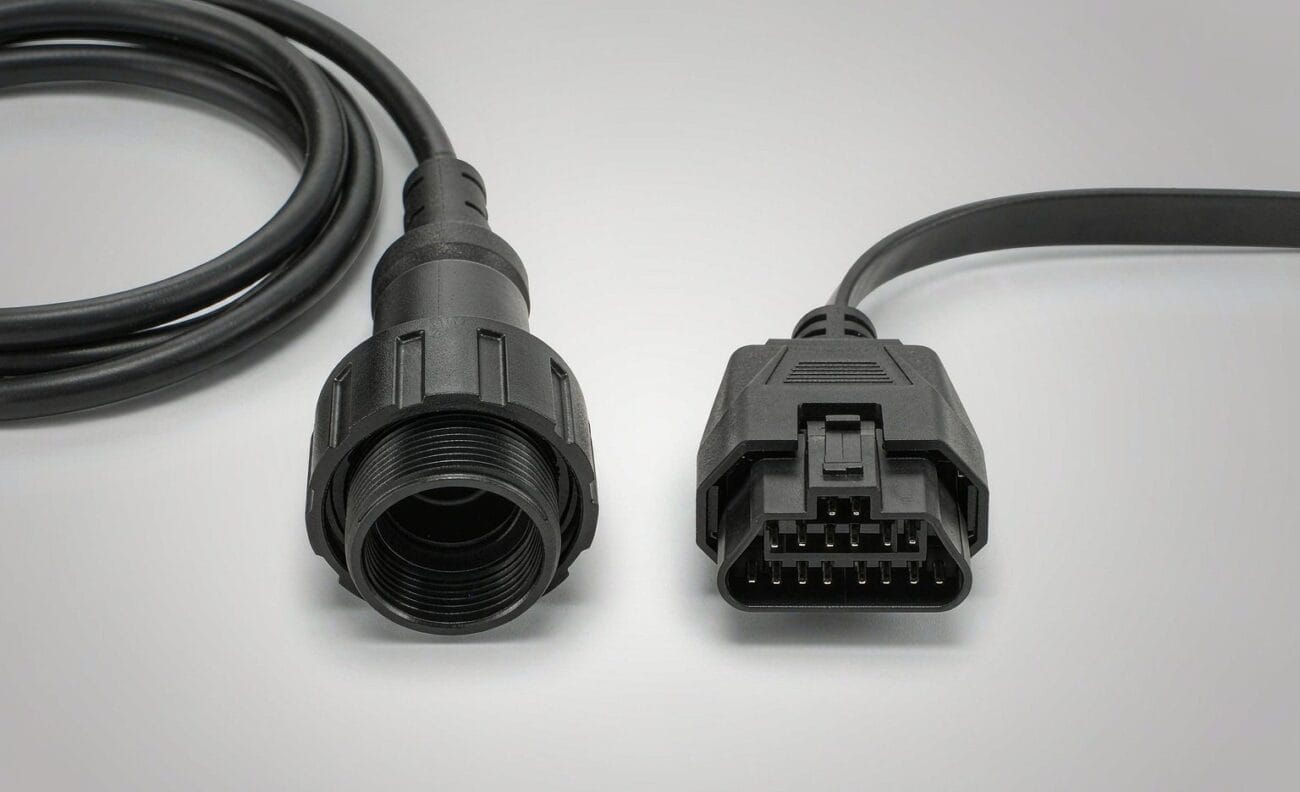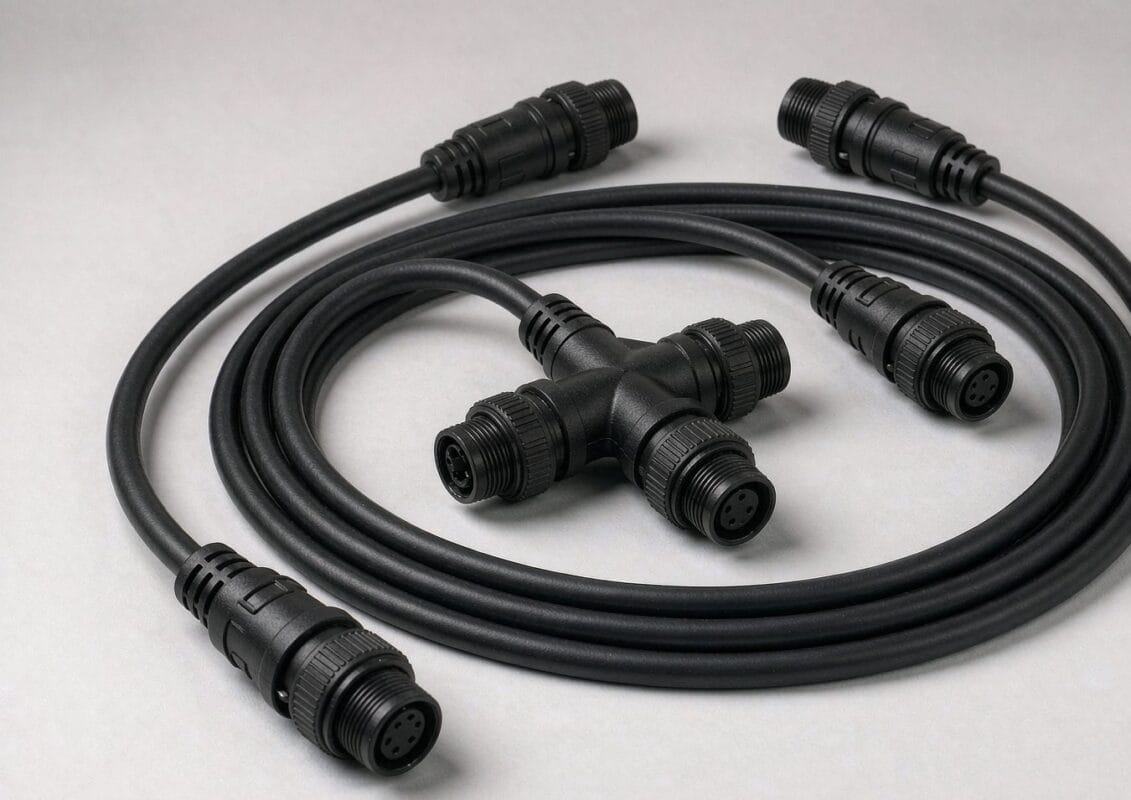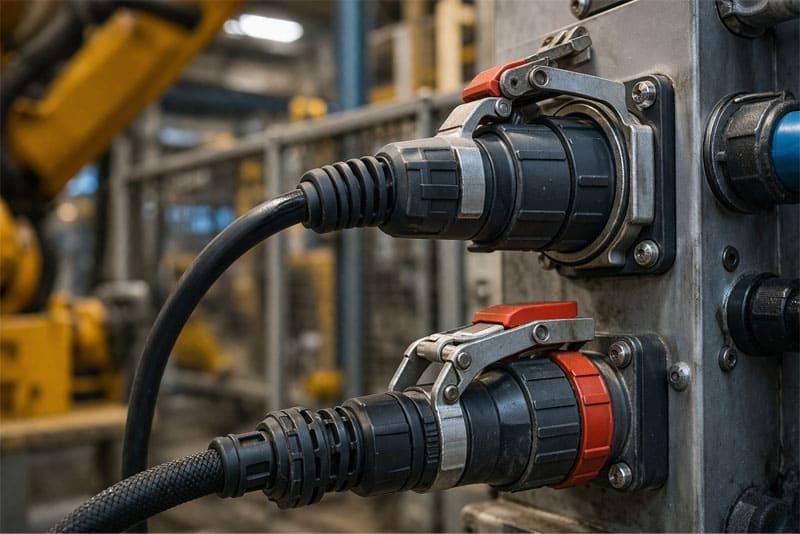
When comparing an overmolded screw-lock cable connector with a latch-style cable connector, the key difference is not only the locking method, but also mechanical protection, cable strain relief, environmental durability, and serviceability.
| Feature | Overmolded Screw-Lock Cable Connector | Latch Cable Connector |
|---|---|---|
| Locking method | Threaded screw / locking screw | Snap latch / clip |
| Cable protection | ★★★★★ Excellent | ★★★ Good |
| Strain relief | ★★★★★ Excellent | ★★★ Depends on design |
| Vibration resistance | ★★★★★ Excellent | ★★★★ Good |
| Dust/moisture resistance | ★★★★★ Better | ★★★ Depends on housing |
| Connector strength | Very high | Medium to high |
| Assembly speed | Slower | Faster |
| Maintenance | Less convenient | Very convenient |
| Repeated plugging cycles | Moderate | Excellent |
| Industrial suitability | Excellent | Good |
1. Overmolded Screw-Lock Cable Connector
Construction
An overmolded screw-lock cable assembly typically combines:
Internal connector insert
Metal locking screws or threaded hardware
Shielding structure
Cable jacket
Injection-molded strain relief
The cable and connector become a single protected assembly.
Advantages
1. Superior Mechanical Protection
The overmolded body protects:
Solder joints
PCB contacts
Cable termination points
Shield connections
This is important because the cable failure point is often not the connector itself, but the transition area between:
Cable → Connector Housing
Overmolding reduces:
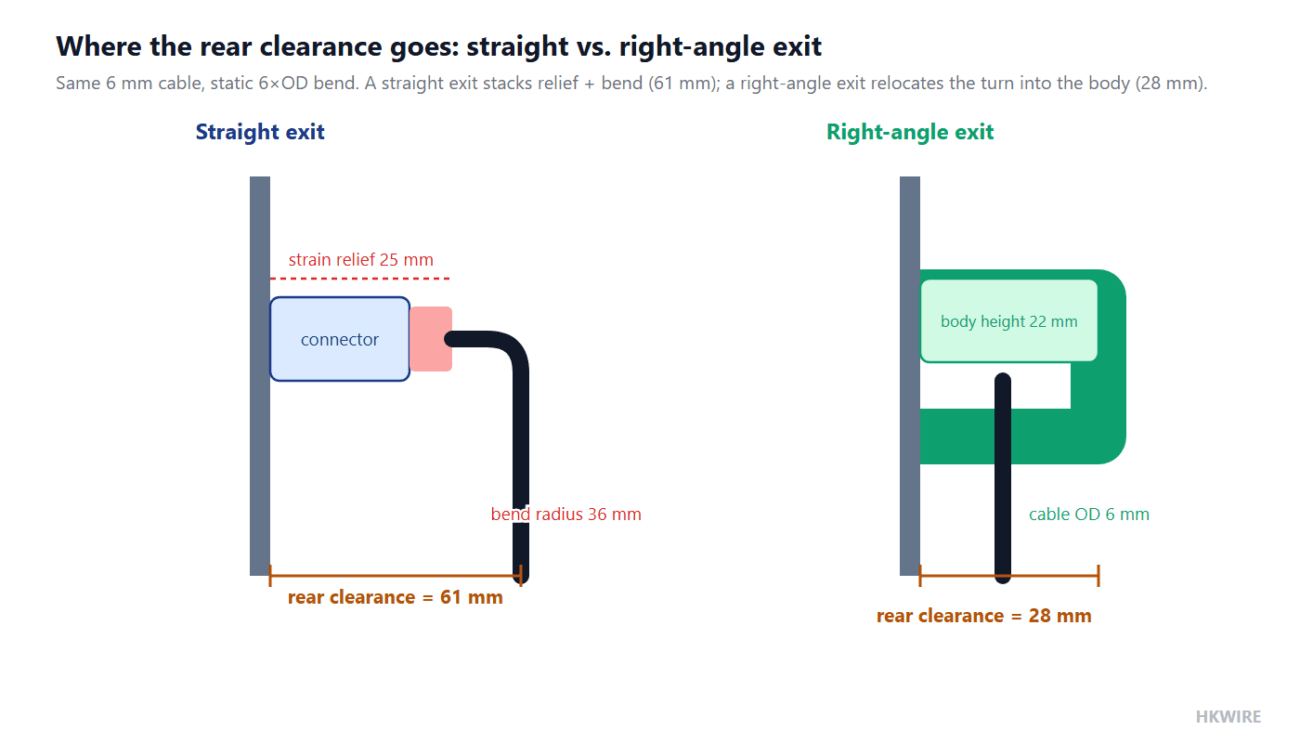
Cable bending stress
Pull-out damage
Repeated flex failures
2. Excellent Vibration Resistance
The screw-lock mechanism prevents connector separation caused by:
Machine vibration
Motor movement
Shock loading
Cable movement
Typical applications:
CNC machines
Industrial robots
Vision inspection systems
Factory automation equipment
3. Better Industrial Reliability
An overmolded screw-lock cable connector is usually preferred for equipment that must operate continuously.
Examples:
24/7 production lines
Industrial PCs
Embedded controllers
Measurement equipment
4. Better Environmental Protection
Depending on design, overmolding can improve resistance against:
Dust
Oil mist
Moisture
Industrial contaminants
A latch connector with exposed moving parts may be more vulnerable.
Disadvantages
1. Slower Installation
Installation requires:
Insert connector
Align locking screws
Tighten screws
This adds assembly time.
2. Lower Service Convenience
For equipment requiring frequent cable replacement, screw-lock can be inconvenient.
3. Higher Cost
Additional manufacturing processes:
Precision molding
Locking hardware
Assembly steps
increase cost.
2. Latch Cable Connector
Construction
A latch connector uses:
Spring clip
Locking tab
Push-release mechanism
Common examples:
RJ45 Ethernet connectors
Standard USB connectors
Many consumer cable assemblies
Advantages
1. Fast Connection
Benefits:
Tool-free installation
Quick replacement
Easy troubleshooting
Ideal for:
Test equipment
Development systems
Service environments
2. High Plug/Unplug Cycle Capability
Latch connectors are suitable when operators frequently:
Connect cables
Disconnect equipment
Change configurations
3. Lower Cost
Advantages for high-volume products:
Simple design
Faster assembly
Lower manufacturing cost
Disadvantages
1. Lower Mechanical Retention
A latch relies on a spring mechanism.
It can release due to:
Cable pulling
Side force
Strong vibration
Operator impact
2. Connector Body Protection Depends on Housing
A normal latch connector often has:
Plastic shell
Limited strain relief
Exposed locking mechanism
It may not survive harsh industrial environments as well as overmolded versions.
For Industrial USB 3.0 Cable Products
For a USB 3.0 Type-A Male to Female Extension Cable, the positioning difference is:
Overmolded Screw-Lock Version
Target customers:
OEM machine builders
Automation integrators
Industrial equipment manufacturers
Marketing message:
“Heavy-duty industrial USB cable engineered for secure, vibration-resistant data transmission in demanding environments.”
Latch Version
Target customers:
General IT users
Office equipment
Temporary installations
Marketing message:
“Easy-install USB extension cable with quick-release connector design.”
| Application | Better Choice |
|---|---|
| Industrial automation machine | ✅ Overmolded Screw-Lock |
| Machine vision camera | ✅ Overmolded Screw-Lock |
| Robotics equipment | ✅ Overmolded Screw-Lock |
| Factory control cabinet | ✅ Overmolded Screw-Lock |
| Industrial PC connection | ✅ Overmolded Screw-Lock |
| Laboratory test bench | Latch / Screw-Lock |
| Repair workstation | ✅ Latch |
| Consumer electronics | ✅ Latch |
| Frequent cable replacement | ✅ Latch |
Engineering Recommendation
For B2B industrial applications, the preferred hierarchy is:
1. Overmolded Screw-Lock Connector
★★★★★ Best reliability
2. Metal Housing Screw-Lock Connector
★★★★☆ Good industrial option
3. Latch Connector with Overmold Strain Relief
★★★☆☆ Good general industrial use
4. Standard Plastic Latch Connector
★★☆☆☆ Consumer/light-duty use
Frequently asked questions
Is a screw-lock connector always better than a latch?
No. A screw-lock wins where vibration, cable drag or an accidental unplug risks stopping the machine. A latch wins where the cable is mated and unmated many times a day and nothing is pulling on it. Choose on whether the failure mode you fear is “comes loose” or “takes too long to release”.
Can a screw-lock USB connector replace a standard USB plug?
Only if the receptacle has the matching threaded holes. Screw-lock USB Type-A, USB 3.0 Micro-B and some USB-C variants use a jackscrew that threads into the device side, so both halves have to be specified together. A screw-lock plug in a plain socket locks nothing.
Does overmolding raise the IP rating on its own?
It improves the two places that usually leak — the strain relief and the cable entry — but the rating is still set by the mating face. A mated pair that claims IP67 needs both halves built for it; check the connector body, the panel seal and the cable exit together rather than reading one number off a datasheet.
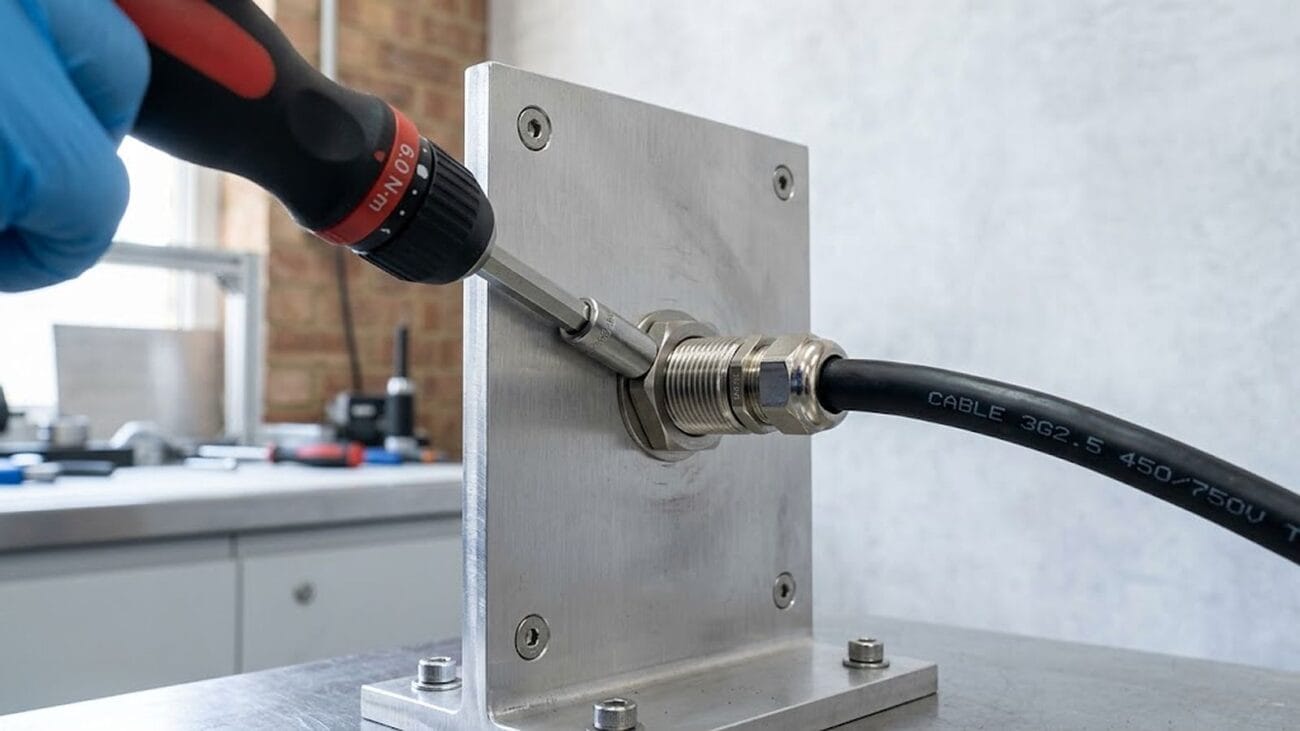
How tight should the jackscrews be?
Seated by hand and then a short turn with a driver. Overmolded bodies hide how much load the thread is taking, and over-tightening strips the jackscrew or deforms the shell before it improves the seal. If access is awkward, ask for a knurled thumb screw that can be run by hand.
What is the minimum order quantity for an overmolded screw-lock assembly?
500 pcs per part number for production runs; prototypes and samples are built from 1 to 50 pcs. Sample builds ship in 3 working days and production follows 14 working days after first article approval. Tooling is quoted separately, and a new overmold tool adds about 10 working days — see custom development.