M8 D-Coded Ethernet Cable, 4-Pin 100 Mbit Cordset for Tight Spaces
Last updated: 7 September 2026
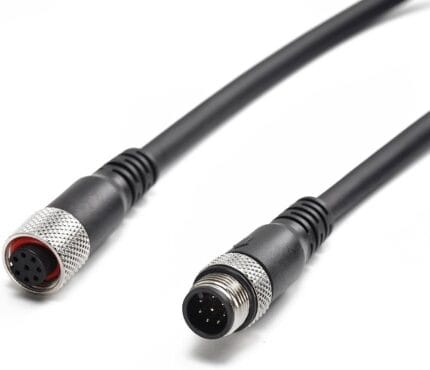
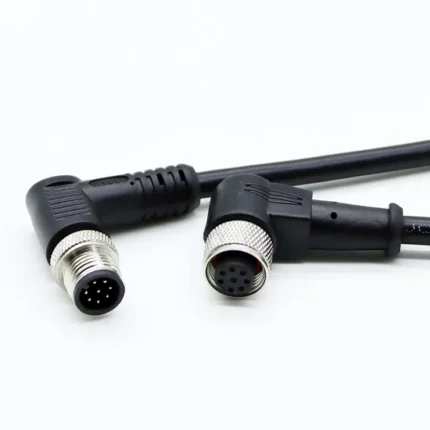
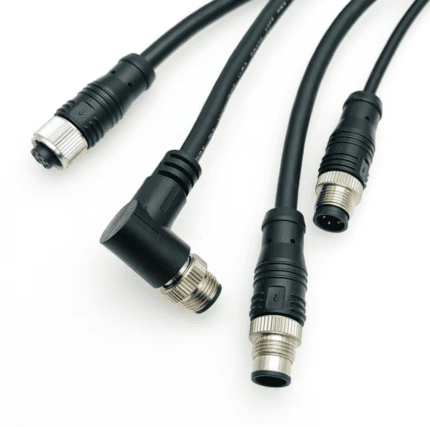
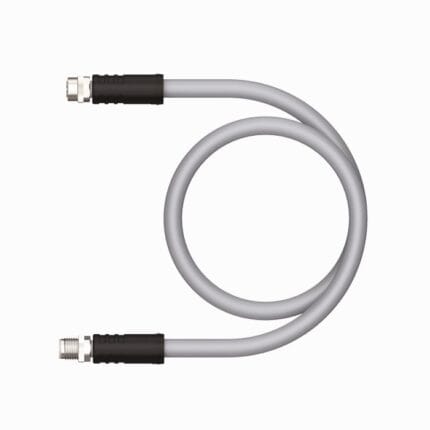
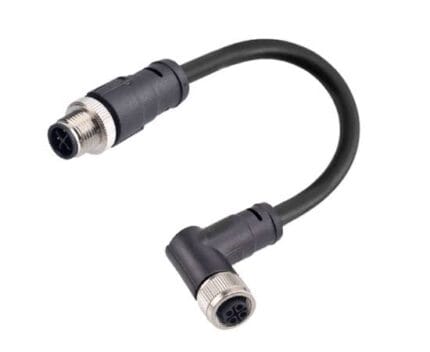
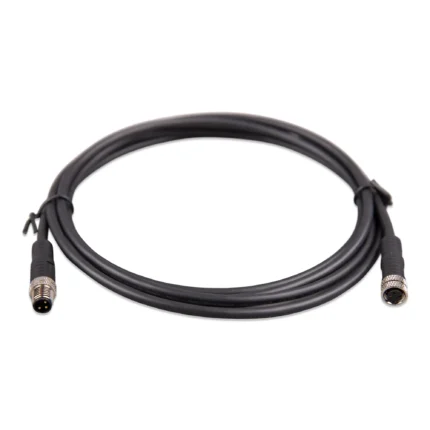
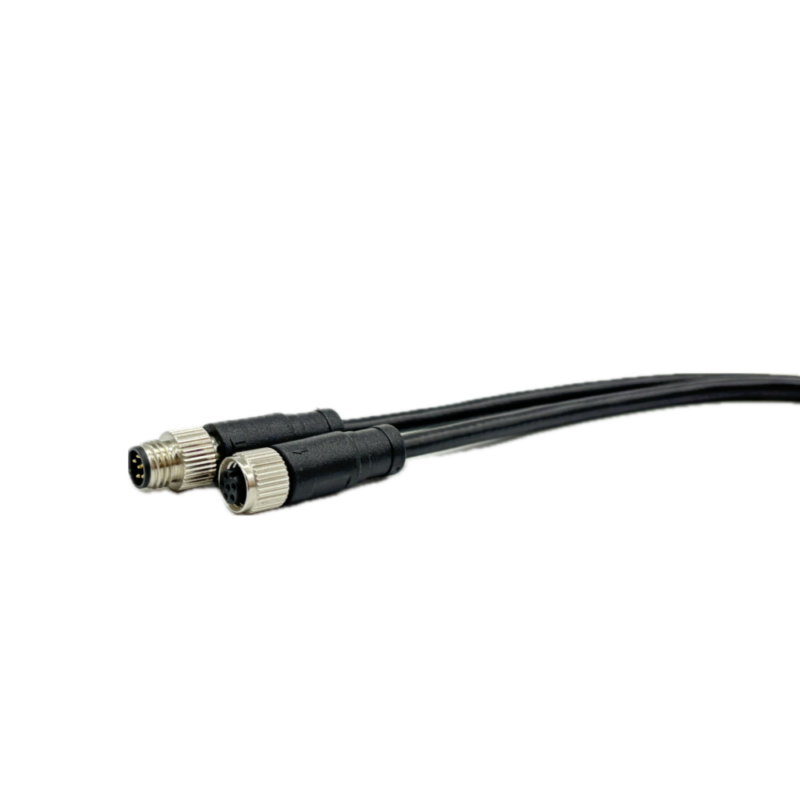
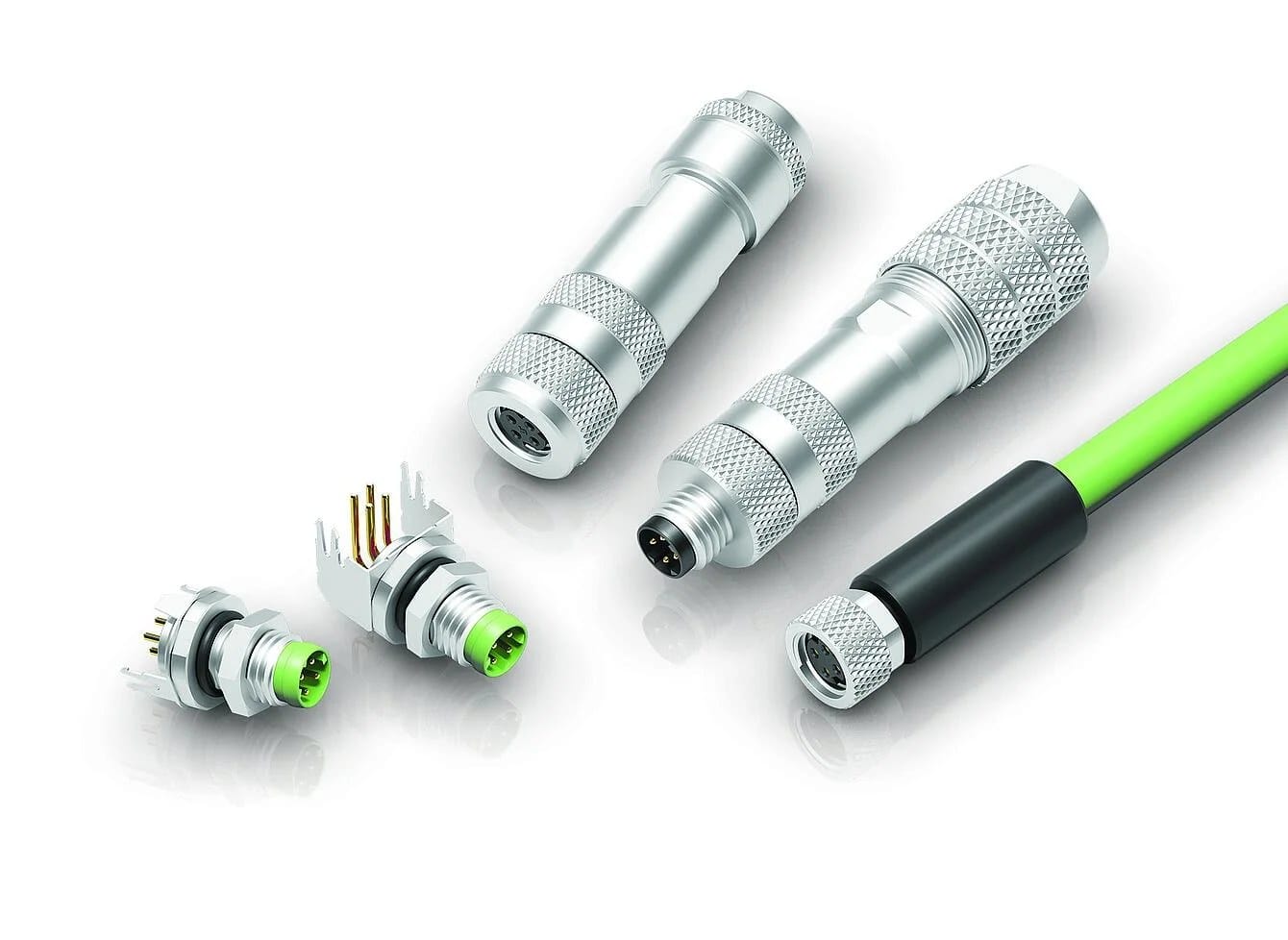
This M8 D-coded Ethernet cable is a 4-pin 100 mbit cordset for tight spaces.
When M12 will not fit
M8 connectors are roughly a third smaller than M12, which is the whole point. Inside a robot wrist, behind a compact vision sensor, or on a small flow meter there is often not enough room for a 12 mm thread and its bend radius. The M8 D-coded Ethernet cable keeps the two-pair Ethernet layout of its bigger sibling but shrinks the shell so it fits where an M12 will not.
What D-code buys you
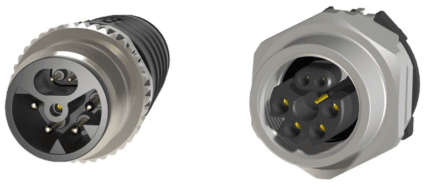
D-code arranges four contacts as two shielded pairs matched to the Ethernet physical layer, which is why it is the interface of choice for PROFINET, EtherNet/IP and EtherCATdevice drops at the 100 Mbit/s class. A-code can physically carry the same signal, but its contact geometry is not laid out for differential pairs, so crosstalk and impedance behavior get worse as the run gets longer. If the port says D-code, use D-code.
Planning for the bend radius
The most common field failure on M8 Ethernet is not electrical, it is mechanical – the cable is routed tighter than the jacket and the pairs allow, and the link degrades over weeks of vibration. Ask us for the minimum bend radius for the jacket you are using and route to it. If the run moves, say so up front and we will build with high-flex stranding rather than a fixed-installation core.
M8 is also the natural choice where weight matters – on a moving robot link, a smaller connector and a thinner jacket reduce the load the axis has to accelerate. Many cells run M12 in the fixed part of the run and drop to M8 only at the sensor head, and we build that transition as one overmoulded lead so there is no second sealing point to leak.
M8 is also the natural choice where weight matters – on a moving robot link, a smaller connector and a thinner jacket reduce the load the axis has to accelerate. Many cells run M12 in the fixed part of the run and drop to M8 only at the sensor head, and we build that transition as a single overmoulded lead to avoid a second sealing point.
Build options
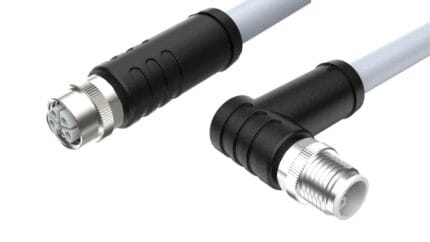
- M8 D-code straight or right-angle, male or female
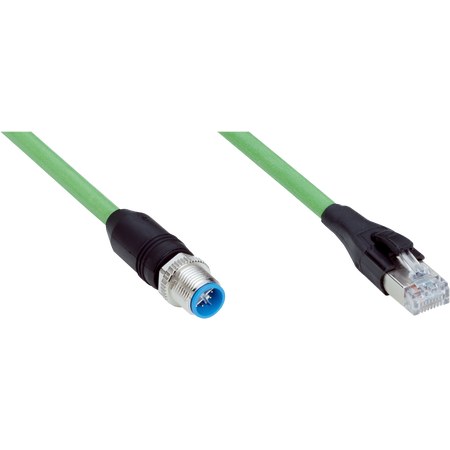
- M8 to M8 patch, or M8 D-code to RJ45 for a cabinet interface
- PUR jacket for coolant and oil, PVC for dry enclosures
- Shield bonded to the coupling nut
- Short lengths down to a few hundred millimeters for sensor heads
You May Also Need
Related Cable Ranges
Signal and Data Cables • Automotive Cable Wire Harness • Panel Mount Cable
Frequently Asked Questions
What is M8 D-Coded Ethernet Cable used for?
Compact vision sensors, robot wrists, tight enclosures.
Which connectors does M8 D-Coded Ethernet Cable use?
One end is M8 D-coded 4-pin, straight or right-angle and the other end is M8 D-coded, RJ45 or open leads.
What connector coding does M8 D-Coded Ethernet Cable use?
D-code, industrial Ethernet (IEC 61076-2-114 class).
| Connector A | M8 D-coded 4-pin, straight or right-angle |
|---|---|
| Connector B | M8 D-coded, RJ45 or open leads |
| Coding | D-code, industrial Ethernet (IEC 61076-2-114 class) |
| Data rate | 100 Mbit/s class – confirm per build |
| Thread | M8 x 1.0 |
| Jacket | PUR or PVC |
| Shielding | Braided shield, bonded to the coupling nut |
| Ingress rating | IP67 when mated – confirm per build |
| Application | Compact vision sensors, robot wrists, tight enclosures |