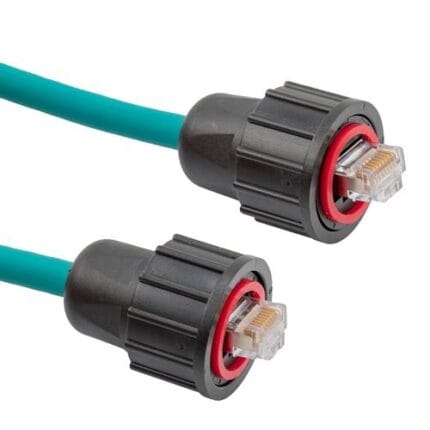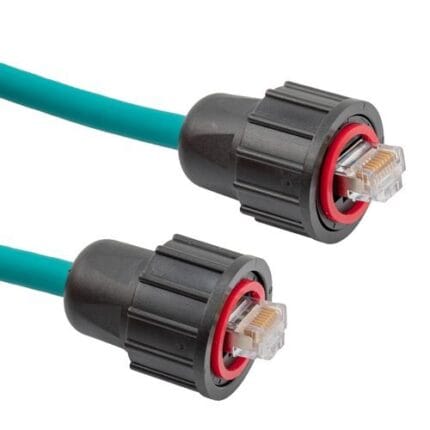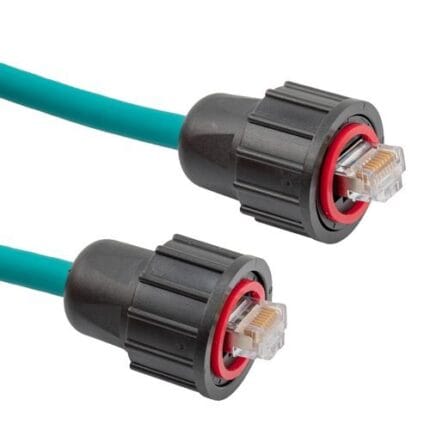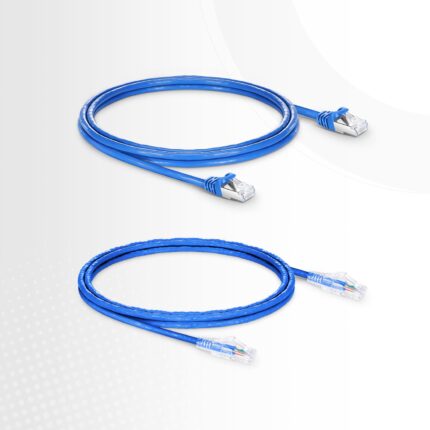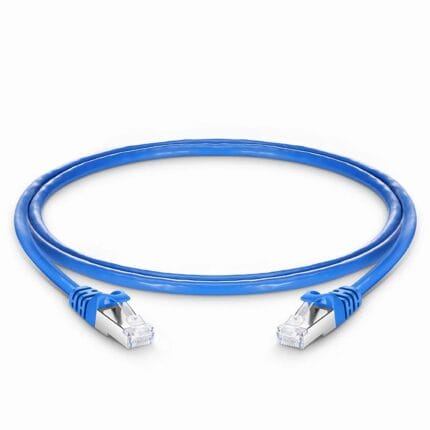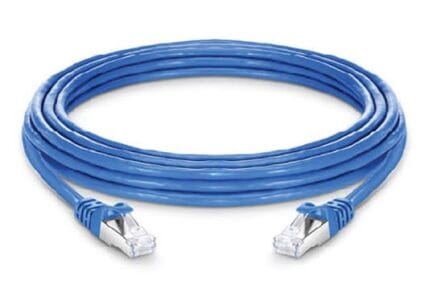
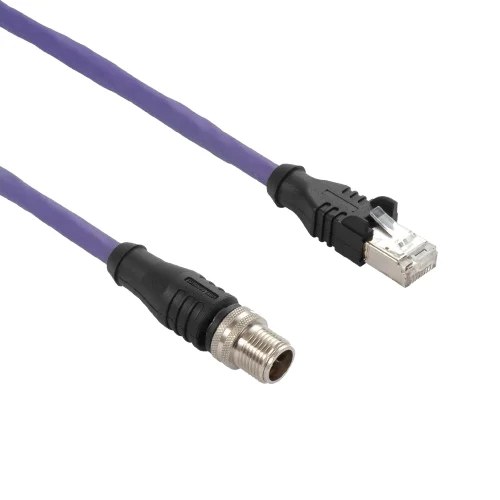
Cat6A IP69K Washdown Patch Cord, M12 X-Code to RJ45, PUR
A cat6a ip69k washdown patch has to survive the part of the shift that destroys ordinary cords: the rinse at the end of it. Food and beverage packaging lines, dairies, breweries and pharmaceutical clean rooms are foamed with caustic detergent and then rinsed with water at high pressure and high temperature. The cord carries 10 gigabit Ethernet to a vision camera or an operator panel that cannot be moved out of the wash zone, so it takes the jet on the outside and keeps the link up on the inside.
IP69K is a test, not a description
IP69K is the high-pressure, high-temperature water jet code in the ISO 20653 ingress series, written for road vehicles and widely adopted as the benchmark on processing equipment. Whether an assembly passes depends on the overmould geometry, the gasket compression at the coupling and the torque it is tightened to, not on the cable alone. Competitor literature for this family quotes IP69K together with resistance to Ecolab cleaning agents and to high-pressure spray. We are not printing that as our result until we hold the report, and we will state the applicable edition of the standard only once it is confirmed against the test certificate.
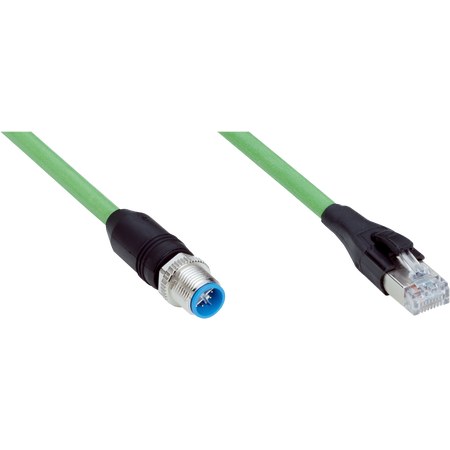
M12 X-code on the wet end, RJ45 on the dry end
X-coding is the eight-position M12 keying laid down for 10 gigabit Ethernet, described in IEC 61076-2-109; check which edition your plant standard references. On the machine side the cord terminates in an M12 X-coded plug that mates with a sealed receptacle on the camera or the panel. On the cabinet side it ends in an ordinary RJ45, so nothing special is needed at the switch. That asymmetry is the point: one sealed joint out in the wash zone, one commodity port in the dry cabinet.
Jacket and armour options
PUR is the working jacket for these assemblies because it resists the cleaning chemistry, the hot water and the mechanical abuse of a wet floor better than PVC, and it stays flexible at the low end of the quoted temperature range. Competitor data also offers a stainless steel braid over the jacket, quoted as 316L, for cells where the cord is abraded against frames or hit directly by the nozzle. Treat both as options to be specified, not as defaults.
Installation reality
Route the cord so that water drains off it rather than pooling at the connector, and support it so the weight of a wet cable is not hanging off the coupling. Hand-tighten and then torque the M12 to the figure on the connector drawing, since an under-torqued coupling is the most common cause of a washdown failure. Keep the bend radius at the strain relief generous, and keep the run clear of the nozzle path where the operator actually aims.
What we are confirming
Ingress rating, temperature range, jacket chemistry, cleaning agent resistance and the stainless braid option are taken from public competitor data. Give us the cleaning agents in use, the rinse temperature and pressure, and the length, and we will come back with the datasheet that covers the construction you are buying.
Related Cable Ranges
Signal and Data Cables • Circular M8 M12 Cable • Panel Mount Cable
| Category / class | Category 6A, Class EA per ISO/IEC 11801 |
|---|---|
| Wet end connector | M12 X-coded, 8 positions, per IEC 61076-2-109 (confirm applicable edition) |
| Dry end connector | RJ45 plug, shielded |
| Ingress target | IP69K per ISO 20653 (pending test report and edition confirmation) |
| Jacket material | PUR, halogen-free (pending supplier datasheet) |
| Armour option | Stainless steel braid, 316L class (pending supplier confirmation) |
| Chemical resistance | Caustic foam and Ecolab-type detergents claimed in competitor data (pending test report) |
| Temperature range | -25 to +85 C (pending supplier datasheet) |
| Standard lengths | 3 m / 5 m / 10 m (pending supplier confirmation) |
| Typical loads | Washdown vision cameras, panel PCs, remote I/O on food, dairy, brewery and pharma lines |