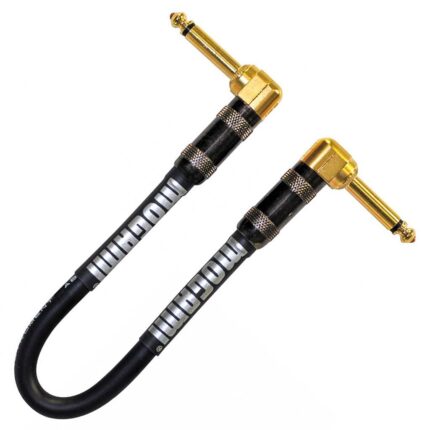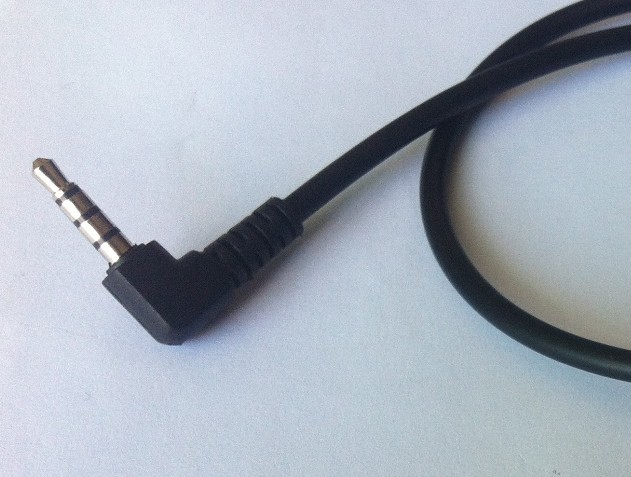
3-5mm TRRS 4 Pole Right Angle Cable
A 3 5mm trrs right angle cable with a 4-pole plug carrying stereo audio plus mic, and a 90 degree head for tight panels. CTIA or OMTP wiring, far end stripped, socketed or per your drawing.
Overview
This 3.5mm trrs right angle cable carries stereo audio plus a
microphone channel through a four-pole 3.5mm plug whose head sits at 90 degrees to the cable, so the
lead leaves the device flat against the chassis instead of standing 25 mm out of it. That matters more
than it sounds: in a rack panel, a control box or a piece of test equipment, a straight plug is often
the reason a lid will not close. The far end is built to your specification — stripped and tinned, a
TRRS or TRS socket, or something else entirely.
Key Specifications
| Connector A | 3.5 mm TRRS male, 4-pole, 90° right-angle, black PVC housing |
|---|---|
| Connector B | Stripped / tinned, or a 3.5 mm TRRS / TRS / USB — by build |
| Cable Length | Custom on request |
| Jacket | Black PVC |
| Application | Headset extension, AV control panel, embedded audio panel |
| Wiring standard | CTIA / AHJ as standard, OMTP on request |
| Contact finish | Nickel-plated contact rings |
| Conductor | Stranded copper |
| Strain relief | Molded boot at the right-angle plug |
| Build | Far end, length and pinout per your drawing |
CTIA or OMTP: why a 3 5mm trrs right angle cable kills the mic
Two wiring standards share the same 3.5mm four-pole shell, and they differ in exactly one respect:
which contact carries ground and which carries the microphone. Get it wrong and the headphone speakers
usually still work, because left and right are on the same two contacts in both standards, but the
microphone goes dead, or the headset is detected as the wrong type and the device mutes the input.
This is the single most common reason a headset lead is returned as faulty when it is not.
| Contact | CTIA / AHJ (most phones and headsets today) | OMTP (older and some industrial gear) |
|---|---|---|
| Tip | Left audio | Left audio |
| Ring 1 | Right audio | Right audio |
| Ring 2 | Ground | Microphone |
| Sleeve | Microphone | Ground |
The symptom tells you which mistake you made. No microphone at all usually means the mic contact is
sitting on ground. A microphone that only works when the plug is held at an angle is a mechanical
problem, not a wiring one. A device that refuses to detect the headset at all is usually seeing the
wrong resistance between mic and ground, which is how the
four-pole
jack senses what is plugged in.
We build both standards. Tell us which the host device uses, or send the model, and the build is
verified against it rather than assumed.
Why the right-angle head, and which way should it exit
A right-angle plug solves clearance, and it introduces a new variable: the exit direction. The cable
can leave to the left or to the right of the plug axis, and on a crowded panel that choice decides
whether the lead routes cleanly or folds back across the connector. Specify it from the enclosure
rather than from a photograph of the connector alone.
- Measure the clearance above the jack with the lid on. That number, not the plug length, is what
the right-angle head has to fit inside. - Decide the exit direction from the cable route, and mark it on the drawing.
- Where the panel is thin, check whether the molded boot or the plug shell is the part that fouls
first. - For a panel that has to be opened repeatedly, put a
panel-mount
socket in the wall and use this lead inside only.
The far end is the part you specify
One end of this assembly is fixed; the other is whatever your equipment needs. The four common
answers are stripped and tinned conductors for a terminal block, a 3.5mm TRRS socket to extend a
headset, a 3.5mm TRS socket where the microphone channel is not used, or a completely different
connector, including USB, which is really a different product built on the same panel. Because that
end varies, so does the pinout: say whether the mic channel has to reach it, and whether the sleeve
should carry ground, mic, or be left open.
Test it before it goes in the panel
A four-pole lead that passes a continuity check can still be wrong, so verify it the way the
equipment will. Plug the headset into the finished lead and into the host device, then make a
recording or a call and listen back rather than trusting that audio in means audio out. Check that any
inline button or remote works, because a button that does nothing is usually a wiring difference
rather than a broken switch. If the microphone only works when the plug is partly withdrawn, the shell
is sitting too deep in a recessed jack, and the fix is a plug with a shorter barrel rather than a
different pinout.
Typical applications for this 3 5mm trrs right angle cable
- AV control panels where a straight plug would foul the lid or the next connector
- Headset extensions on production lines and in call-center furniture
- Embedded audio on industrial and test equipment with a 3.5mm jack on a crowded face
- Vehicle and marine dashboards, running to a
flush
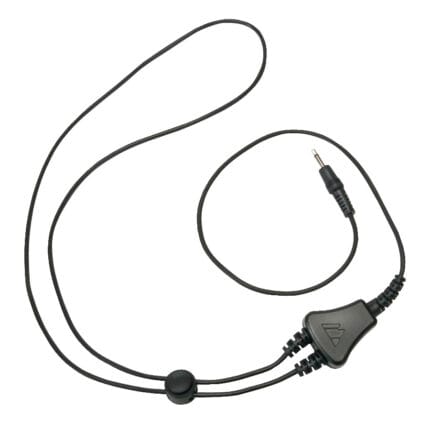
mount audio extension in the trim - Assistive listening and interpretation equipment, where the standard
neckloop receiver wiring
has to match the four-pole convention the receiver uses
How to specify your build
- Wiring standard — CTIA or OMTP, confirmed against the host device.
- Exit direction of the right-angle head, and the clearance available.
- Far end — stripped and tinned, TRRS socket, TRS socket, or another
connector. - Length, measured inside the enclosure as well as outside it.
- Quantity, and whether this is a prototype or a production panel build.
Build standard for 3-5mm TRRS 4 Pole builds is IPC/WHMA-A-620 Class 3 under ISO 9001, with terminations from 32 to 12 AWG. continuity and pinout are checked on every 3-5mm unit before packing, and seal checking is quoted whenever an ingress rating is on the drawing.
Custom builds and ordering
On 3-5mm TRRS 4 Pole builds, prototype lots run from 1 to 50 pcs and leave in 3 working days; production runs of 500 pcs and up ship 14 working days after approval. Tooling not already held adds around 10 working days. 3-5mm OEM and ODM shipments carry your part number and labeling, and material certificates plus first-article reports are available.
Every production run can ship with RoHS and REACH declarations and the electrical report agreed at quotation; see certifications and material declarations. UL styles and other named approvals are built to drawing: we source to the style you specify and document it, rather than asserting a listing we do not hold. The 90-degree exit is formed in the tool itself; the exit options and their clearances are set out under right-angle overmold tooling options. Related reading: cable assemblies for broadcast and pro AV. Tooling is quoted separately, cut in-house rather than brokered out, and owned by you.
Related audio and panel assemblies
- Assistive Listening Neckloop with Breakaway Release
- 3.5 mm AUX Audio Female Panel Mount Extension
- Car Dashboard Flush Mount USB-A + 3.5 mm Audio
- Balanced IEM Cable with Detachable Two-Pin and MMCX
- 3.5mm to MIDI 6-Pin DIN Audio Cable
- Control Cabinet Service Interface with RJ45
Full range: audio and video cable assemblies.
Frequently Asked Questions
How do I know whether my device is CTIA or OMTP?
Check the manual or the headset that came with it. If the original headset’s microphone works and
another one does not, the two are on different standards. Tell us the model and we will match it.
The audio works but the microphone is dead. Faulty cable?
Probably a standard mismatch rather than a fault. Ground and microphone are swapped between CTIA and
OMTP, and the speakers work either way.
Can I have the right-angle plug exit the other way?
Yes. Exit direction is a build option; specify it from the enclosure, not from the connector
alone.
Do you build the far end as a socket rather than stripped wires?
Yes — TRRS socket, TRS socket, or another connector type entirely. It is the most common
customisation on this part.
| Connector A | 3.5 mm TRRS male, 4-pole, 90° right-angle, black PVC housing |
|---|---|
| Connector B | Stripped / tinned, or a 3.5 mm TRRS / TRS / USB — by build |
| Cable Length | Custom on request |
| Jacket | Black PVC |
| Application | Headset extension, AV control panel, embedded audio panel |
| Wiring standard | CTIA / AHJ as standard, OMTP on request |
| Contact finish | Nickel-plated contact rings |
| Conductor | Stranded copper |
| Strain relief | Molded boot at the right-angle plug |
| Build | Far end, length and pinout per your drawing |
Related products