Cobot Arm Cable Harness with Drag-Chain Jacket
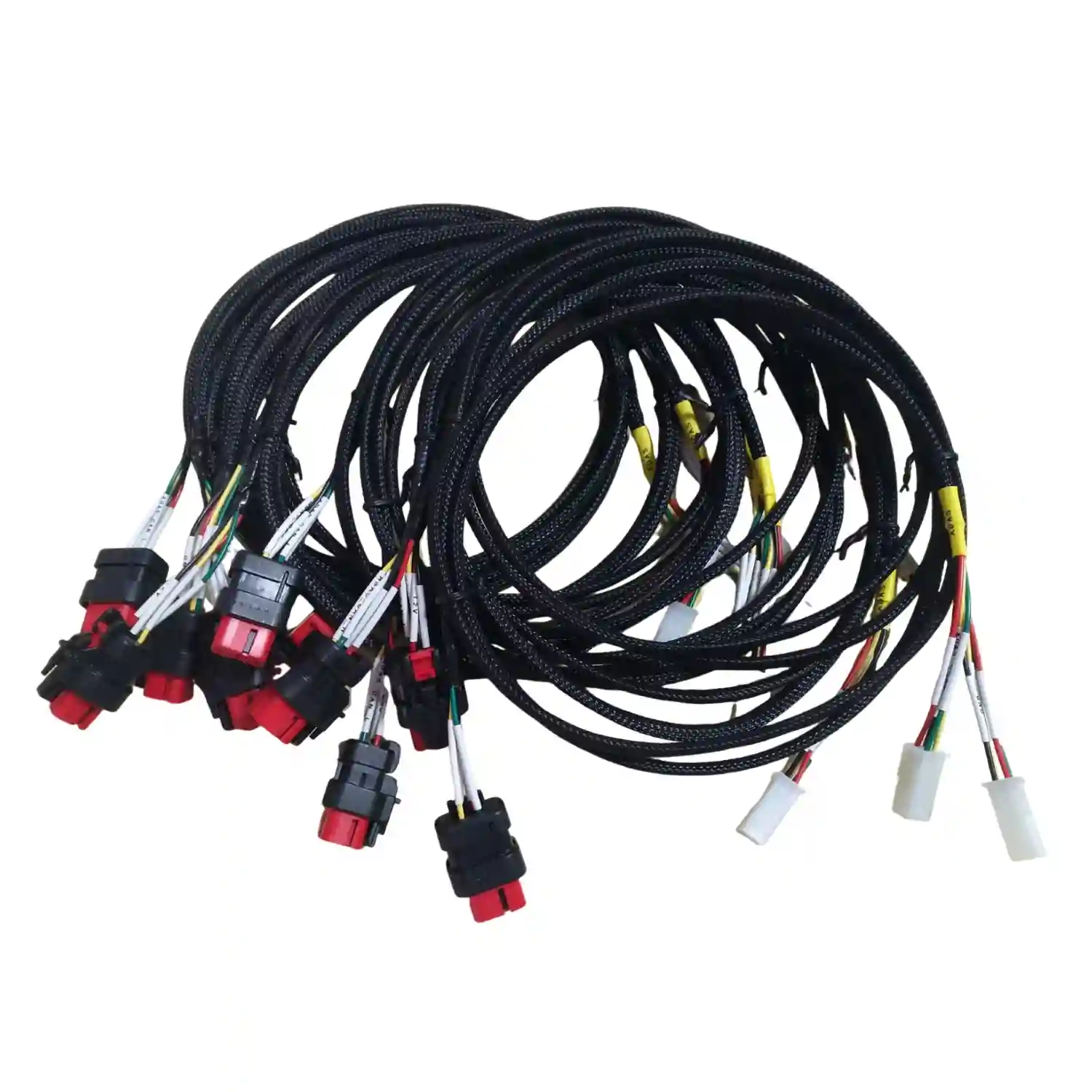
A cobot cable harness built to your arm layout: braided-sleeve branches, sealed connectors and a flex test defined against your motion profile before the first part is made.
Last updated: 13 September 2026
Overview
A cobot cable harness hangs on an arm that never stops moving, which makes it a fatigue part wearing the costume of a wiring part. The conductors do not fail because they were undersized for the current – they fail because they were bent a few hundred thousand times at a radius nobody checked. And on a low-payload arm, the harness is also dead weight the motors have to carry, so the design tension is real: lighter means thinner, and thinner usually means shorter life. We build to your dress-pack layout with the flex test defined before the first part is made, so the trade-off is a decision you took rather than a warranty claim you inherited.
Key Specifications
| Build | Multi-branch harness to your dress-pack drawing |
|---|---|
| Sleeve | Braided abrasion sleeve; PUR jacket options |
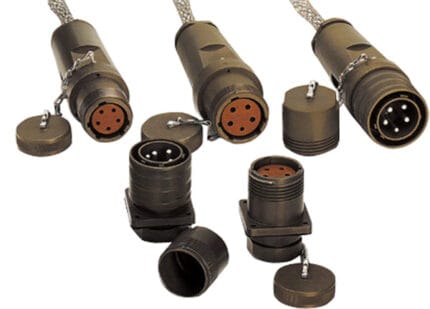
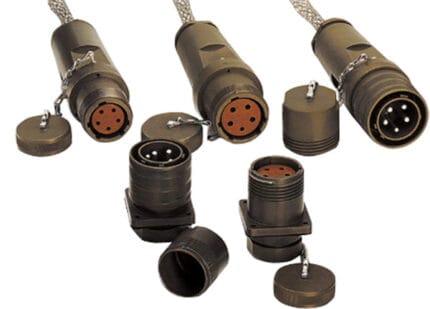
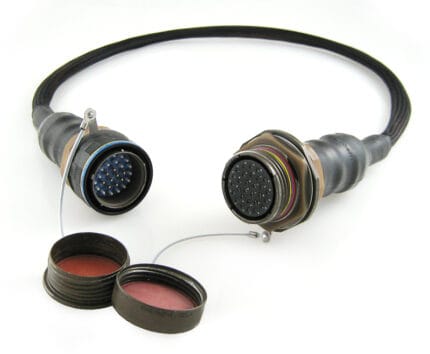
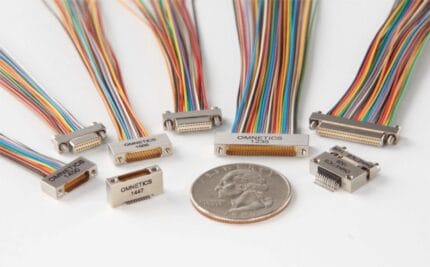
| Connectors | Sealed rectangular and circular, per your BOM |
| Motion | Flex life stated with load, radius and angle per your profile |
| Conductors | Per your signal and power schedule |
| Marking | Branch labels at every break-out |
| Weight | Lightweight construction for low-payload arms |
| Revisions | Built to your revision number, reorder-stable |
What kills this cable
| Stress | Failure mode | Design response |
|---|---|---|
| Continuous multi-axis bending | Strands break at the point where the harness leaves the clamp or the connector boot | Fine-strand conductor, short lay, bend relief that starts at the shell |
| Torsion at the wrist axis | Cores migrate inside the sleeve, the bundle twists and the screen opens | Torsion-rated lay-up, braid angle set for rotation, service length defined |
| Abrasion against the arm casting | Sleeve wears, then the jacket, then the insulation | Braided abrasion sleeve, and routing that keeps the harness off the casting |
| Self-collision in tight poses | The harness is pinched between the arm and the workpiece | Routing and clamping set against the full pose envelope, not the home position |
| Excess harness weight | Reduced payload and higher motor load, cycle time suffers | Conductor sizes set to the schedule, no margin stacked on top of margin |
Flex life is not a number, it is a test condition
This is the part worth being blunt about. A cycle count quoted without a bend radius, a travel distance and a load is not a specification, it is marketing. The same cable that survives a million cycles at a generous radius on a test rig will fail in weeks at a tight radius on a wrist axis.
So we ask for the motion profile up front: the radius at each axis, the angle of travel, the cycle rate and whether the motion is pure bending or bending plus torsion. That is what the build is quoted against, and it is stated on the drawing. If your arm program changes, the profile has to be revisited – not because the cable got worse, but because the job did.
Weight against life
On a low-payload arm every gram on the dress-pack is a gram the motors move on every cycle, and it comes straight off the rated payload. But the obvious weight saving – thinner conductors and a thinner jacket – is also the obvious way to shorten flex life. The places worth looking instead:
- Combine branches. One jacket carrying power and signal weighs less than two separate cables and usually flexes better.
- Size conductors to the schedule, not to a habit. A signal circuit does not need a power conductor.
- Trim the run length. A harness routed to the shortest viable path is lighter and has less to snag.
- Choose the sleeve deliberately. Braided sleeve is lighter than conduit and protects against abrasion, which is the failure you actually get.
Design notes from the build
Branches are broken out with strain relief at the sleeve transition rather than just taped, because the sleeve edge is where motion cuts jackets – a taped edge is a knife with a delay on it. Sealed connectors are mated and tested as an assembly, so the pinout you approved is the pinout that ships. Every break-out is labeled, because a dress-pack is re-terminated during commissioning more often than anyone plans for, and an unlabeled branch on a six-axis arm is an hour of guessing.
Typical applications for this cobot cable harness
- Collaborative arms on machine tending and pick-and-place cells
- Cobots on mobile platforms, where the harness also sees vehicle vibration
- Lab and electronics assembly with small-payload arms
- Dispensing and finishing cells with a tooling cable at the wrist
- Vision and gripper drops on the end effector, alongside our Robot Teach Pendant Cable with PUR Jacket for Arm Controllers
- Light assembly cells sharing a cell with human operators
How to specify your build
- Arm model and dress-pack layout, or a drawing of the routing.
- Motion profile – radius, travel angle, cycle rate, and whether there is torsion.
- Circuit schedule for power and signal branches.
- Connector part numbers at the base and at the tool.
- Abrasion and fluid exposure – what the harness rubs against and what it gets sprayed with.
- Payload sensitivity, so we know how hard to chase weight.
- Quantity and whether this is a prototype or a production release.
Workmanship and testing
Assembly and inspection follow IPC-WHMA-A-620 Class 3 workmanship criteria under our ISO 9001 quality management system, and every unit passes 100% continuity and pinout testing before packing. Conductor range is 32 to 12 AWG. Where your drawing states a flex life, we build to it and test against the profile on the drawing rather than quoting a cycle figure of our own – a number without its test conditions attached is not a number worth having.
Custom builds and ordering
Prototypes start from 5 pcs and ship in 3 working days; production orders start at MOQ 500 pcs and ship 14 working days after approval. New overmold tooling adds about 10 working days, and we hold 100 sets in house at our Longgang, Shenzhen plant – four assembly lines, 40 assembly workers, 1,000,000 pcs annual output. Factory audits and video line tours can be arranged.
Related robot and motion harnesses
- Custom Industrial Robot Wire Harness
- Robot Teach Pendant Cable with PUR Jacket for Arm Controllers
- Hybrid Robot Torsion Cable with CAT6 Data Pair, Power and Control Cores
- Robot Torsion Resistant Cable for Six-Axis Arm Wiring
- M12 Drag Chain Cable for Continuous Flex Cordsets
- Cleanroom Robot Cable Harness for EFEM and Vacuum Transfer Arms
Full range: custom wire harnesses.
Frequently Asked Questions
How many cycles will the harness last?
We build to the cycle target on your drawing, tested at the radius, angle and load you specify. A cycle count without those conditions is not meaningful, so we do not quote one standalone.
Can you make the harness lighter for a small-payload arm?
Yes, and the best savings usually come from combining branches into one jacket and trimming run length rather than from thinning conductors, which costs flex life.
What is a cobot, and why is it different from an industrial arm?
A cobot is designed to work alongside people, which generally means lower payload, rounded geometry and a dress-pack that hangs outside the arm rather than running inside it. That last point is why the harness has to be abrasion-resistant and light.
Do you supply the tool-end connectors too?
Yes. Base and tool ends are a normal part of the build, with flying leads where the tool changes frequently.
What is the minimum order?
5 pcs minimum for prototypes, shipping in 3 working days. Production runs of 500 pcs and up ship 14 working days after approval.
| Build | Multi-branch harness to your dress-pack drawing |
|---|---|
| Sleeve | Braided abrasion sleeve; PUR jacket options |
| Connectors | Sealed rectangular and circular, per your BOM |
| Motion | Flex life stated with load, radius and angle per your profile |
| Conductors | Per your signal and power schedule |
| Marking | Branch labels at every break-out |
| Weight | Lightweight construction for low-payload arms |
| Revisions | Built to your revision number, reorder-stable |