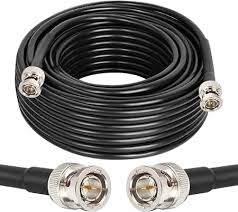
12G-SDI Coax Cable Assembly, BNC to BNC
A 12g sdi coax cable built on 75 ohm precision coax with BNC to BNC ends, made to the reach your rack needs, with return loss stated for the build.
Last updated: 13 September 2026
Overview
A 12g sdi coax cable has one job: move an SDI signal from camera to CCU, or rack to monitor, without the eye closing. Reach is decided by the coax construction, by how well the BNC ends are terminated, and by the bend discipline behind the panel. So we build to the reach you state and report the return loss with the shipment, instead of promising a generic figure that was never measured on your build.
Key Specifications
| Connector A | BNC male, 75 ohm, straight or right angle |
|---|---|
| Connector B | BNC male, 75 ohm, straight or right angle |
| Impedance | 75 ohm precision SDI coax |
| Signal | 12G-SDI to SMPTE ST 2082; 6G, 3G and HD on request |
| Jacket | Flexible PVC or low-friction PUR, build to order |
| Length | OEM build to the reach you state |
| Return loss | Stated for the build, measured per order |
| Marking | Labels with your part number or rack position |
What 12G-SDI asks of the link
SDI is a family of standards, all at 75 ohms, all on BNC, each one four times the data rate of the one below it. Higher rate means a smaller eye and a shorter reach on the same cable.
| Standard | Data rate | Known as | Typical use |
|---|---|---|---|
| SMPTE ST 259 | 270 Mbit/s | SD-SDI | Legacy standard-definition plant |
| SMPTE ST 292 | 1.485 Gbit/s | HD-SDI | 1080i and 720p plant |
| SMPTE ST 424 | 3 Gbit/s | 3G-SDI | 1080p production |
| SMPTE ST 2081 | 6 Gbit/s | 6G-SDI | High frame rate and 4K at lower rates |
| SMPTE ST 2082 | 12 Gbit/s | 12G-SDI | Single-link 4K at 50 and 60 fps |
Those rates are industry-general definitions from the serial digital interface family. Which rate you are running is the first thing we need, because it sets everything else about the build.
Return loss: the number that decides reach
Return loss measures how much of the signal comes back toward the source because of an impedance change. Every connector, every kink, every bend tighter than the cable wants, adds a reflection. At 12 Gbit/s the eye is already small, so the reflections you can get away with at 3G will close it. Two practical consequences follow. The BNC termination quality matters more than the cable at this rate — a crimp done to the wrong strip length shows up immediately. And the reach you get is a property of the whole assembly, which is why we state it for your build rather than quoting a datasheet.
75 ohms, and why BNC is not one part
Video runs at 75 ohms and RF runs at 50, and the two are not interchangeable even though the connectors look nearly identical. A true 75 ohm BNC has a different dielectric and center pin diameter from a 50 ohm one; plenty of parts sold as 75 ohm are 50 ohm bodies. Every mixed joint is a mismatch, and mismatches are what return loss measures. The second trap is cable size: SDI coax comes in several diameters, and a plug meant for a large-core cable will not terminate correctly on a thin one. Send us the cable you are using, or let us supply both as one assembly.
Rack discipline and bend radius
- Respect the bend radius. Tighter than the cable wants and you have built in a reflection.
- Do not tie SDI tight against a rack rail with a zip tie pulled hard — deforming the dielectric changes the impedance at that point.
- Label both ends. At 12G you will want to know which cable is which before you start swapping.
- Keep it away from power. Parallel runs with mains are the usual source of intermittent faults blamed on the cable.
- Cap unused ends. Dust and bent pins cost more time than anything else in a rack.
Typical applications for this 12g sdi coax cable
- Camera to CCU on 4K production and OB trucks
- Rack to rack patching inside a broadcast facility
- Router to monitor wall and multiviewer feeds
- Studio infrastructure written to SMPTE ST 2082 — see also our SDI BNC Cable Assembly for Studios and OB Vans
- Machine vision and medical imaging links on 75 ohm coax
How to specify your build
- Data rate — 12G, 6G, 3G or HD, so the build matches the signal.
- Reach — the length you actually need, not a round number.
- Cable diameter and type, or let us supply it as one assembly.
- Connector — BNC 75 ohm, straight or right angle, gold or nickel.
- Jacket — flexible PVC for racks, PUR for mobile and outdoor work.
- Labels with your part number or the rack position.
Workmanship and testing
Assembly and inspection follow IPC/WHMA-A-620 Class 3 workmanship criteria under our ISO 9001 quality management system, and every unit is 100% continuity and pinout tested before it is packed. Conductor range is 32 to 12 AWG. Strip geometry and crimp dimensions are set from the connector maker’s data and checked on the first article. Where a standard sets a limit for the category, the connector interface or the jacket, that is the industry-general definition of the rating. The values your assembly is built and verified to are the ones stated on your drawing, per order.
Custom builds and ordering
Broadcast builds usually ship labeled and tested, with the return loss figures for the batch. Prototype builds start from 5 pcs and ship in 3 working days; production orders start at MOQ 500 pcs and ship 14 working days after approval. New tooling adds about 10 working days, and we hold 100 sets of mold tooling in house. OEM and ODM builds ship under your part number and labeling, with material certificates and first-article reports on request. Factory audits and video line tours of our Longgang, Shenzhen plant can be arranged through Alan Kang.
Related broadcast and coax assemblies
- SDI BNC Cable Assembly for Studios and OB Vans
- SMA to BNC RF Coax Patch Cable, 50 Ohm RG-58
- CoaXPress Machine Vision Cable Assembly for CXP-12
- Ultra High Speed HDMI Cable for 8K Video Walls
- Active Optical HDMI Cable for Boardrooms
- DP80 DisplayPort Cable with Latching Connector
Full range: audio video cable range.
Frequently Asked Questions
How far can 12G-SDI go?
It depends on the coax, the terminations and the rate, so we do not quote a generic number. Tell us the reach you need and we will build and verify to it.
Do you measure return loss?
Where the order calls for it, yes, and the figures are reported for your build rather than quoted from a generic datasheet.
Can I use a 50 ohm BNC?
It will often mate, and that is the problem — the mismatch reflects signal. Use true 75 ohm parts throughout.
Right-angle or straight?
Right-angle ends save depth in a rack and are worth it on patch bays. Just check the clearance to the neighboring jack first.
| Connector A | BNC male, 75 ohm, straight or right angle |
|---|---|
| Connector B | BNC male, 75 ohm, straight or right angle |
| Impedance | 75 ohm precision SDI coax |
| Jacket | Flexible PVC or low-friction PUR, build to order |
| Length | OEM build to the reach you state |
| Return loss | Stated for the build, measured per order |
| Signal | 12G-SDI to SMPTE ST 2082; 6G, 3G and HD on request |
| Marking | Labels with your part number or rack position |