Single Pair Ethernet Cable in M8 and M12 Shells for Sensor Runs
Last updated: 7 September 2026
A single pair ethernet cable carries Ethernet over two conductors instead of four pairs. That is the whole idea, and everything else follows from it: smaller connectors, thinner cable, longer reach at low speed, and a routed network that reaches the devices at the edge of a plant or a building instead of stopping at the nearest fieldbus coupler.
Why two wires instead of eight
Industrial Ethernet was designed for bandwidth, and a proximity switch does not need any. For thirty years the gap between a sensor and the network was filled by a 4-20 mA current loop or an RS-485 drop, both of which require a gateway, a separate topology and a person who understands them. Single pair ethernet removes the gateway: the device speaks IP, the switch speaks IP, and the cable in between is two conductors in a shield. In a plant with thousands of discrete points, that changes the cost of the last hundred meters more than any connector choice.
Reach and power on the same pair
The trade is speed against distance. Short runs can carry gigabit; the same cable at 10 Mbps reaches into the hundreds of meters, and competitor data quotes up to 1000 m at that rate. Power over the data line, PoDL, is the other reason the technology is being adopted at device level: a sensor or a valve positioner takes its supply from the same pair that carries its data. The quoted figures, including a 600 MHz bandwidth claim and a 50 to 52 W power class, come from competitor literature and need supplier confirmation before they appear on our datasheet.
Choosing an M8 or an M12 shell
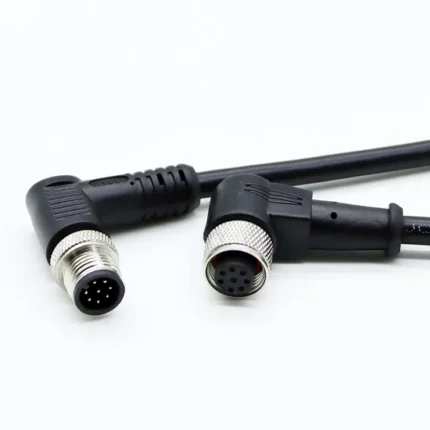
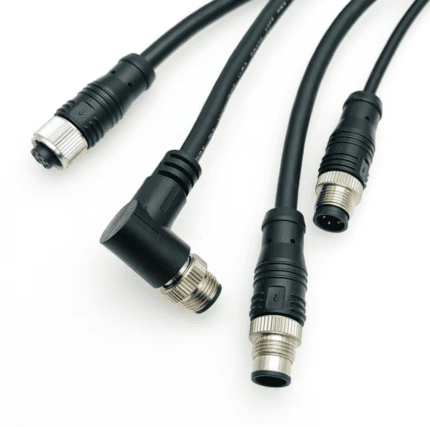
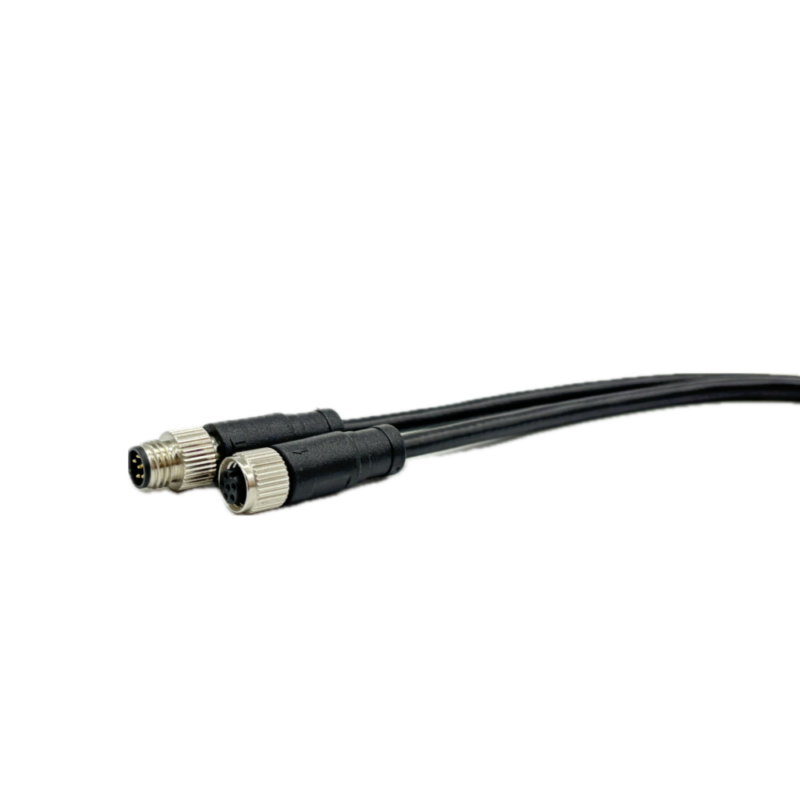
- M8 for the smallest devices and the tightest sensor heads where panel space is the constraint
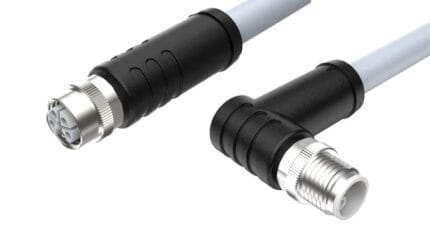
- M12 where the installer already stocks M12 tooling and the gland sizes match the enclosure
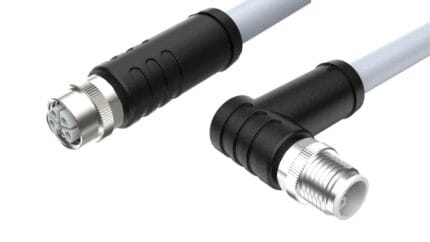
- IP67 mating faces described in IEC 63171-5 for the M8 and M12 industrial variants
- Hybrid mating faces described in IEC 63171-7 where a power contact sits alongside the data pair
Migration, not replacement
Almost nobody replaces a working 4-20 mA installation for the pleasure of it. The usual path is a new machine, a new line or a new building management layer where the sensors are specified as SPE from the start, and an SPE to industrial Ethernet gateway where the new segment has to talk to the old network. That is worth planning: the coding, the pinout and the power class have to match on both ends, and the cable you choose should be the one the gateway vendor tested against.
What needs confirming
Data rate against distance, PoDL power class, conductor cross-section, jacket compound, temperature range and ingress rating for this range are taken from published competitor data, not from a verified datasheet for our part. Where a number matters to your design, ask for the supplier document behind it.
You May Also Need
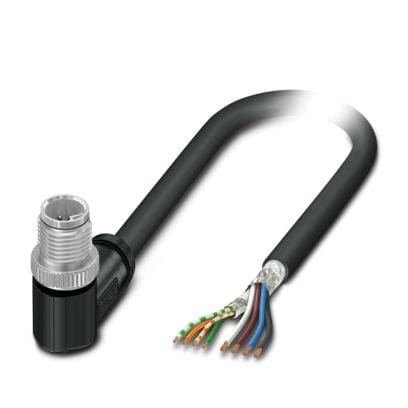
- M8 6-Pin A-Coded Right-Angle Sensor Cable
- M8 / M12 5-Pin Right-Angle PUR Sensor Cable (Gray)
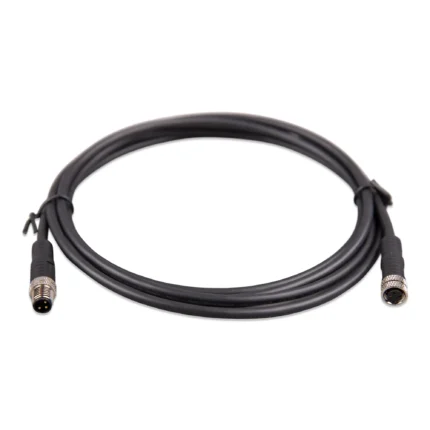
- M8 3-Pin A-Coded Circular Connector Sensor / Actuator Cable
Related Cable Ranges
Signal and Data Cables • Automotive Cable Wire Harness • Panel Mount Cable
Frequently Asked Questions
What jacket material does Single Pair Ethernet Cable in M8 and M12 Shells for use?
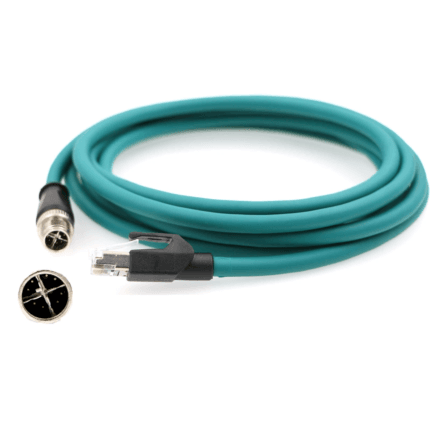
The jacket is Halogen-free PUR, green or black.
What lengths does Single Pair Ethernet Cable in M8 and M12 Shells for come in?
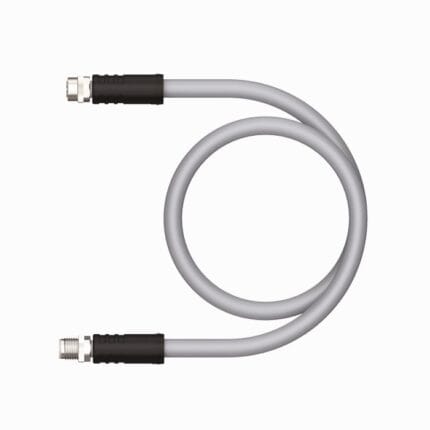
Build lengths are 1 / 2 / 5 / 10 / 25 m.
Which interface does Single Pair Ethernet Cable in M8 and M12 Shells for carry?
Single pair ethernet, 2 conductors.
| Interface | Single pair ethernet, 2 conductors |
|---|---|
| Shells offered | M8 and M12 |
| Mating face standards | IEC 63171-5 for IP67 industrial variants, IEC 63171-7 for hybrid (confirm applicable edition) |
| Data rate | Gigabit over short runs, 10 Mbps over long runs (pending supplier datasheet) |
| Reach | up to 1000 m at 10 Mbps quoted in competitor data, pending confirmation |
| Power over data line | PoDL, 50 to 52 W class quoted in competitor data, pending confirmation |
| Conductor cross-section | 0.34 to 2 mm2 depending on variant (pending supplier datasheet) |
| Jacket material | Halogen-free PUR, green or black |
| Temperature range | -40 to +85 C class (pending supplier datasheet) |
| Ingress rating | IP65 / IP67 class (pending supplier test report) |
| Standard lengths | 1 / 2 / 5 / 10 / 25 m |