10BASE-T1L Patch Cord for Single Pair Ethernet, T1 Industrial or M8
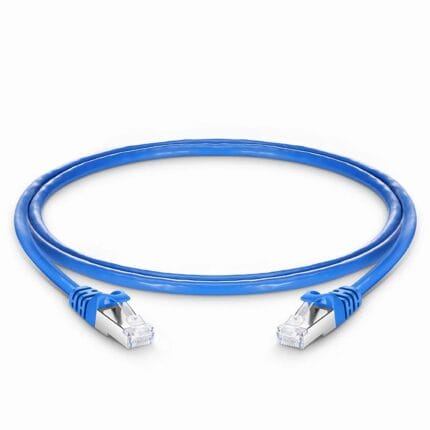
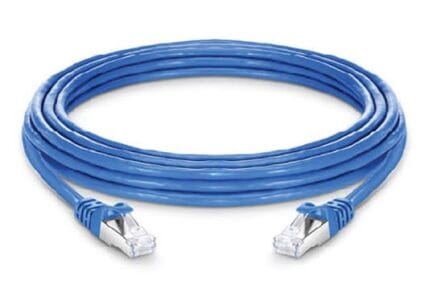
A 10base-t1l patch cord carries Ethernet over a single twisted pair, which is the change that makes the economics work at the edge of a building or a plant. Four-pair cable is expensive to buy, heavy to pull and awkward to terminate in a small sensor, and for a valve positioner or a room sensor it is far more cable than the data requires. 10BASE-T1L, defined in IEEE 802.3cg, runs 10 Mbps over distances quoted up to 1000 m on one pair, which puts devices that previously needed a gateway onto an IP network directly.
Power on the same pair
Power over Data Lines, specified in IEEE 802.3bu, puts DC on the same pair that carries the data. That is what removes the separate power drop to a sensor: one cord, one connector, one gland. Competitor data quotes 60 V DC and 4 A class for this family. Those numbers are not interchangeable with PoE figures and the delivered power depends heavily on the loop resistance of the run, so give us the length and the load before ordering and we will check the drop rather than quoting a class.
Connector options
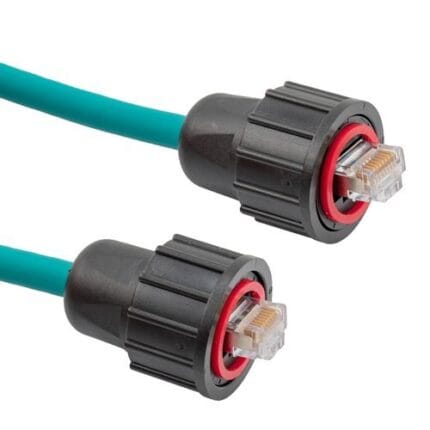
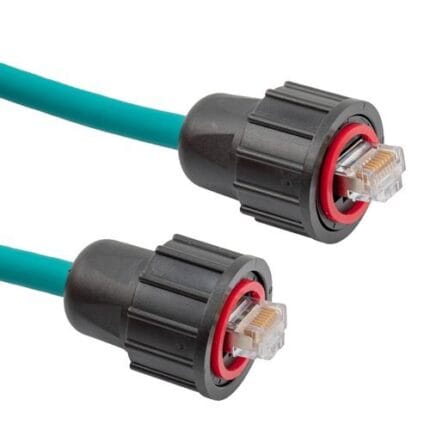
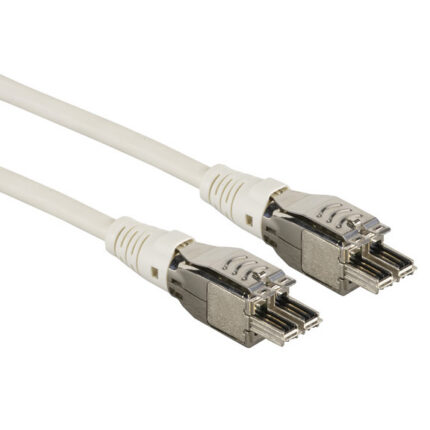
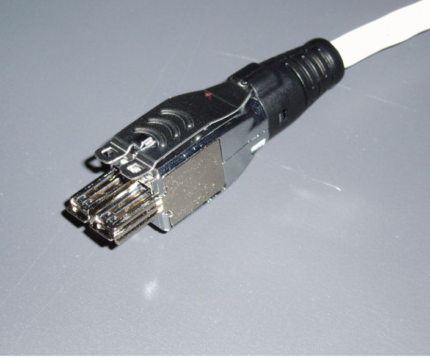
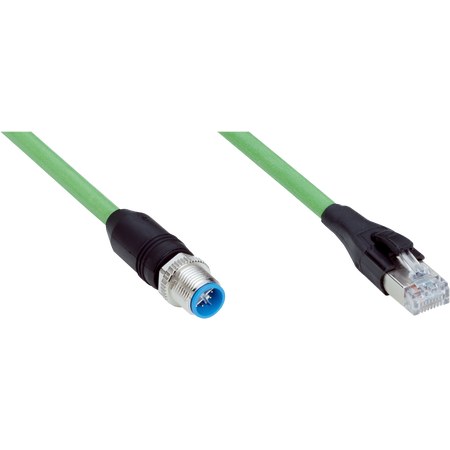
Two mating faces are offered. The T1 Industrial interface to IEC 63171-6 is a small, keyed, latching connector intended for single pair use; confirm the edition your project specifies. The M8 option suits installations already built on M8 sensor wiring, or where an existing IP67 harness has to be reused. Cords are offered at IP20 for panels and field cabinets and at IP67 for the device end, and mixing the two on one assembly is normal.
Where it is used
- Building automation trunks for HVAC actuators, valve drives and room sensors
- Lighting control segments where each luminaire becomes an addressable node
- Access control and metering points spread along a corridor or a riser
- Process instrumentation and IIoT sensor drops that were previously on a fieldbus
Installation reality
Reach and speed trade against each other, and the trunk is a bus, not a star: check the segment rules for the multi-drop topology before you lay out spurs. Keep the pair twist right up to the termination, since the balance that gives you the reach is destroyed by a couple of centimetres of untwisted conductor at the connector. Screened constructions need the screen bonded at the connector shell and the shell referenced to earth at one point at least, and the run should be kept out of the same conduit as variable speed drive output.
What we are confirming
Reach, conductor size, current and voltage ratings, temperature range, mating cycles, oil resistance and ingress ratings are quoted from public competitor data. Competitor literature also quotes a 600 MHz bandwidth figure for this cable family; that describes the cable rather than a 10BASE-T1L link, and we do not publish it until the supplier states what was measured. Ask for the datasheet for the exact construction.
Related Cable Ranges
Signal and Data Cables • Circular M8 M12 Cable • Panel Mount Cable
| Application standard | 10BASE-T1L per IEEE 802.3cg; PoDL per IEEE 802.3bu |
|---|---|
| Pairs | 1 pair, 22/7 or 26/7 stranding (pending supplier datasheet) |
| Screening | Screened or unscreened constructions offered |
| Reach | Up to 1000 m class (pending supplier datasheet and segment calculation) |
| PoDL rating | 60 V DC / 4 A class (pending supplier datasheet; voltage drop must be checked per run) |
| Connector options | T1 Industrial per IEC 63171-6, or M8; confirm applicable standard edition |
| Ingress options | IP20 for panels; IP67 for the device end (pending test reports) |
| Jacket material | PUR or XLPE; oil resistance per EN 60811-404 claimed in competitor data (pending test report) |
| Temperature range | -40 to +80 C (pending supplier datasheet) |
| Mating cycles | 1000 cycles class (pending supplier test report) |
| Standard lengths | 0.2 / 1 / 5 / 10 / 20 / 40 m (pending supplier confirmation) |