Cat6A Railway Patch Cord for Rolling Stock, RJ45 or M12 Ends
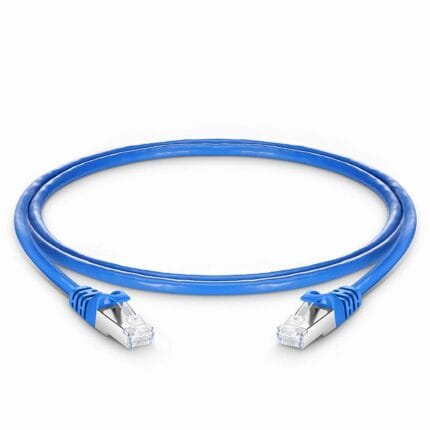
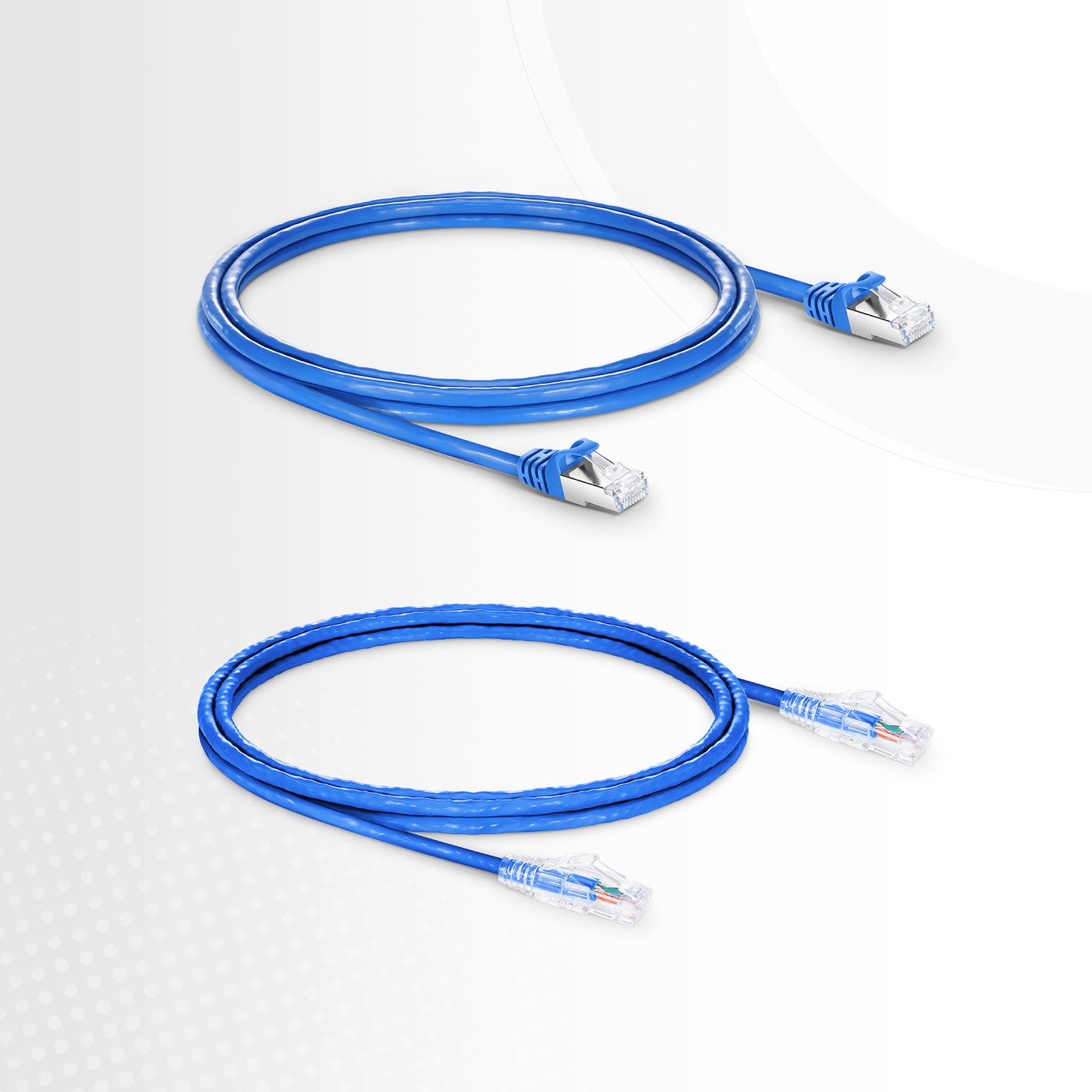
A Cat6A railway patch cord for rolling stock, built with screened S/FTP pairs and a halogen-free LSZH jacket to EN 45545-2 fire performance targets. RJ45 or M12 X-coded ends, made to your length and drawing.
Overview
A Cat6A railway patch cord is specified against two things an office cord
never meets: the fire behavior of every material in the finished assembly, and a service life
measured in decades of vibration. Onboard passenger information screens, CCTV cameras, ticket
validators and the vehicle control network have moved onto Category 6A links because the camera
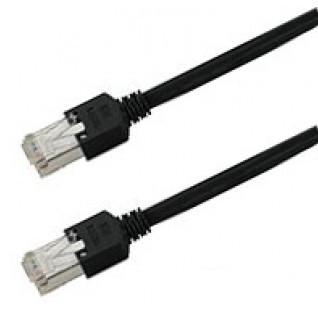
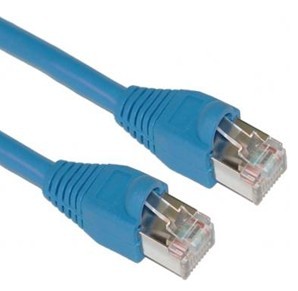
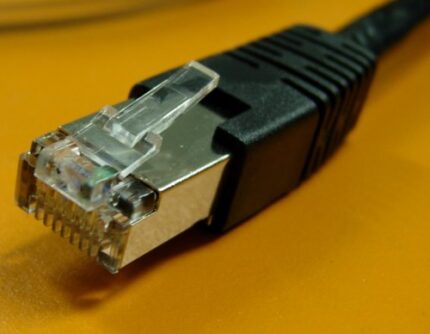
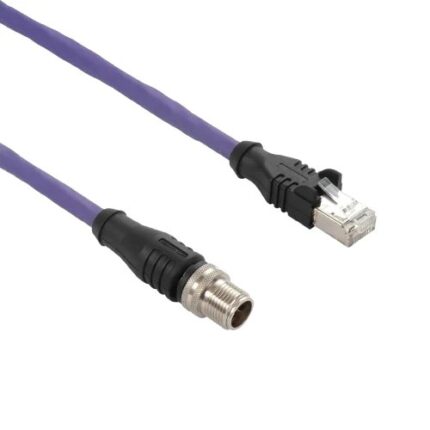
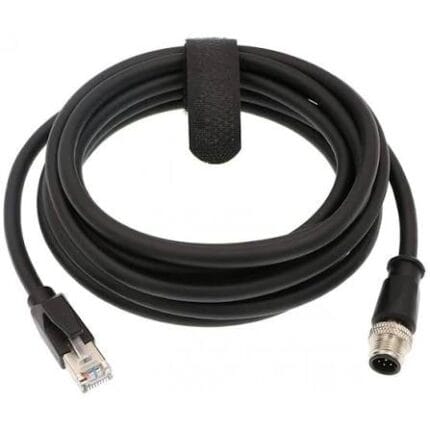
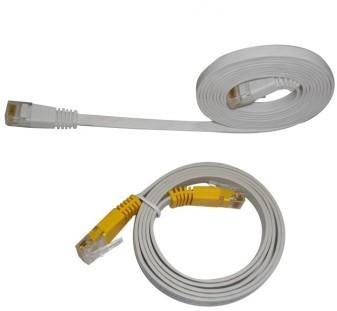
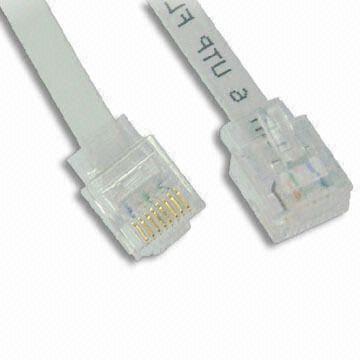
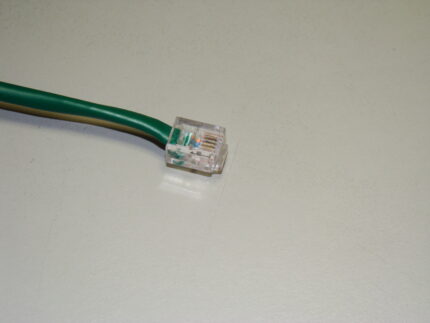
count per vehicle keeps rising. These cordsets are RJ45 to RJ45 as standard, with an M12 X-coded
variant where the equipment side has to be sealed against weather and washdown.
Key Specifications
| Category / class | Category 6A, Class EA per ISO/IEC 11801 (confirm against TIA-568.2-D for North American projects) |
|---|---|
| Construction | 4 x 2 x 26 AWG S/FTP: foil per pair plus overall braid (pending supplier datasheet) |
| Ends | RJ45 to RJ45 standard; M12 X-coded variant available |
| Jacket material | Halogen-free LSZH, RAL 6018 green |
| Jacket standards | Railway cable families EN 50306-1 and EN 50264-1 (pending supplier confirmation) |
| Fire performance target | EN 45545-2 requirement set R15, EL1A, HL1-HL3 (pending test report) |
| Supporting fire tests | IEC 60332-3-24 / -3-25 flame spread, IEC 61034 smoke density, EN 50305 toxicity (pending test reports) |
| Rated voltage | 90 V class (pending supplier datasheet) |
| Temperature range | -40 to +70 C (pending supplier datasheet) |
| PFAS status | PFAS-free claim requested from compound supplier, not yet confirmed |
| Vibration and shock | IEC 61373 category 1 class B quoted for rolling stock equipment (pending test report) |
| Equipment standard | EN 50155 operating temperature class stated per order drawing |
Fire performance is the specification, not a checkbox
EN 45545-2 is the European standard covering fire protection of railway vehicles. It assigns
requirement sets R1 to R26 by where a product sits in the vehicle, and hazard levels HL1 to HL3 by
how severe the operating case is. Electric cable falls under R15, and the hazard level you need is
set by the route profile and the evacuation concept.
| Classification | What it covers | Who sets it |
|---|---|---|
| R15 | The requirement set covering electric cable in railway vehicles | The standard, by product location |
| HL1 | Lower hazard level | Route profile and evacuation concept |
| HL2 | Medium hazard level | Route profile and evacuation concept |
| HL3 | Higher hazard level, typically long tunnels and underground sections | Route profile and evacuation concept |
The three properties tested are flame spread, smoke density and toxicity, commonly assessed to
IEC 60332-3-24 and -3-25, IEC 61034 and EN 50305 respectively. Competitor data for this
construction quotes the R15 set across HL1 to HL3. We treat that as the design target: published
competitor figures are not a test report for our bill of materials.
Vibration, and why the connector is the weak point
Equipment mounted on rolling
stock is qualified to EN 50155, which covers operating temperature classes and supply voltage
variation, with vibration and shock assessed to IEC 61373. Cables are not electronic equipment and
fall under the fire and material requirements instead, but they live in the same environment, and
the environment is what kills them. A cord that passes the fire test and then fails in service
usually fails at the connector: the latch wears, the strain relief loosens, or the braid loses
contact with the shell.
RJ45 or M12 X-code: the termination trade-off
Both are offered, and the choice is about where the cord ends rather than which is better.
| Factor | RJ45 | M12 X-coded |
|---|---|---|
| Sealing | Needs a sealed receptacle or a shroud | Sealed in the mated state, IP67 class quoted for the family |
| Retention | Latch, can be released by vibration or a tug | Threaded coupling, stays clamped |
| Faceplate space | Familiar, larger | Compact in a round shell |
| Field work | Every technician has the tooling | Needs the right coupling torque |
| Best fit | Equipment cubicles, saloon panels, dry interiors | Bogies, roof-mounted equipment, door pillars, exterior housings |
A common build is RJ45 in the cubicle and M12 X-code at the equipment, which is what the
X-coded variant of this cord is for. Where the whole link is M12, our Cat6A
M12 X-code link cable covers both ends.
Jacket and construction
The quoted construction is four screened pairs of 26 AWG in an S/FTP layout, foil on each pair
under an overall braid. The jacket is a halogen-free LSZH compound drawn from the railway cable
families EN 50306-1 and EN 50264-1, in RAL 6018 green so the data network stays distinguishable
from power and signaling in a crowded tray. Confirm which regime your project is approved under
before we freeze the compound.
Where it is used
- Passenger information displays and seat-back screens on commuter and intercity stock
- Onboard CCTV recording chains, where every added camera is another 6A run
- Ticket validators, gate lines and passenger counting nodes
- Vehicle control and diagnostic networks inside saloons and equipment cubicles
- Exterior and underframe equipment, using the M12
rail Ethernet cable alongside it
Installation reality
Screened pairs in a vehicle only behave if the screen is terminated properly. Bond the braid to
the connector shell at both ends and land the shell on a clean, painted-through chassis point, or
the screen stops being a screen. Keep a generous bend radius at the connector exit, because a cord
in a door pillar or a seat-back box gets flexed every time the panel is opened for service.
What we are confirming
Voltage rating, temperature range, conductor gauge and every fire and smoke figure above come
from public competitor data rather than from a verified datasheet for our part. Ask us for the
material declaration and the test report for the construction you are buying.
How to specify your build
- Ends — RJ45 to RJ45, M12 X-coded to RJ45, or M12 both ends.
- Fire requirement — the hazard level and standard edition your project is
approved under. - Length and routing, including whether the run passes a door pillar.
- Quantity, and whether this is a prototype or a series order.
Typical applications for this Cat6A railway patch cord
- New build and refurbishment programs on commuter and intercity stock
- CCTV retrofits where a camera is added to every vehicle in a set
- Door and brake control cubicles on the vehicle network
- Interior harness programs, alongside our railway
rolling stock harness
Workmanship and testing
Build standard for Cat6A Railway builds is IPC/WHMA-A-620 Class 3 under ISO 9001, with terminations from 32 to 12 AWG. continuity and pinout are checked on every Cat6A unit before packing, and seal checking is quoted whenever an ingress rating is on the drawing.
RoHS and REACH declarations are provided per project together with the agreed test reports; the documentation scope is listed under certifications and compliance. If your drawing specifies a UL style, we build to that drawing and supply the UL reference with the shipment instead of substituting an equivalent. Where this build needs an overmold, the tool is designed, cut and maintained in our own shop under in-house mold making and overmold tooling, and it is never used for another customer’s program. The wider context is covered under cable assemblies for industrial automation and robotics.
Custom builds and ordering
On Cat6A Railway builds, prototype lots run from 1 to 50 pcs and leave in 3 working days. Production runs of 500 pcs and up ship 14 working days after approval. Tooling not already held adds around 10 working days. Cat6A OEM and ODM shipments carry your part number and labeling, and material certificates and first-article reports are on offer.
Related rail and industrial cords
- Cat6A M12 X-Coded Patch
Cord, 8-Pin M12 to RJ45, PUR - Cat6A M12 X-Code Link Cable,
X-Coded 8-Pin Both Ends - M12 Rail Ethernet Cable for
Rolling Stock and Bus Networks - M12 Rail Signal Cable for Door
Control and Brake Sensors - Railway Rolling Stock
Harness Built to EN 45545-2 Cable Specifications
Full range: Ethernet
cable and patch cords.
Frequently Asked Questions
Which hazard level do I need?
That is set by the route profile and the evacuation concept, not by the cable. Establish it
before you specify the compound, because it drives the material declaration.
RJ45 or M12?
RJ45 for dry interior cubicles and panels where every technician has the tooling. M12 X-coded
where the equipment end is sealed, on a door pillar, or exposed to weather and washdown.
Are the fire figures on this page your test results?
No. The R15 set and the supporting flame, smoke and toxicity test families are the design
target quoted from competitor data and from the standards. We supply the material declaration and
test report for the construction you buy.
Why is the jacket green?
RAL 6018 green keeps the data network distinguishable from power and signaling in a crowded
tray. Other colors can be specified if your identification scheme needs them.
Can you build to EN 50155?
EN 50155 applies to electronic equipment; cable falls under the fire and material requirements.
Tell us which class your project specifies and we will confirm the compound and the test evidence
against it.
| Category / class | Category 6A, Class EA per ISO/IEC 11801 (confirm against TIA-568.2-D for North American projects) |
|---|---|
| Construction | 4 x 2 x 26 AWG S/FTP: foil per pair plus overall braid |
| Ends | RJ45 to RJ45 standard; M12 X-coded variant available |
| Jacket material | Halogen-free LSZH, RAL 6018 green |
| Jacket standards | Railway cable families EN 50306-1 and EN 50264-1 class |
| Fire performance target | EN 45545-2 requirement set R15, EL1A, HL1-HL3 |
| Supporting fire tests | IEC 60332-3-24 / -3-25 flame spread, IEC 61034 smoke density, EN 50305 toxicity |
| Rated voltage | 90 V class |
| Temperature range | -40 to +70 C class |
| PFAS status | PFAS-free claim requested from compound supplier, not yet confirmed |
| Vibration and shock | IEC 61373 category 1 class B quoted for rolling stock equipment |
| Equipment standard | EN 50155 operating temperature class stated per order drawing |