Nano-D Space Harness Built to Drawing for CubeSat Internal Wiring
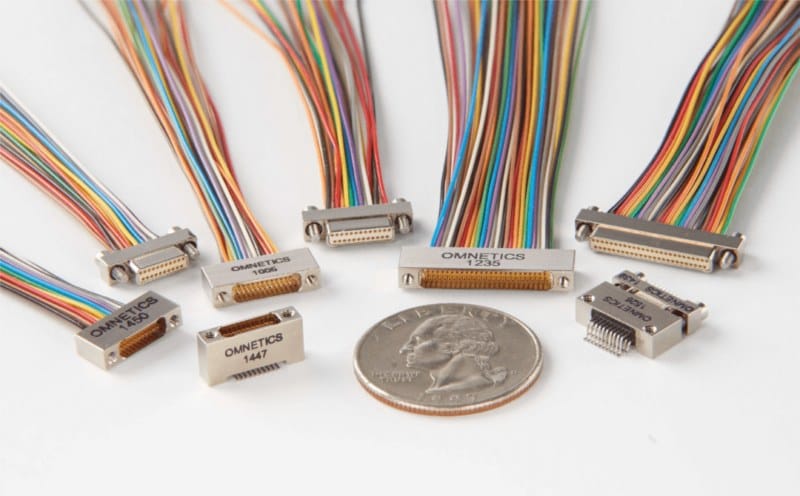
A Nano-D space harness built to drawing for CubeSat and small launch vehicle internal wiring, with exact lengths, breakouts positioned against the mechanical model, low outgassing materials, and serialized build records held against every unit. Send the pinout and the mechanical model.
Last updated: 13 September 2026
Overview
Inside a small satellite there is no room for a service loop and no opportunity to re-work a loom after the integration. A Nano-D space harness is therefore built to the exact length on the drawing, with breakouts positioned against the mechanical model rather than estimated, and with the connector family chosen for mass and volume before anything else. We build Nano-D and Micro-D style twisted-pin contact assemblies from 9 to 100 positions, plus the coax and twisted pair legs that a payload or attitude control board needs.
Key Specifications
| Build Type | Build to drawing or build to sample |
|---|---|
| Connector Style | Nano-D and Micro-D style twisted-pin contacts |
| Positions | 9 to 100 positions, per drawing |
| Wire | ETFE insulated, M22759/33 style or nominated equivalent |
| Outgassing | Low outgassing materials per ASTM E595 criteria when specified |
| Leg Types | Discrete signal, coax and twisted pair mixed |
| Traceability | Serialized build records and lot traceability on materials |
| Testing | Continuity, insulation resistance, dimensional check |
No service loop, no second chance
A CubeSat is defined by its volume, and the harness has to fit into what is left after the boards, the batteries and the structure have taken their share. Two practical rules follow from that. Lengths are exact, so a measurement error at the drawing stage becomes an assembly that will not close. And the loom is installed once, usually before the panels go on, so every termination has to be right the first time. That is why we photograph each build stage and hold the record against the serial number rather than trusting a final electrical check.
A space harness is qualified against the environment rather than against a data sheet. These are the five stresses that decide how we build one:
| Stress | What fails | What the build does about it |
|---|---|---|
| Launch vibration | Unsupported branch mass and heavy connector bodies | Short unsupported lengths, strain relief at every exit, branch mass kept low |
| Thermal cycling in vacuum | Differential expansion between materials opens a joint | Materials with compatible behavior and strain relief instead of rigid potting where movement is expected |
| Outgassing in vacuum | Vapor condenses on optics and cold surfaces | Low outgassing materials throughout, screened per ASTM E595 when your program names it |
| Handling during integration | Bent pins and cracked backshells | Protective caps and a documented packing method for transit |
| No repair access | A fault found late becomes a program level problem | Serialized inspection records so any fault can be traced to a build step |
Outgassing is a bill of materials property
As with any vacuum build, outgassing is a property of the whole bill of materials rather than of the wire. Insulation, sleeving, lacing, marker stock, adhesive and potting compound are all selected to the same requirement. Where your program names ASTM E595 as the screening method we quote to it and pass through the supplier data we hold, and where it names a different flow we quote to that instead. We do not invent a pass figure to fill a line on a quotation.
What we do not assume
Space programs carry their own screening and qualification flow, and we do not claim a qualification level we have not been assessed against. If your project specifies an EEE parts screening level, a vibration or thermal cycling profile, or a particular first article inspection format, send that document with the enquiry and we will quote to it. Where the flow is not yet defined, we will say so in the quotation rather than filling the gap with a stock phrase.
Build records and inspection
- Termination and potting steps recorded against the harness serial number
- Continuity and insulation resistance measured on every circuit
- Dimensional check against the drawing before release
- Photographic record of each build stage available on request
- Lot traceability on wire, contacts and sleeving
Typical applications for this Nano-D space harness
- CubeSat and small satellite internal wiring
- Launch vehicle stage and upper stage avionics looms
- Payload, attitude control and power distribution links
- Ground support and flat sat harnesses built to the flight drawing
- Replacement looms reproduced from a qualification unit
What to send with the enquiry
- The pinout table, with connector part numbers or mating face photographs.
- The mechanical model, or a measured sample for a replacement build.
- Conductor gauge and type per leg, including which legs are coax or twisted pair.
- Exact branch lengths and breakout positions, because there is no service loop here.
- Any material or screening specification your program imposes on the loom.
Workmanship and ordering
Workmanship follows IPC/WHMA-A-620 Class 3 and the line runs under ISO 9001. Conductors from 32 to 12 AWG are in range. Continuity and pinout are verified on 100% of units before packing; if you specify an ingress rating, seal checking on the batch can be quoted.
The prototype minimum is 5 pcs, out in 3 working days. Production starts at 500 pcs and ships 14 working days from approval. Tooling for a body we do not stock adds about 10 working days. Your part number, your label, your packaging – with material certificates and first-article reports on request.
Frequently Asked Questions
Can you build to a qualification flow we supply?
Yes, and that is the best way to start. Send the screening level, the environmental profiles and the first article format with the enquiry and we will quote to them.
Do you hold a space qualification?
No. We build to the flow your program defines and document what we did. We do not claim an assessment we have not been through.
How exact are the lengths?
To the drawing, with breakouts positioned against the mechanical model. Send the model or a measured sample and we build to it.
What is the prototype quantity?
Minimum for a prototype run is 5 pcs, out the door in 3 working days. Volume production starts at 500 pcs and ships 14 working days after you approve the sample.
Related assemblies
- MIL-DTL-83513 Micro-D and MIL-DTL-32139 Nano-D Cable
- Micro-D Shielded Jumper with Twisted Pair and Coax Mix for Avionics
- Lightweight UAV Wire Harness for eVTOL Propulsion and Avionics Bays
- MIL-C-26482 Series I Military Cable Assembly
- MIL-DTL-5015 Circular Power Cable Assembly
- Rugged RJ45 IP68 Military Ethernet Cable
Full range: Custom Wire Harnesses.
| Build Type | Build to drawing or build to sample |
|---|---|
| Connector Style | Nano-D and Micro-D style twisted-pin contacts |
| Positions | 9 to 100 positions, per drawing |
| Wire | ETFE insulated, M22759/33 style or nominated equivalent |
| Outgassing | Low outgassing materials per ASTM E595 criteria when specified |
| Leg Types | Discrete signal, coax and twisted pair mixed |
| Traceability | Serialized build records and lot traceability on materials |
| Testing | Continuity, insulation resistance, dimensional check |