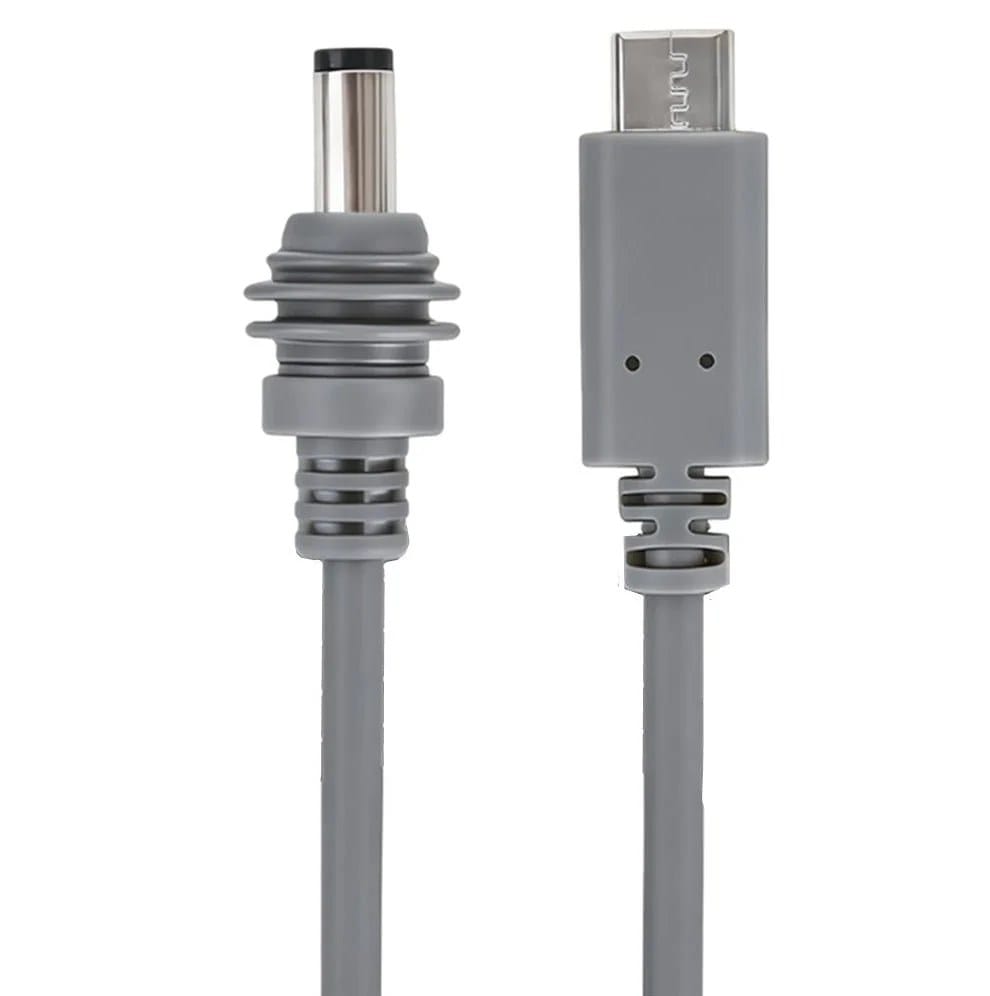
IP67 DC to USB-C Cable, 5.5×2.1mm Barrel Power Lead 0.5 m to 5 m
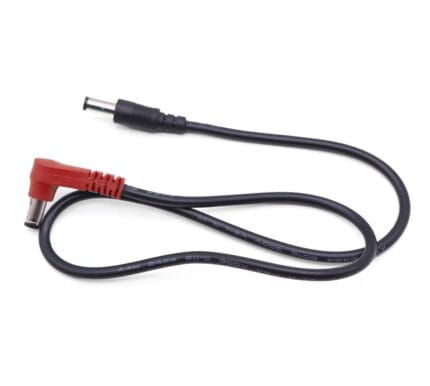
A dc to usb-c cable that feeds USB-C loads straight from a 12 V or 24 V rail. Sealed 5.5×2.1mm barrel on the source side, straight USB-C plug on the load side, in 0.5 m, 2 m, 3 m and 5 m. No inverter, no adapter.
Last updated: 13 September 2026
Overview
Off-grid and vehicle systems distribute power on a DC rail, while more of the loads on that rail
arrive with a USB-C input every year. This DC to USB-C cable bridges the two: the
round connector plugs into a 5.5×2.1mm source such as a battery box, a solar generator or a fused DC
panel, and the USB-C end feeds the load directly, with no inverter and no separate adapter inside the
enclosure. The sealed coupler is on the barrel side, because that is the end that lives outside the
box.
Key Specifications
| Connector A | DC barrel plug 5.5×2.1mm, sealed coupler, center positive |
|---|---|
| Connector B | USB-C plug, straight |
| Ingress rating | IP67 on the barrel side only (test report pending) |
| Conductor | 20 to 18 AWG depending on length |
| Lengths | 0.5 m / 2 m / 3 m / 5 m |
| Max power | Up to 100 W depending on the connected device and source |
| Polarity | Barrel center positive |
| Applications | Mini PCs, 5G routers, single-board computers, cameras |
Which devices this DC to USB-C cable fits
The rule is the input label on the device, not the shape of the port. A USB-C socket tells you nothing about the voltage the device expects,
so read the rating plate before you design this into a system.
| Load | What the input usually wants | Fit |
|---|---|---|
| 5G router, CPE, hotspot | Wide range, often 5 V to 20 V over USB-C | Good fit — check the startup current |
| Mini PC, single-board computer | Usually 12 V or a 20 V PD profile | Check the profile; a 20 V device will not run from a 12 V rail |
| USB-C camera, small monitor | 5 V to 15 V over USB-C | Good fit on short runs |
| Power bank, handheld | 5 V to 20 V, negotiated | Good fit |
| Laptop, mobile workstation | 20 V and up, sometimes 28 V EPR | Only if the rail and the source can hold it — ask first |
Identifying what you actually have
Before ordering, three things settle whether this is the right lead and which length you need.
- Read the device input label. It prints either a single voltage or a negotiated
range. If it says 20 V, a 12 V battery rail will not run it. - Measure the source outlet. A caliper across the barrel tells you whether it is
5.5×2.1mm or one of its neighbors, and a meter tells you the polarity — center positive on this
build. - Work out the distance. The one-way distance from source to load, as installed.
That plus the load current decides the conductor.
If the device takes its power over USB-C with no negotiation — a dumb 5 V load, for example — say so
in the enquiry, because the termination at the USB-C end changes.
Why the usual adapter stack fails
The common alternative is an inverter feeding the original wall adapter, or a 12 V lighter adapter
with a USB-C output, both sitting inside a sealed enclosure. That arrangement fails for predictable
reasons. The inverter runs hot in a box that was not designed to shed heat, and heat is what kills the
capacitors. The lighter adapter is a friction fit that vibrates loose on a vehicle or a boat. And every
extra conversion step between the battery and the load throws away power you already paid for in panel
and battery capacity. A single cable from the DC rail to the device removes all three of those, which
is why the failure rate drops when installers switch.
Sealing is on the round side
Know which end needs to be weathertight before ordering. The barrel side carries the sealed coupler
with a compression gasket, because that is the end that lives outside a box or in a damp cabinet. The
USB-C plug on the load side is a standard unsealed plug; it is meant to sit inside a housing or at a
device that is already protected. If both ends are exposed, put the joint inside an enclosure instead of
relying on the cable. Ingress ratings such as IP67 come from IEC 60529 as an industry-wide definition —
the first digit is solid ingress, the second is liquid — and a rating applies to a mated pair, not to an
open port. The rating your assembly is built and verified to is the one stated on your drawing.
Sizing the run
Keep the run as short as the layout allows. Voltage drop on a 12 V rail eats the margin that the
USB-C device expects, and the symptom is a load that reboots under peak demand rather than one that
refuses to start. For fixed installs, mount the DC source within a meter or two of the load and use the
longer lengths only for low-power devices. Send us the one-way distance and the load current and we
will size the conductor for you.
- 0.5 m — device mounted alongside the battery box or fused panel
- 2 m to 3 m — device on the same wall or rack as the distribution point
- 5 m — low-power loads only, or a heavier conductor; tell us the current first
Typical applications for this DC to USB-C cable
- Off-grid cabins and vans feeding USB-C routers and mini PCs straight from the house battery
- Solar generator and battery boxes with a 5.5×2.1mm outlet, extended with our IP67 waterproof DC extension cable
- Field and film kits where one battery box has to serve cameras, recorders and a 5G uplink
- Marine and RV installations, with a DC barrel pigtail cable on the permanent side of the panel
- Outdoor enclosures where the barrel enters through a gland and the USB-C end stays dry inside
How to specify your build
- Length — 0.5 m, 2 m, 3 m or 5 m, or a custom length.
- Load current and voltage — what the device draws and expects.
- Source side — barrel plug or socket, straight or right-angle.
- USB-C orientation — straight, or right-angle where the device sits against a wall.
- Jacket — standard PVC, or a UV resistant compound for exterior runs.
- Quantity, and whether samples are needed first.
Workmanship and testing
Workmanship follows IPC/WHMA-A-620 Class 3 and the line runs under ISO 9001. Conductors from 32 to 12 AWG are in range. Continuity and pinout are verified on 100% of units before packing; if you specify an ingress rating, seal checking on the batch can be quoted.
Related DC power leads
- IP67 Waterproof DC Extension Cable 5.5×2.1mm Male to Female
- USB C to DC 5521 Right Angle Cable
- 14 AWG DC Barrel Pigtail Cable 5.5×2.1mm to Bare Wire
- USB-C PD Trigger Power Cable to DC 5.5×2.1mm Barrel
- Mini UPS Splitter Cable DC 5.5×2.1mm
Full range: DC Plug Power Cable.
Frequently Asked Questions
Will a 12 V battery run my 20 V device?
No. Power over USB-C is negotiated, and a device built for a 20 V profile will not charge from a 12 V rail. Match the rail to what the device actually accepts.
Is the whole cable IP67?
No — the sealed coupler is on the barrel side. The USB-C plug on the load side is a standard unsealed plug and is meant to sit inside a protected housing.
Can I use this to charge a laptop?
Sometimes, and only if the rail voltage and the source can hold the profile the laptop asks for. Tell us the model and the rail voltage and we will tell you before you order.
How long can the run be?
Stock lengths go to 5 m, and the longer lengths suit low-power loads. For a high-current device, keep it short or move the source closer — drop on a low-voltage rail is what makes loads reboot under peak demand.
What is the minimum order?
Minimum for a prototype run is 5 pcs, out the door in 3 working days. Volume production starts at 500 pcs and ships 14 working days after you approve the sample.
| Connector A | DC barrel plug 5.5×2.1mm, sealed coupler, center positive |
|---|---|
| Connector B | USB-C plug, straight |
| Ingress rating | IP67 on the barrel side only class |
| Conductor | 20 to 18 AWG depending on length |
| Lengths | 0.5 m / 2 m / 3 m / 5 m |
| Max power | Up to 100 W depending on the connected device and source |
| Polarity | Barrel center positive |
| Applications | Mini PCs, 5G routers, single-board computers, cameras |
Related products
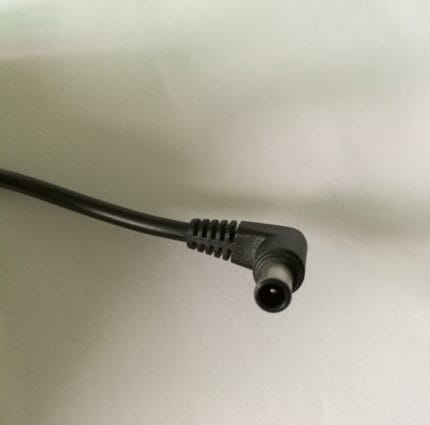
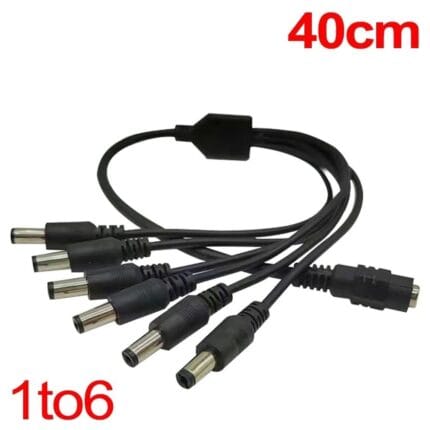
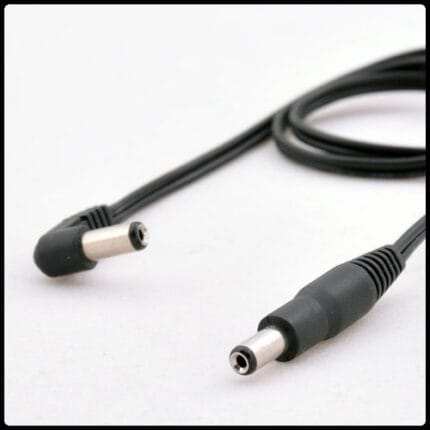
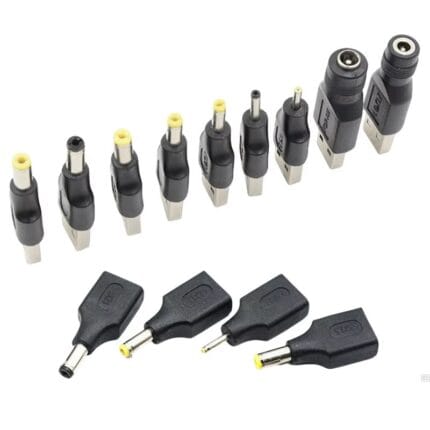
DC Barrel Adapter Kit – 5521 / 5525 / 4017 / 3513 / 1.35mm / 2.5mm, 6-Piece
A dc barrel adapter kit covering 5.5x2.1, 5.5x2.5, 4.0x1.7, 3.5x1.35 and 2.5 mm in six molded female-to-male adapters, so one supply covers a mixed estate. Center positive throughout, with nickel-plated brass contacts. Measure the socket pin with a caliper before ordering: the outer shell is identical across three of these five sizes. Bagged with a size card, or boxed with a printed insert.