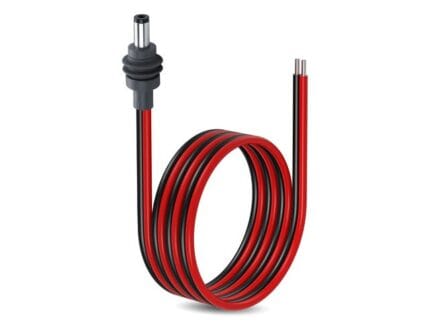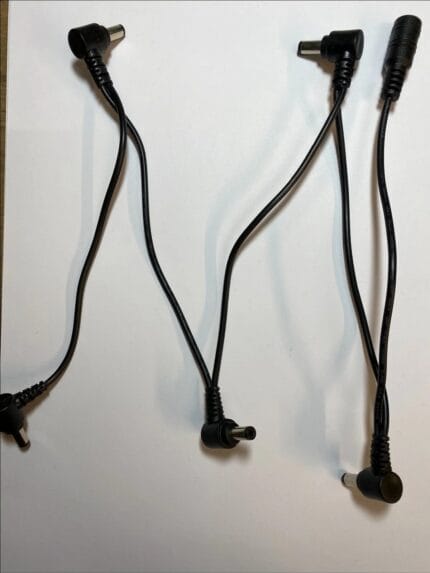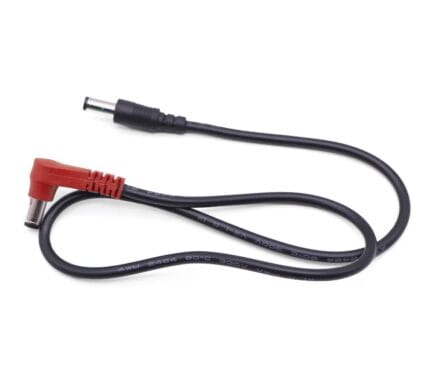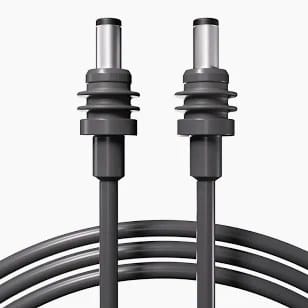
USB C to DC 5521 Right Angle Cable
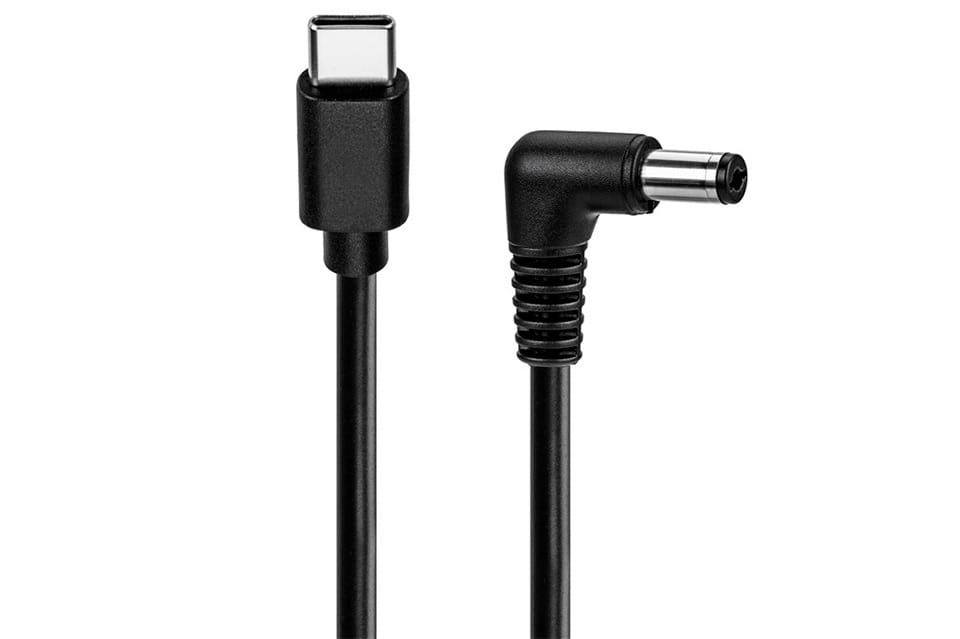
A dc 5521 right angle cable takes a USB-C PD source to a 5.5 x 2.1 mm barrel device, with an L-shaped plug that sits flush behind monitors, mini-PCs and rack gear. Center positive, custom length.
Overview
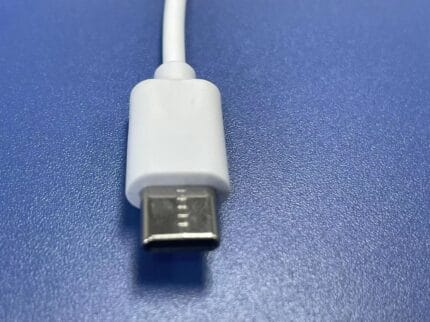
A dc 5521 right angle cable bridges the two power worlds that currently coexist on every desk: a USB-C PD source and a device that still takes a 5.5 x 2.1 mm barrel jack. One end is a USB Type-C plug with the CC lines active, the other is an L-shaped 5.5 x 2.1 mm male barrel that lies flat against the equipment instead of standing out behind it. That geometry is what makes it usable behind a monitor on a low-profile arm, in a shallow rack shelf, or against a wall where a straight plug would need more depth than the gap allows. Output depends on what the source negotiates; the common contracted voltages are 5, 9, 12, 15 and 20 V.
Key Specifications
| Connector A | USB Type-C male |
|---|---|
| Connector B | DC 5.5 x 2.1 mm male plug (right angle / L-shaped) |
| Jacket | Black PVC |
| Color | Black |
| Output | 5 V / 9 V / 12 V / 15 V / 20 V PD (depends on host) |
| Polarity | Center positive (standard) |
| Conductor | Stranded copper, size stated per your drawing |
| Plug Style | L-shaped barrel, exit direction set at build time |
| Application | PD-powered routers, mini-PCs, monitors, LED strips |
What voltage will actually come out of the barrel?
This is the question to settle before ordering, and the honest answer is: whatever the source and the cable agree on. USB Power Delivery works by negotiation – the source advertises what it can supply, the sink requests a contract, and the voltage is set by that exchange. A lead with no active circuitry in it gives you 5 V. To get 9, 12, 15 or 20 V at the barrel you need a trigger that requests the contract on the device side.
| Build | How the voltage is set | What arrives at the barrel | Choose it when |
|---|---|---|---|
| Passive USB-C to barrel | Fixed 5 V default from the source | 5 V | The load really is 5 V and the current is modest |
| Trigger set to a fixed voltage | A trigger requests one contract, for example 12 V | The voltage the trigger was built for | One known load, one known voltage, no variation |
| Selectable trigger | A switch or a resistor selects the requested contract | Whichever voltage is selected | Field service kits and bench work with mixed loads |
If your device needs a specific voltage above 5 V, say so at the inquiry and we will build the trigger to that contract rather than leaving it to the source default. Our USB-C PD Trigger Cable to DC 5.5×2.1mm is the dedicated version of this, and the USB Power Delivery specification defines the contracts a source may offer.
Current is the other half of the negotiation
A router that needs 12 V at 1 A is asking for 12 W, and almost any PD source can do that. A mini-PC that needs 12 V at 3 A is asking for 36 W, which is a smaller set of chargers and one that expects the cable to identify itself correctly. Work out the wattage first, then check that the source you plan to use advertises a contract at that wattage and not just a headline number.
- Read the device label for voltage and current, not just voltage.
- Check the charger contract list, which is printed on the body in small print.
- Measure under load. A source at its limit will sag or renegotiate, and the device will reboot.
- Size the conductor for the current, because the drop is on top of whatever the source already lost.
Why the L-shaped plug, and what to specify about it
A right-angle plug removes the plug body and the cable bend radius from the depth needed behind the equipment. In exchange, it has to be molded for the direction the cable should exit, because an L-shaped plug only goes one way. Measure the gap, decide which way the cable has to run once it leaves the jack – left, right, up or down as installed – and state that on the drawing. Getting it wrong is not a wiring error, but it puts the cable exactly where there is no room for it.
The second consideration is strain. With the cable leaving sideways, a pull loads the plug body in shear against the panel rather than levering it out of the jack, which is why right-angle builds survive better in equipment that gets moved.
Where a dc 5521 right angle cable is the right call
- Monitors and mini-PCs on low-profile mounts where the barrel jack faces the wall
- Rack shelves and cabinet gear with limited rear clearance
- USB-C power banks feeding 12 V routers, cameras and LED controllers in the field
- Desktop consolidation, where one PD charger replaces several wall adapters
- Retrofit of legacy 12 V gear that outlived its original adapter
- Installations that also need a sealed joint, where our IP67 DC to USB-C Cable is the outdoor-rated alternative
What to send with the inquiry
- Voltage and current the load needs, from its rating label.
- Whether a trigger is required, and at what voltage.
- Source you plan to use, if you know it, so we can check the contract list.
- Exit direction of the right-angle plug as installed.
- Length and whether the run is inside equipment or across a room.
- Quantity, and whether this is a prototype or a production order.
Workmanship and testing
USB C builds are assembled and inspected to IPC/WHMA-A-620 Class 3 criteria, with ISO 9001 as the quality system over 32 to 12 AWG work. continuity and pinout are checked on every USB unit before packing, and seal checking is quoted whenever an ingress rating is on the drawing.
Material declarations against RoHS and REACH are issued per project, alongside the dimensional and electrical reports agreed at quotation; see certifications, compliance and material declarations. Where your drawing names a UL style or another approval, the build follows your drawing and ships with the supporting document rather than a claim of our own. Right-angle exits are molded rather than bent, following the exit forms and tooling described under right-angle cable assembly forms and tooling. The wider context is covered under our marine and outdoor work. Tooling for this build is cut in our own tool room and belongs to your program, so a repeat run years later starts from the same tool.
Custom builds and ordering
USB C prototype builds start from 1 to 50 pcs and are out in 3 working days; production is quoted from 500 pcs at 14 working days after approval. Tooling not already held adds around 10 working days. Private-label USB runs ship under your part number and labeling, and material certificates and first-article reports are on offer.
What is listed here for USB C builds is the industry-standard definition, not a measurement we took on a finished part. What your assembly is built and verified to is what your drawing states, confirmed against the supplier datasheet before a quote goes out.
Related USB-C and DC power leads
- USB-C PD Charging Cable 240 W PD 3.1 EPR
- USB-C PD Trigger Cable to DC 5.5×2.1mm
- DC 4017 Right Angle Power Cable
- DC 4017 Straight to Right Angle Combo Cable
- Starlink Mini DC Extension Cable – DC 5.5×2.1mm
- Mini UPS Splitter Cable DC 5.5×2.1mm
Full ranges: DC plug power cable and signal and data cables.
Frequently Asked Questions
Will this give me 12 V from any USB-C charger?
No. Without a trigger you get the 5 V default. A trigger built to request a 12 V contract is needed, and the charger has to offer that contract.
Can I use it with a power bank?
Yes, if the power bank advertises the contract your device needs. Check the output list on the bank rather than assuming it matches the wall charger.
Does it matter which way the right-angle plug exits?
Yes. The plug is molded for one exit direction, so tell us which way the cable must run in the installed position and we will set the mold accordingly.
Is the barrel center positive?
Yes, as standard. If your device is center negative, say so at the inquiry and we will build it reversed rather than have you use an adapter.
| Connector A | USB Type-C male |
|---|---|
| Connector B | DC 5.5 x 2.1 mm male plug (right angle / L-shaped) |
| Jacket | Black PVC |
| Color | Black |
| Output | 5 V / 9 V / 12 V / 15 V / 20 V PD (depends on host) |
| Application | PD-powered routers, mini-PCs, monitors, LED strips |
| Polarity | Center positive (standard) |
| Conductor | Stranded copper, size stated per your drawing |
| Plug Style | L-shaped barrel, exit direction set at build time |