Drone Battery Power Harness, 12 AWG Silicone with T-Plug Connectors
A drone battery power harness is the high-current lead that links a flight battery to the ESC or power distribution board, built so voltage drop and heat stay under control at burst current.
Overview
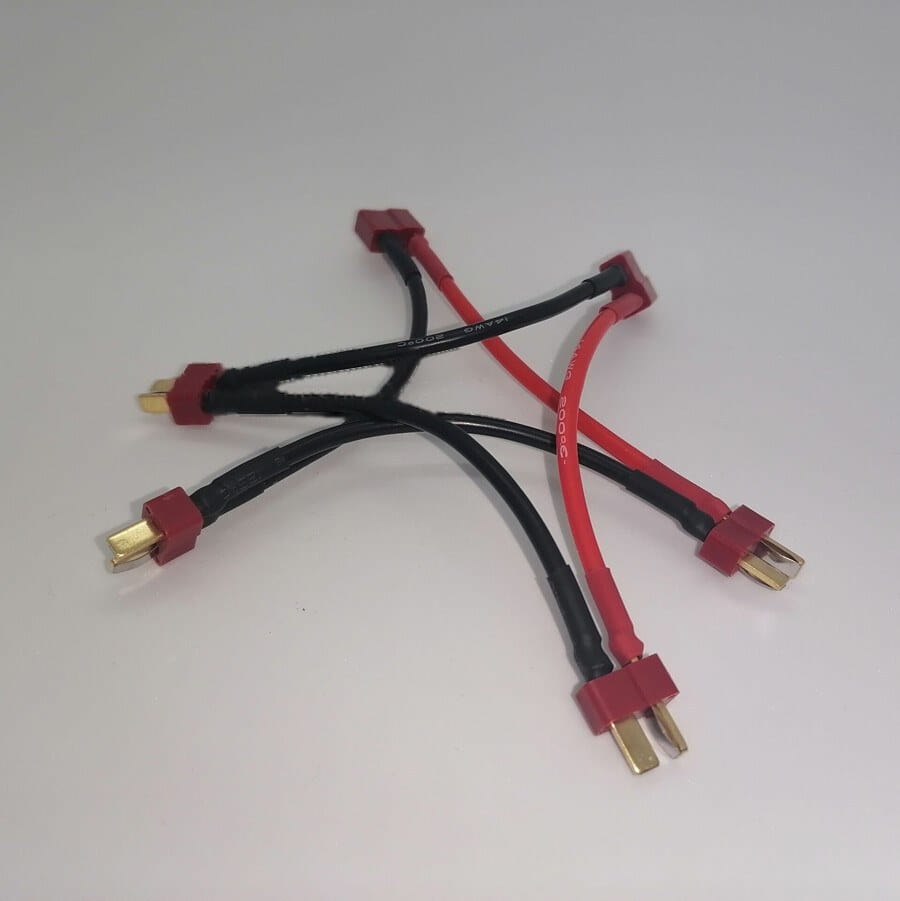
A drone battery harness is one of those parts that looks like a simple cable until it is the reason a pack sags under load. This version is built around what the photographed leads show: 12 AWG silicone-jacketed wire printed with a 200 °C rating, terminated in red T-plug (Deans style) connectors, cut and assembled to your drawing.
Where the harness sits in the power path
The run starts at the pack’s discharge leads and ends at the ESC input or the power distribution board. The same lead style covers three jobs: the main power run, the charge lead that reaches a balancing charger, and the parallel link that ties two packs together. Each job stresses the harness differently, which is why conductor size and connector choice are specified rather than assumed.
T-plug (Deans style) connectors, mated both ways
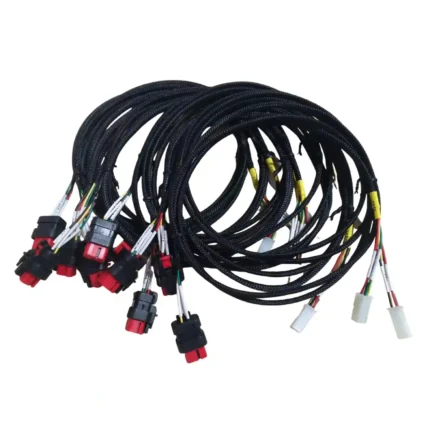
The leads in the photo use the red T-plug family in both polarities, so a single drawing can cover the pack side and the equipment side of the run. The family is widely used on existing air and ground builds; if your fleet has standardized on a different connector, the harness is built to that drawing instead. What does not change is the rule that one airframe uses one connector family, because mixed families are the usual cause of reversed or mis-mated packs.
12 AWG silicone wire, rated 200 °C
The wire on the photographed leads is printed 12 AWG with a 200 °C temperature rating, which is exactly what you want next to ESCs and battery terminations: silicone stays flexible in cold weather and does not shrink back when a solder joint is made nearby. The fine stranding keeps DC resistance low on short runs. Other gauges are cut to order when the drawing calls for them — see silicone wire harnesses for the insulation family. The mass, vibration and EMI disciplines that decide the rest of the loom are set out in our drone cable supplier checklist.
Keeping voltage drop and heat down
On a battery lead, the loss is I²R in the copper and contact resistance at each termination. Short runs of 12 AWG keep the copper loss small, and crimped-and-soldered terminations keep the contact contribution predictable. The practical check is simple: measure pack voltage at the ESC input under burst load. If the sag is larger than the drawing allows, the harness is the first place to look — before blaming the pack.
Build options and marking
- Single red/black pair or multiple leads per assembly
- Polarity and connector gender assigned by the drawing, keyed to the pack
- Cut to length per order, no standard stock length to work around
- Print or heat-shrink labels per node list for fleet maintenance
- Packaging in pairs or kits so the pack side and the charger side ship together
Quality checks before shipment
Every piece gets a 100% continuity and polarity check — on a power lead, reversed polarity is not a warranty claim, it is a fire. Crimp pull tests are run on the terminations used for your order. The limits and sampling plan are agreed in writing before production release, the same discipline applied across our lightweight UAV wire harness work.
Drone battery harness options: single leads, paired leads, charge leads
Most orders fall into three shapes. A single paired lead is the main pack-to-ESC run. A charge lead reaches from the pack’s connector to the charger, often with the opposite gender. Parallel links tie packs together and need the same gauge as the main run, because they carry the same current. Tell us which shape the drawing describes and the assembly is built around it, the same way our battery communication harnesses orders are structured.
How to order
Send a drawing or a sample: connector family and gender, gauge, length, polarity and marking. Quotations follow the standard custom flow on the custom wire harness page, and prototypes and production are built to the same released document. Reference background on the connector family and wire types is widely published; silicone rubber is one neutral starting point for the insulation family.
| Build Type | Build to drawing or build to sample |
|---|---|
| Application | Flight battery to ESC or PDB power runs, charge leads, parallel packs |
| Connector | T-plug style (Deans type), male and female |
| Conductor | 12 AWG high-strand copper |
| Insulation | Silicone, 200 °C rating (printed on the cable) |
| Configuration | Single red/black pair or multiple leads; polarity per drawing |
| Length | Cut to spec per order |
| Marking | Print or heat-shrink labels per node list |
| Testing | 100% continuity and polarity check; crimp pull test |