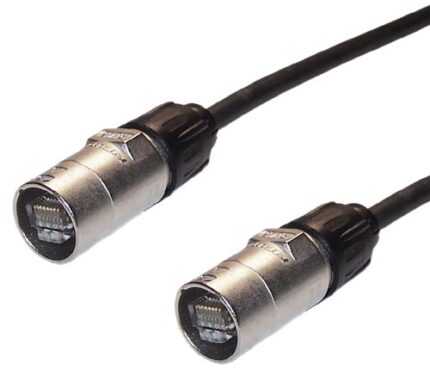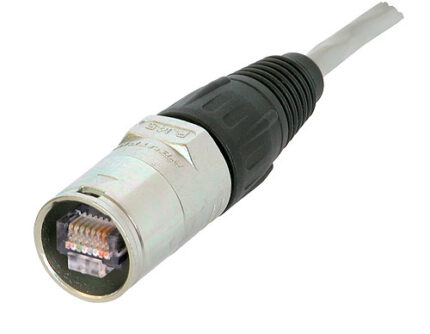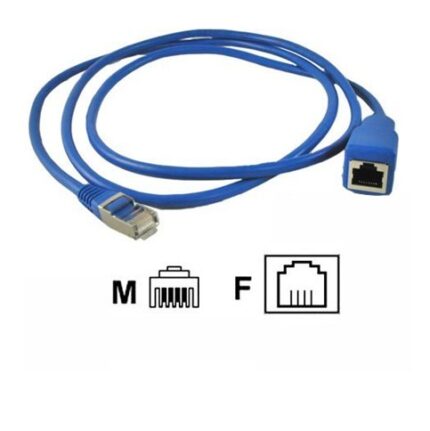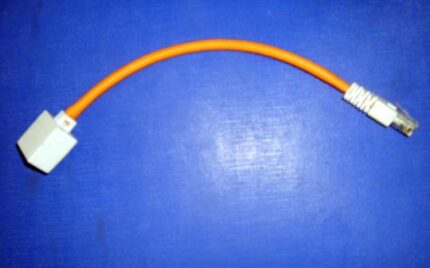
Cat5e FTP Shielded Patch Cord
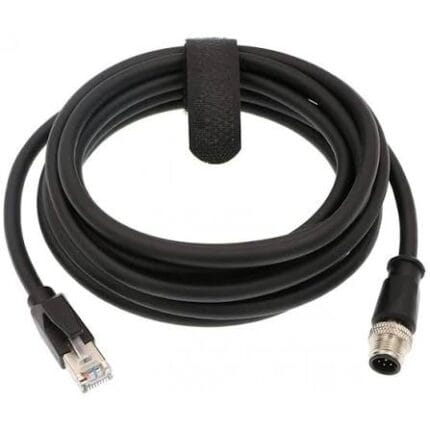
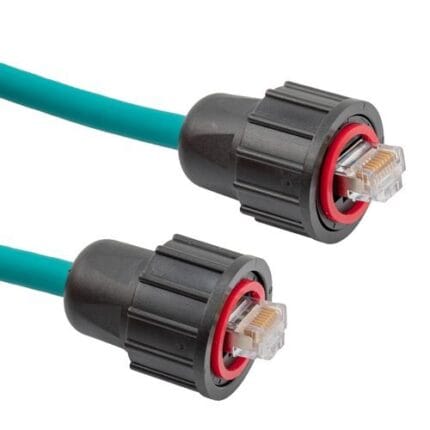
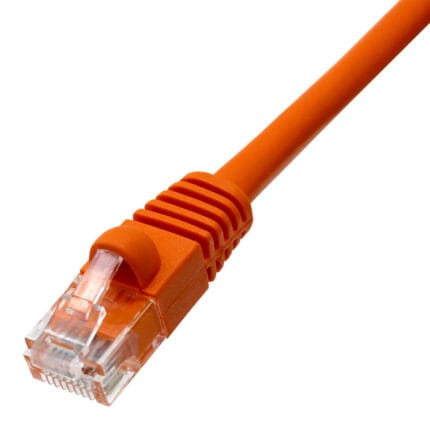
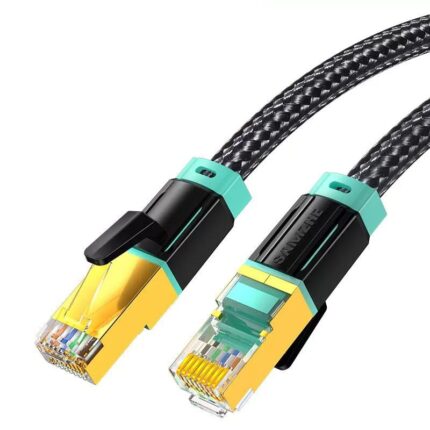
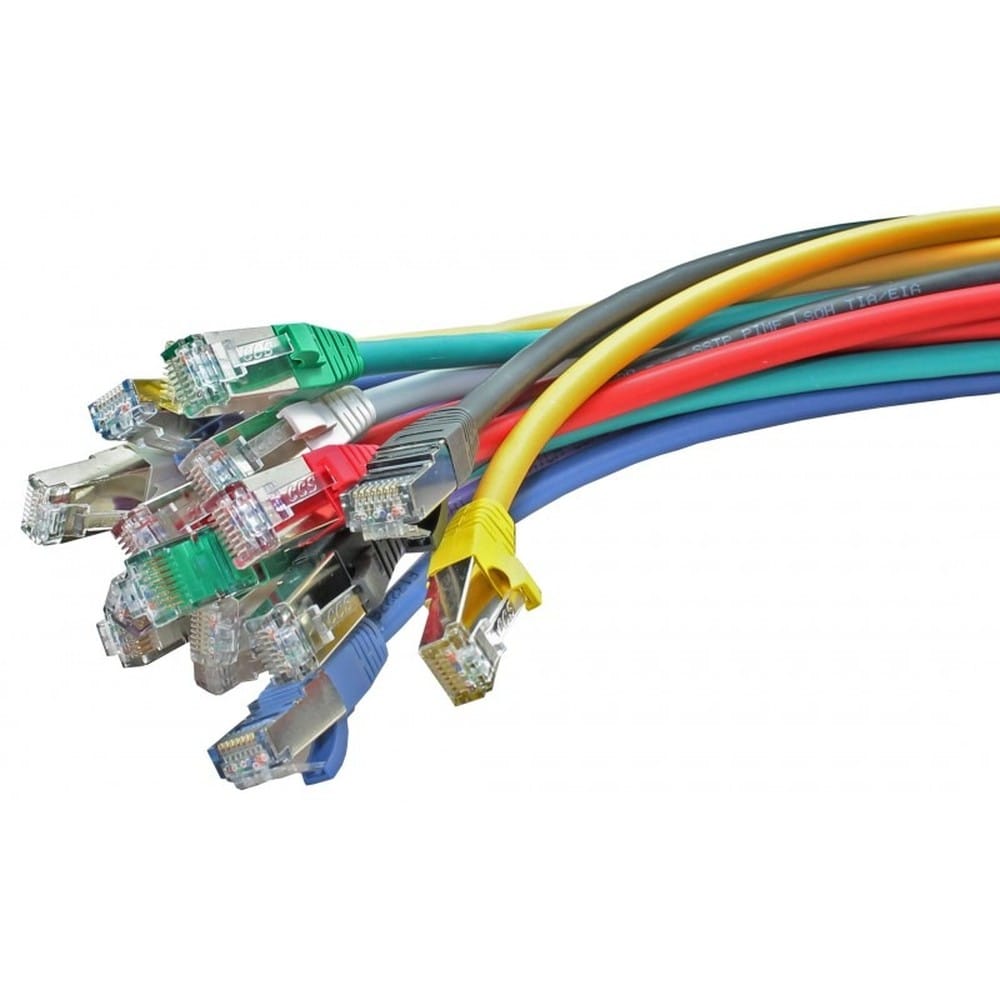
A cat5e ftp shielded cord puts a 100 percent foil screen over the four pairs and terminates it into screened RJ45 plugs, for runs that pass drives, lighting, lift machinery or dense trays.
Overview
A cat5e ftp shielded cord adds one thing to the standard unshielded construction: an overall polyester-aluminum foil screen at 100 percent coverage, carried into screened RJ45 plugs at both ends. That is the right choice when a run passes motor drives, fluorescent lighting, elevator machinery or a densely packed cable tray, and it is the wrong choice when it does not, because the screen costs money, adds stiffness, and creates a grounding obligation that has to be met for it to do anything. The jacket is a flame retardant PVC compound, the pairs are 24 AWG solid bare copper under HDPE insulation, and the channel holds 100 ohm impedance.
Key Specifications
| Cable Category | Cat5e (Category 5e) |
|---|---|
| Shielding | FTP / F-UTP, polyester-aluminum foil, 100 percent coverage |
| Conductor | 24 AWG solid bare copper (0.5 mm) |
| Insulation | HDPE, 0.96 mm nominal diameter |
| Jacket | FR PVC compound, 5.2 +/-0.2 mm diameter |
| Connector | Screened RJ45 male to RJ45 male |
| Impedance | 100 ohm +/-5% |
| Insulation Resistance | 5 G ohm/km minimum |
| Shield Termination | Foil carried to the plug shell at both ends |
| Compliance | ANSI/TIA/EIA-568-C.2, ISO/IEC 11801, IEC 61156-6 |
| Flame Rating | IEC 60332-1-2, UL-1581 VW-1 |
Where shielding earns its cost
Unshielded cable is correct for the majority of office drops, and adding foil where it is not needed only raises cost and slows termination. Foil screening earns its place when the channel sits beside something that radiates: variable frequency drives, large transformers, radio equipment, or a long parallel run of power cable. The shielding works by giving the interfering field a low-impedance path to ground instead of letting it couple into the pairs.
| Route condition | What you see without a screen | Screened cord worth it? |
|---|---|---|
| Beside a variable frequency drive | Random link drops correlated with motor speed | Yes |
| Parallel to power for a long distance | Errors at high utilization, fine when idle | Yes, if separation cannot be improved |
| Dense tray with many data cables | Alien crosstalk between adjacent channels | Usually yes at higher categories |
| Near radio or broadcast equipment | Burst errors and retraining | Yes, plus careful grounding |
| Normal office tray, data only | Nothing | No |
The screen works only if it is continuous. The patch cord, the patch panel and the equipment cords all need to be shielded, and the installation needs a proper ground path. If any link in that chain is unshielded, the benefit largely disappears, and a screen that is left floating can behave worse than no screen at all.
The three mistakes that make a screened install pointless
Most screened installations that fail to deliver are not failures of the cable. They are failures of the termination and the grounding.
- Screen not carried into the plug. A screened cable terminated into an unshielded plug leaves the foil stopping short of the connector, which is the one place it matters.
- Drain wire dressed as a pigtail. A long pigtail is an inductor at the frequencies that matter. Terminate the screen 360 degrees into the connector shell.
- Screen grounded at both ends in a building with a poor equipotential bond. This can circulate current in the screen and inject noise. Get the earthing philosophy right before the cable goes in, and follow the site standard where one exists.
Foil or braid, and what the coverage figure means
An overall foil screen gives 100 percent coverage at low weight and low cost, but it has higher transfer impedance than a braid and it is more delicate to terminate. Braid is mechanically stronger and better at low frequency, which is why heavy industrial constructions use foil on each pair plus an overall braid. For a Category 5e channel next to plant equipment, foil is usually the right balance; where the environment is severe, step up to the braided construction instead of doubling up on foil.
- Foil – light, cheap, 100 percent coverage, needs careful termination.
- Braid – stronger, better at low frequency, heavier and bulkier.
- Both, per pair and overall – the heavy industrial answer, at a cost in stiffness and bend radius.
Where a cat5e ftp shielded cord gets installed
- Plant rooms and factory floors where data runs beside switching equipment
- Lift shafts and machinery rooms with large motors on the same route
- Broadcast and AV installations with dense RF sources nearby
- Hospital and laboratory installations with imaging equipment on the same riser
- Retail and commercial sites where the data tray shares a route with power for long distances
- Outdoor and buried routes, where our Cat5e FTP Outdoor / Direct-Burial Patch Cord is the jacket and construction you actually want
How to specify the build
- Length of each cord, and whether they are all the same.
- Plug type – screened RJ45 as standard; confirm the mating side is screened too.
- Screen construction – overall foil, or a heavier construction for severe sites.
- Grounding philosophy for the site, so the screen is terminated consistently.
- Jacket and color, and whether the run needs a flame-rated compound.
- Quantity, and whether this is a prototype or a production order.
Workmanship and testing
Cat5e FTP Shielded builds are made to IPC/WHMA-A-620 Class 3 workmanship inside an ISO 9001 system, over a 32 to 12 AWG range. continuity and pinout are verified on each Cat5e assembly before packing, and seal checking is quoted whenever an ingress rating is on the drawing.
Material declarations against RoHS and REACH are issued per project, alongside the dimensional and electrical reports agreed at quotation; see certifications, compliance and material declarations. Where your drawing names a UL style or another approval, the build follows your drawing and ships with the supporting document rather than a claim of our own. Production runs on the same lines described under the assembly lines behind this build, where cutting, termination, molding and 100 percent electrical verification sit under one roof. The wider context is covered under our industrial automation work. Tooling for this build is cut in our own tool room and belongs to your program, so a repeat run years later starts from the same tool.
Custom builds and ordering
For Cat5e FTP Shielded builds, prototypes run from 1 to 50 pcs with a 3 working day turnaround; volume orders begin at 500 pcs and ship 14 working days after approval. Tooling not already held adds around 10 working days. OEM and ODM Cat5e work ships under your part number and labeling, and material certificates and first-article reports come with them on request.
Ratings shown here are the industry-standard description of what the Cat5e FTP Shielded interface family is defined to do, not test results from a part of ours. Your assembly is built and verified to the values on your drawing, which we check against the supplier datasheet before quoting.
Related screened and industrial patch cords
- Cat5e FTP Outdoor / Direct-Burial Patch Cord
- Cat6 S/FTP Shielded RJ45 Patch Cord
- Cat6A Shielded Patch Cord, S/FTP 26 AWG, 500 MHz
- Cat6 S/FTP IP67 Industrial Pigtail Patch Cord
- Cat6A Railway Patch Cord for Rolling Stock
- ix Industrial Cat6A Patch Cord
Full ranges: Ethernet patch cords and signal and data cables.
Frequently Asked Questions
Do I need screened patch panels as well?
Yes. The screen has to be continuous from end to end. A screened cord plugged into an unscreened jack leaves the screen open at that point.
Should the screen be grounded at one end or both?
Follow the site earthing standard. Grounding both ends of a screen in a building with a poor equipotential bond can circulate current and make matters worse, so decide it as a system question, not a per-cable one.
Can I use a screened cord with unshielded equipment?
It will work, but you get little benefit. The screen needs somewhere to dump the current it collects; without a screened path on both sides it does very little.
Is foil enough next to a large drive?
Usually for Category 5e. Where the environment is severe, or where the run is long and close to the source, move to a braided or foil-per-pair construction rather than doubling the foil.
| Cable Category | Cat5e (Category 5e) |
|---|---|
| Shielding | FTP / F-UTP, polyester-aluminum foil, 100 percent coverage |
| Conductor | 24 AWG solid bare copper (0.5 mm) |
| Insulation | HDPE, 0.96 mm nominal diameter |
| Jacket | FR PVC compound, 5.2 +/-0.2 mm diameter |
| Connector | Screened RJ45 male to RJ45 male |
| Impedance | 100 ohm +/-5% |
| Insulation Resistance | 5 G ohm/km minimum |
| Compliance | ANSI/TIA/EIA-568-C.2, ISO/IEC 11801, IEC 61156-6 |
| Flame Rating | IEC 60332-1-2, UL-1581 VW-1 |
| Shield Termination | Foil carried to the plug shell at both ends |