V2L Discharge Adapter Cable from Type 2 Inlet to AC Sockets
A v2l discharge adapter cable takes the AC output already present at a vehicle inlet and presents it at a Schuko, BS 1363, CEE or NEMA socket. It is not a charger and not an inverter — the vehicle decides how much power is available.
Last updated: 13 September 2026
Overview
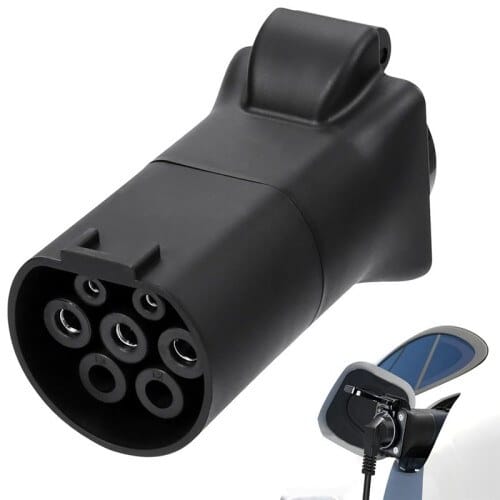
A v2l discharge adapter cable takes the AC output already present at a vehicle inlet — an IEC 62196 Type 2 or GB/T AC coupler — and presents it at a socket you can plug ordinary equipment into. It is not a charger, it is not an inverter, and it does not make a vehicle capable of discharge. It only works on vehicles whose maker enabled vehicle-to-load output, and the vehicle electronics decide how much power is available, when it stops, and what happens when the traction battery reaches its reserve. What we build is the cord set between the two ends, in the outlet standard your destination uses.
Key Specifications
| Inlet connector | IEC 62196-2 Type 2 female coupler or GB/T AC coupler |
|---|---|
| Outlet connector | Schuko, UK BS 1363, CEE 16 A, or NEMA 5-15 socket |
| Cable length | 3 m / 5 m / 7 m / 10 m |
| Jacket material | TPU, black, outdoor grade |
| Nominal output | 230 V or 120 V AC, single phase, vehicle-limited |
| Accessory | Optional attached dust cap for the outlet |
| Function | Passive discharge lead, not a charger, not an inverter |
V2L, V2H and V2G are not the same job
| Mode | What the vehicle feeds | What the cable has to do |
|---|---|---|
| V2L (vehicle to load) | Ordinary AC sockets at the vehicle, via the inlet or a dedicated outlet | Carry single-phase AC to a regional socket standard |
| V2H (vehicle to home) | A building installation through a transfer switch | Installed wiring and an isolation switch, not a cord set |
| V2G (vehicle to grid) | Power back into the grid under utility control | Grid-side equipment and a bidirectional charger |
This product is the first row only. If your application is a house or a grid connection, a cord set is not the right answer and we will say so.
Outlet standard by destination
The socket is chosen by region and by the kit you expect to run. Getting this wrong is the most common ordering mistake on this part, because the vehicle side is standard while the load side is not.
| Outlet | Standard | Where it is wanted |
|---|---|---|
| Schuko | CEE 7/3 | Continental Europe, site tools and camping |
| UK socket | BS 1363 | UK and Ireland, campsite pitches |
| CEE 16 A | IEC 60309 | Industrial sites, event power, workshops |
| NEMA 5-15 | NEMA 5-15 | North American equipment |
Because the socket end is the part that gets dragged through mud, we build the outlet body with a proper grip surface and a cap that stays attached rather than one that goes missing on day two.
Safe use on site
- Plug the coupler into the vehicle first, let the vehicle complete its own checks, then connect the load.
- Keep the cable fully unwound when you draw power — a coiled lead traps heat.
- Do not run the socket end into a wet pitch or leave it lying in water, and do not cover the coupler with a jacket or a blanket.
- Do not daisy-chain extension reels off the outlet.
- Mate the connectors until they seat fully, so the stated ingress protection of the mated pair actually applies. An unmated or half-inserted connector has no protection at all.
- Check the coupler and socket for discoloration or a warm housing at each stop.
Length and where the loss goes
| Length | Suits | Note |
|---|---|---|
| 3 m | Tailgates, picnic and light camping | Shortest run, least to coil |
| 5 m | General site and event use | The usual default |
| 7 m | Reaching across a pitch or into a marquee | Unwind fully before loading |
| 10 m | Site work where the vehicle cannot be moved closer | Unwind fully, avoid reel stacking |
Any voltage drop and any heating in the run is a function of length and current, so the shortest length that reaches is always the right one. Where a long run is unavoidable, tell us and we will quote a larger conductor.
Typical applications for this v2l discharge adapter cable
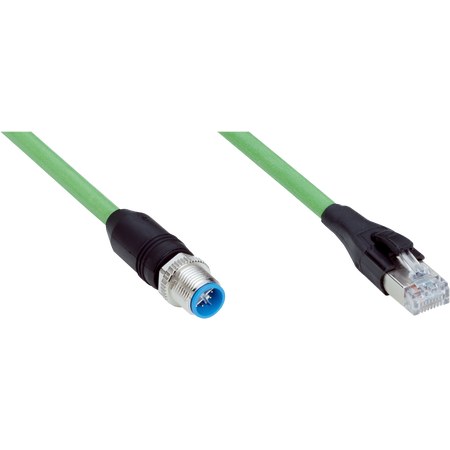
- Site and trade vehicles running tools from the traction battery, alongside our M12 S-coded power cable for single-phase AC loads on the equipment side
- Camping, overlanding and event power where a regional socket is required
- Emergency and resilience kits kept in a fleet vehicle
- Demonstration and showroom use where the outlet has to look like a domestic socket
- Workshop and yard power for light equipment, paired with our M12 C-coded AC cable for fixed installations
What to check before ordering
- The vehicle must support V2L discharge on the inlet you are ordering, and the maker must have enabled it.
- The outlet standard used in the destination country.
- The rated output of the vehicle, and whether it is 230 V or 120 V.
- Length, and whether a dust cap or carry bag is required.
The vehicle is the limiting element in every case. We supply the cord set built to the drawing you approve; the vehicle decides what it will deliver.
Workmanship and testing
Every build is assembled and inspected to IPC/WHMA-A-620 Class 3 workmanship under our ISO 9001 system. We terminate conductors from 32 to 12 AWG. Each unit is checked for continuity and pinout before packing, and where the build carries an ingress rating we can add seal checking on the production run.
Custom builds and ordering
Prototypes run from 5 pcs with a 3 working day turnaround; volume orders start at MOQ 500 pcs and ship 14 working days after sample sign-off. If the build needs tooling we do not already hold, add roughly 10 working days. OEM and ODM orders ship under your part number and labeling, and material certificates and first-article reports are available on request.
Related EV and power leads
- Type2 to NACS adapter for single-phase AC charging
- M12 S-coded power cable for single-phase AC loads
- M12 C-coded AC cable, dual keyway for AC sensors and actuators
- EV high voltage harness built to print for 800 V battery packs
- BESS battery wiring harness built to drawing for 1000-1500 V DC storage racks
Full range: automotive cable and wire harness assemblies.
Frequently Asked Questions
Will this make my car capable of discharge?
No. It is a passive cord set. If the vehicle does not support V2L, nothing appears at the socket.
Is it a charger?
No. It does the opposite: it takes AC out of the vehicle. Charging into the vehicle is a different product and a different standard chain.
How much power can I draw?
Whatever the vehicle permits. The vehicle electronics set the limit and cut the output if it is exceeded or if the traction battery reaches reserve.
Which outlet should I choose?
The one matching the plugs on the equipment at the destination country: Schuko for continental Europe, BS 1363 for the UK, CEE for industrial sites, NEMA 5-15 for North America.
| Inlet connector | IEC 62196-2 Type 2 female coupler or GB/T AC coupler |
|---|---|
| Outlet connector | Schuko, UK BS 1363, CEE 16 A, or NEMA 5-15 socket |
| Cable length | 3 m / 5 m / 7 m / 10 m |
| Jacket material | TPU, black, outdoor grade |
| Nominal output | 230 V or 120 V AC, single phase, vehicle-limited |
| Accessory | Optional attached dust cap for the outlet |
| Function | Passive discharge lead, not a charger, not an inverter |