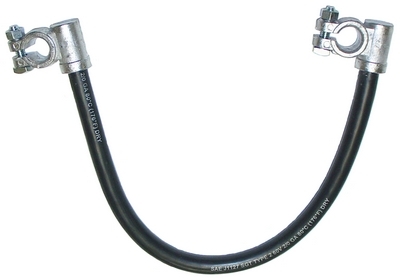
Heavy-Duty Ring Terminal Battery Lead Cable
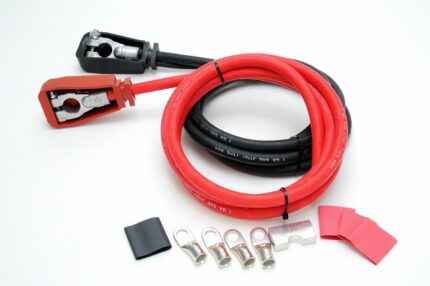
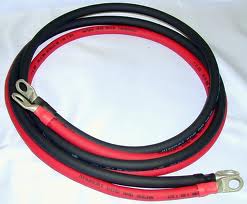
A heavy-gauge battery lead cable with ring terminal clamps at both ends, built to your length, stud size and crimp specification for battery-to-battery and battery-to-equipment runs.
Overview
A battery lead cable is the shortest cable in the vehicle and the one carrying the most current, which is why it is also the one that gets blamed for faults it did not cause. In practice the failures come from three places: a conductor sized for the average load rather than the peak, a crimp that was made with the wrong die, and a termination that corroded because the environment was never part of the specification. We build to the length, stud size and crimp specification you give us, with the conductor sized to the current and the run rather than to a catalog convention.
Key Specifications
| Cable Type | Battery Lead Cable |
|---|---|
| Jacket | Heavy-duty rubber, per your temperature and abrasion requirement |
| End A | Ring terminal clamp, stud size per your spec |
| End B | Ring terminal clamp, stud size per your spec |
| Conductor | Heavy gauge, sized per your current and run length |
| Terminal plating | Tinned copper, or per your spec |
| Application | Automotive, marine and equipment battery runs |
| Polarity marking | Positive and negative identified per your build |
| Testing | 100% continuity and pull force verified in process |
What kills this cable
| Stress | Failure mode | Design response |
|---|---|---|
| Undersized conductor for the peak load | Voltage drop under cranking, heat at the termination | Size to the peak current and the run length, not to the average draw |
| Poor crimp – wrong die or incomplete compression | High resistance joint that heats, then anneals the conductor, then fails | Crimp pull force verified at setup per terminal and wire combination, re-checked in process |
| Corrosion at the terminal | Resistance climbs slowly; the fault appears months later and looks like a dead battery | Tinned copper terminals, and heat-shrink or a sealed boot where the run is exposed |
| Abrasion against the chassis or engine | Jacket wears through, then a short to body | Heavy-duty rubber jacket, grommets at every panel pass-through, clamps at intervals |
| Engine bay heat and vibration | Insulation embrittles, terminals loosen | Jacket temperature rating selected for the bay, and the run supported so vibration does not land on the crimp |
Sizing the conductor: peak, not average
The conductor has to carry the starting current, and the length of the run matters as much as the current does, because voltage drop is a function of both. A lead that is fine on a bench is not fine at three meters on a cold morning. Give us the peak current and the run length and we will size to those, rather than to whatever gauge the last cable happened to be.
Conductor sizes are quoted in AWG, where a smaller number means a larger conductor. We run 32 to 12 AWG, and the terminal is sized to match the conductor – a terminal that is too large for the wire is a crimp that will not hold regardless of how hard it is squeezed.
The crimp is the whole job
Almost every battery lead failure is a termination failure. The sequence is predictable: a slightly high resistance joint heats under load, heat anneals the copper and makes it softer, the softer copper relaxes under the crimp, resistance goes up again, and one morning the vehicle does not start. None of that is visible from the outside.
The controls are unglamorous but effective:
- Correct die for the terminal and wire combination, verified at setup rather than assumed.
- Pull force testing at setup and re-checked in process, so a drifting tool shows up as a failed part on the line.
- Plating – tinned copper resists corrosion, which is the slow failure that looks like a dead battery.
- Stud size matched to the post, so the terminal seats flat rather than on an edge.
Design notes from the build
Specify the stud size at both ends. Battery posts, busbars, isolator switches and windlass terminals do not share a standard, and a ring terminal that is a millimeter out either will not fit or will sit on an edge and loosen. Positive and negative runs are identified per your build, which sounds trivial until a technician is working by torchlight in an engine bay.
Tell us where the run goes. A lead that crosses a hot surface, passes through a bulkhead or sits in a bilge needs a different jacket, a grommet or a sealed boot, and those are decisions made at quoting time rather than after the fact.
Typical applications for this battery lead cable
- Battery-to-battery links in dual-battery vehicles and boats
- Battery-to-equipment feeds for winches, inverters and compressors
- Marine battery banks and isolator switch runs
- Plant, agricultural and construction equipment battery connections
- UPS and backup battery cabinet links, alongside our Heavy-Duty Battery Power Cable with Ring Terminals
- Generator and solar storage battery interconnects
How to specify your build
- Peak current the lead has to carry, and the run length.
- Stud size at both ends.
- Jacket requirement – temperature, abrasion, oil, salt exposure.
- Terminal plating and whether a sealed boot is needed.
- Polarity marking convention.
- Length and quantity.
Workmanship and testing
Assembly and inspection follow IPC-WHMA-A-620 Class 3 workmanship criteria under our ISO 9001 quality management system. Every lead passes 100% continuity testing, and crimp pull force is verified at setup for each terminal and wire combination and re-checked in process – on a high-current lead that check is the difference between a joint that lasts and one that heats. Conductor range is 32 to 12 AWG. Current-carrying figures are the ones on your drawing; we build and verify to those rather than publishing values of our own.
Material declarations against RoHS and REACH are issued per project, alongside the dimensional and electrical reports agreed at quotation; see certifications, compliance and material declarations. Where your drawing names a UL style or another approval, the build follows your drawing and ships with the supporting document rather than a claim of our own. The strain relief and molded body are produced on tooling we cut ourselves see in-house mold making and overmold tooling so the tool is quoted separately, owned by you, and available for repeat runs years later. More background: cable assemblies for automotive and EV.
Custom builds and ordering
Prototypes start from 1 to 50 pcs and ship in 3 working days; production orders start at MOQ 500 pcs and ship 14 working days after approval. Our Longgang, Shenzhen plant runs four assembly lines with 40 assembly workers and 1,000,000 pcs annual output, and OEM builds ship under your part number and labeling. Factory audits and video line tours can be arranged.
Related battery and power leads
- Heavy-Duty Battery Power Cable with Ring Terminals
- Battery Jumper Lead with Insulated Terminal Clamps
- Battery Cable Installation Kit with Terminal Clamps and Lugs
- eBike Battery Harness with XT60, XT90-S or SB50 Plug
- BESS Battery Wiring Harness Built to Drawing for Storage Racks
- DT Connector Pigtail Harness, Sealed Leads for Work Lights
Full range: automotive cable and wire harnesses.
Frequently Asked Questions
What gauge do I need?
Give us the peak current and the run length and we will size it. Sizing to the average draw rather than the starting peak is the most common mistake, and it shows up as voltage drop on a cold morning.
Can I have different stud sizes at each end?
Yes, and it is common – a battery post at one end and an isolator or busbar at the other. Specify both.
Tinned or bare copper terminals?
Tinned, in most installations. Corrosion at the terminal is the slow failure that looks like a flat battery, and tinning buys you a lot of margin on that.
Do you supply a sealed boot?
Yes, where the run is exposed to moisture or salt. Tell us where the cable goes and we quote the termination accordingly.
What is the minimum order?
Five pieces is the prototype minimum for Heavy-Duty Ring Terminal Battery builds, shipping in 3 working days; the production minimum is 500 pcs, delivered 14 working days after approval.
| Cable Type | Battery Lead Cable |
|---|---|
| Jacket | Heavy-duty rubber, per your temperature and abrasion requirement |
| End A | Ring terminal clamp, stud size per your spec |
| End B | Ring terminal clamp, stud size per your spec |
| Application | Automotive, marine and equipment battery runs |
| Conductor | Heavy gauge, 32 to 12 AWG range, sized per your current and run length |
| Terminal plating | Tinned copper, or per your spec |
| Polarity marking | Positive and negative identified per your build |
| Testing | 100% continuity and pull force verified in process |