Drone Battery Power Cable, Discharge Leads Built to Drawing
A drone battery power cable is the highest-current conductor on the airframe. This is the conductor-level part: discharge leads, extenders and parallel pairs, cut to your length and terminated the way your bus expects.
Overview
A drone battery power cable is the highest-current conductor on the airframe, and the one least likely to get the attention it deserves. It carries everything the propulsion system draws, over the shortest run on the machine, at whatever the chemistry will give — which is why this one part sets the floor for how well everything downstream performs.
This page covers the conductor level: discharge leads, battery chargers leads, extenders, parallel cabling and the bare or terminated power leads going into a distribution board or controller input. If what you need is a closed harness — a defined assembly with the end terminations already decided and documented as a single unit — the drone battery power harness is the part to look at. The two are built on the same wire with the same process; they differ in how much of the build is already committed.
Key Specifications
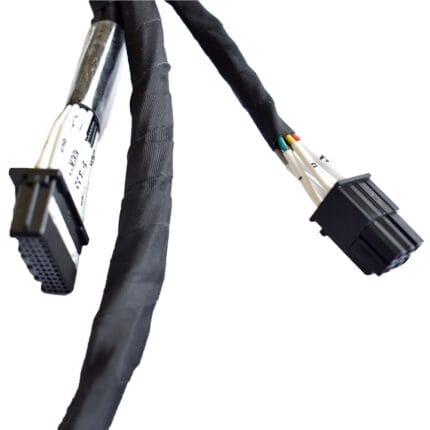
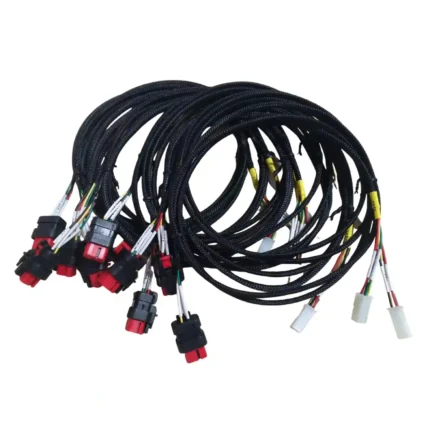
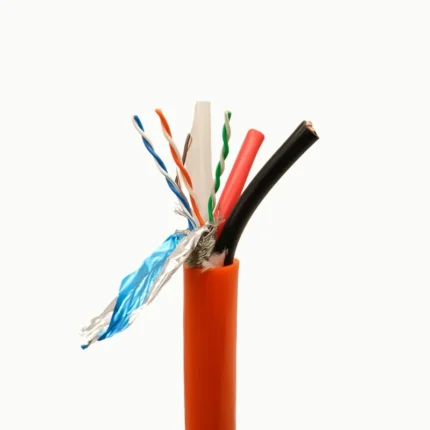
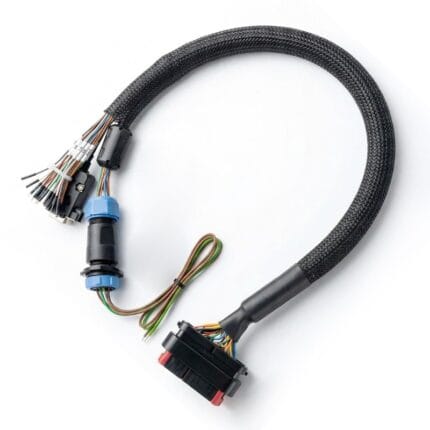
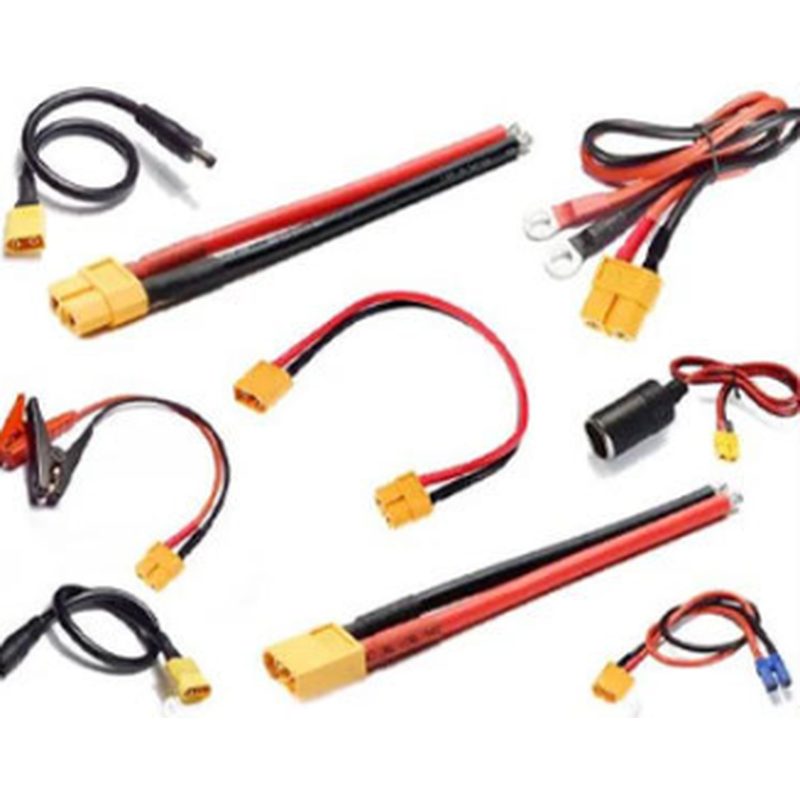
The specification table lists the configuration shown in the product photo. Conductor size, strand count, jacket material, termination treatment and length are all stated per build, because all five follow the current and geometry of your airframe rather than a catalog choice.
What This Drone Battery Power Cable Is and Is Not
It is the wire: the conductor sized to your current, cut to your length, terminated to your interface or left stripped and pre-tinned, marked the way your line wants it. It is what you reach for when the discharge path itself is the thing being changed — the battery moved, the distribution board replaced, the draw increased, or the previous supplier’s wire turned out to be copper-clad.
It is not a finished loom with the branch structure already designed. That version exists as the harness product above, and it is the better starting point when you are specifying a new airframe end to end rather than changing one conductor in an existing one.
Neither is right in the abstract. Tell us which stage you are at and we will point at whichever product saves you a drawing.
Sizing the Run: Continuous versus Burst Current
Every conductivity question here reduces to three quantities you can look up or measure: the current, the one-way length, and how long the high current actually lasts. Steady hover current and a full-throttle climb are not the same load, and the honest approach is to size for the sustained figure with enough margin that the peak does not cook anything.
Published guidance across hobby and professional platforms converges tightly on this: main battery leads around 10 to 12 AWG on mid-size multirotors, thicker on heavy-lift platforms, and lighter on micro airframes operating at far lower voltage. The pattern is consistent because the physics is — resistance scales with length and inversely with cross-section, so doubling the run needs the same copper as doubling the current.
If sizing is genuinely open, give us the draw and the physical route and we will propose a conductor and show the drop arithmetic on the drawing before anything is cut. That conversation takes ten minutes and prevents the most common category of return.
Why Silicone and High Strand Count
Two properties decide every jacket decision in this location. Conductors here are made of many fine strands rather than few coarse ones, because this wire gets flexed during installation and then vibrated for the life of the aircraft. Fine stranding survives both; coarse stranding work hardens at exactly the point where it leaves the terminal, and then it breaks.
Silicone insulation is the other standard answer, typically rated around 200 °C on this class of product, and it earns its place the moment anyone picks up a soldering iron. It does not retract away from a hot joint, it tolerates a joint taking a second longer than planned, and it stays supple instead of stiffening into something that transmits force to the solder.
Tinned copper is the third quiet ingredient. Untreated stranded copper oxidizes; oxidized strands resist; resistance means heat; heat means more oxidation. Tinning breaks that loop, and it also keeps wire solderable after months in a drawer.
Terminations: Your Series, or Stripped and Pre-Tinned
There is no house interface here. If your distribution board or controller already defines one, we terminate to that series with the contact rating the current demands. If you want leads for someone else to finish, we cut, strip and pre-tin to length.
Two things matter either way. First, the joint: the mechanical failure location on a battery lead is almost always within millimeters of the termination, so the joint needs strain relief rather than just insulation. Second, the plating and contact area must suit continuous current, not just the surge — an interface rated for the burst but not the average is how people discover warm compartments during post-flight.
Where the route needs it, we add a molded transition over the exit so strain relief and sealing become one part instead of two things to forget.
Parallel Boards, Splitters and Equal-Length Pairs
Multi-battery airframes introduce a requirement that looks cosmetic and is not: the leads have to be the same length. Two packs in parallel sharing unequal lead lengths share current unequally, and the shorter path takes the larger part of the load.
So parallel sets are cut as matched pairs, marked so pairs stay together, and terminated so they cannot be mismatched by someone working quickly. Splitters for simple configurations are built the same way, with equal legs and a defined mark.
Routing: Keeping the Lead Short Without Loading the Joint
Short is right, but abrupt is expensive. A battery lead cut to exactly the straight-line distance has no slack, and every installation movement then lands directly on the termination — which is the part least able to take it.
The compromise is a small service loop near the battery end, secured so it does not flap, plus a defined bend radius wherever the lead turns. Together they absorb handling loads so the joint only ever sees what the aircraft gives it in flight. Tell us where the battery mounts and we will propose lengths that leave just enough.
Typical Applications
The everyday case is a discharge lead replacement or upgrade: the existing wire is undersized, stiff with age, or a poor copper alloy, and you want the same route built properly.
The second is a configuration change. The battery moved to the top plate, the distribution board changed, the pack count went up, or the aircraft grew a second bus — each of which changes the route and therefore the conductor.
Heavy-lift and industrial platforms use these as the building blocks of a larger power path, usually with documented pull-force values and serialized labels so the asset record knows which lead set is installed.
Charging benches use them too, in parallel sets and adapter leads, where what matters is consistent length and correct polarity marking at both ends rather than weight.
Finally, there are the cases nobody plans — field repairs and one-off test rigs, where a short run of correctly specified wire with documented termination is cheaper than waiting for a full assembly.
Specifying Your Drone Battery Power Cable
Four numbers settle almost everything: the sustained current, the peak and for how long, the one-way length, and the interface at each end. Add the jacket you prefer if you have one, the marking you need, and any documents your team requires, and that is a complete request.
Struggling with any of them? Send the airframe and the pack. Measuring and proposing from hardware in hand is routine, and it usually surfaces constraints that a clean specification would have missed.
Compatibility and Fitment
Because the interface is yours rather than ours, compatibility is defined on your drawing and verified before production. Where a drone battery power cable replaces an existing part, send the old one — matching a known-good sample avoids guesswork about length, strip length and terminal plating.
Custom Builds and Ordering
Every lead is built to order. Prototype quantities from one; production pricing from 500 pieces. Mixed lengths and several configurations within one order are normal, and tooling for any molded part belongs to your program.
Packaging and Shipping
Leads ship bagged by part code, coiled rather than folded, so nothing takes a permanent set. Test records can accompany production batches when requested at quotation.
Quality and Compliance
Every lead is continuity tested, polarity-marked and inspected at the termination before packing. Pull-force verification is available per batch, and prototype approval precedes any production tooling, so nothing advances on an unverified drawing.
Material declarations against RoHS and REACH are issued per project, alongside the dimensional and electrical reports agreed at quotation; see certifications, compliance and material declarations. Where your drawing names a UL style or another approval, the build follows your drawing and ships with the supporting document rather than a claim of our own. Where the build calls for a sealed exit, it follows the insert, gasket and overmold-bond method described under IP67 and IP68 sealing structures. Related reading: prototypes and first article inspection.
Frequently Asked Questions
How is this different from your battery power harness? This page covers the conductor level — discharge leads, extenders, parallel sets. The harness product is the closed assembly with the branch structure already defined.
What gauge do I need? Tell us the sustained current and the run length and we will propose one and show the drop numbers. Mid-size multirotors commonly land around 10 to 12 AWG.
Why not just use generic silicone wire? Consistent length, documented termination, verified strand count and pull-force records turn a hobby buy into something repeat orders can rely on.
Can you supply leads without connectors? Yes — cut, stripped and pre-tinned to length is a normal configuration.
Do you match an existing sample? Yes, and it is the fastest route to a drawing. One lead set is usually enough.
What if I need matched pairs for parallel packs? We cut them equal and mark them so pairs stay together.
What is the minimum order? One prototype; production pricing from 500 pieces.
How fast do you quote? About three working days from current, length and termination details.
Related Cable Ranges
See the whole set in the drone and UAV cable assembly overview, including where this conductor sits between the pack and the controller.
Downstream and adjacent: the ESC cable assembly, the drone motor cable assembly and the finished drone battery power harness.
The wider custom wire harnesses range covers other sectors built the same way.
| Product type | Drone battery power cable: discharge leads, extenders, parallel pairs and battery pigtails |
|---|---|
| Build basis | Built to your drawing, your measurement, or a sample lead set you already fly |
| Conductor range | 32 to 12 AWG; gauge proposed from your sustained current and run length |
| Stranding | High-strand tinned copper – confirm per build |
| Insulation | Silicone rated 200 C standard; PTFE or FEP on request – confirm per build |
| Configuration | Single leads, paired discharge leads, extenders or matched parallel sets |
| Termination | Your named connector series, or cut, stripped and pre-tinned to length |
| Polarity marking | Red and black throughout; both ends marked where the drawing calls for it |
| Matched sets | Parallel pairs cut to equal length and marked so pairs stay together |
| Strain relief | Defined service loop and bend radius built into the stated length |
| Tooling | Any molded transition cut in our own tool room belongs to your program |
| Workmanship | IPC/WHMA-A-620 Class 3 under ISO 9001 |
| Testing | 100% continuity and polarity check; pull-force verification available per batch |
| Typical applications | Flight battery to distribution board runs, parallel pack sets, charging benches, bench test rigs, replacement discharge leads |
| Order quantity | Prototype 1 to 50 pieces; production from 500 pieces |