DB9 RS485 Screw Cable for Modbus RTU Multi-Drop Runs
Last updated: 7 September 2026
This DB9 RS485 screw cable is made for Modbus RTU multi-drop runs.
DB9 is the connector, not the pinout
The expensive mistake with serial fieldbus over a nine-pin shell is assuming the pin assignment is standard. It is not. Which of the nine contacts carry the differential pair, which carry the signal reference and which carry a supply or a bias are decided by the equipment manufacturer, and two devices bolted into the same cabinet can disagree completely. Order a db9 rs485 screw cable without stating the pinout and you receive a perfectly built cable that does not work. Send us the pinout, the device model, or a photograph of both connector faces with your order.
What the differential pair buys you
The electrical layer defined by TIA/EIA-485 sends each symbol as the voltage difference between two conductors instead of a level referenced to ground. Noise induced along the run therefore lands on both conductors together and cancels at the receiver. That is what lets a multi-drop segment cross a plant floor past contactors, drives and welding plant. It only works if the two conductors are a twisted pair – keeping them close together is what makes the cancellation hold. We keep the lay consistent and, where the environment is noisy, add an overall braid bonded to the metal shell.
Daisy chain, not a star
RS-485 is defined as a bus: one trunk that visits each node in turn, with short spurs off it. Long branches cause reflections that corrupt the signal edges. Send us the node spacing and we will advise on the topology before you buy cable.
About the terminating resistor
A bus needs a resistor at the far end whose value matches the characteristic impedance of the pair, so arriving edges are absorbed instead of reflected. Whether your segment needs one, and whether it is already fitted inside the device behind a jumper, depends on the equipment. Confirm the value and the placement against your device documentation and the cable you are using rather than assuming a default.
Build options
- Straight or right-angle DB9, male or female, at either end
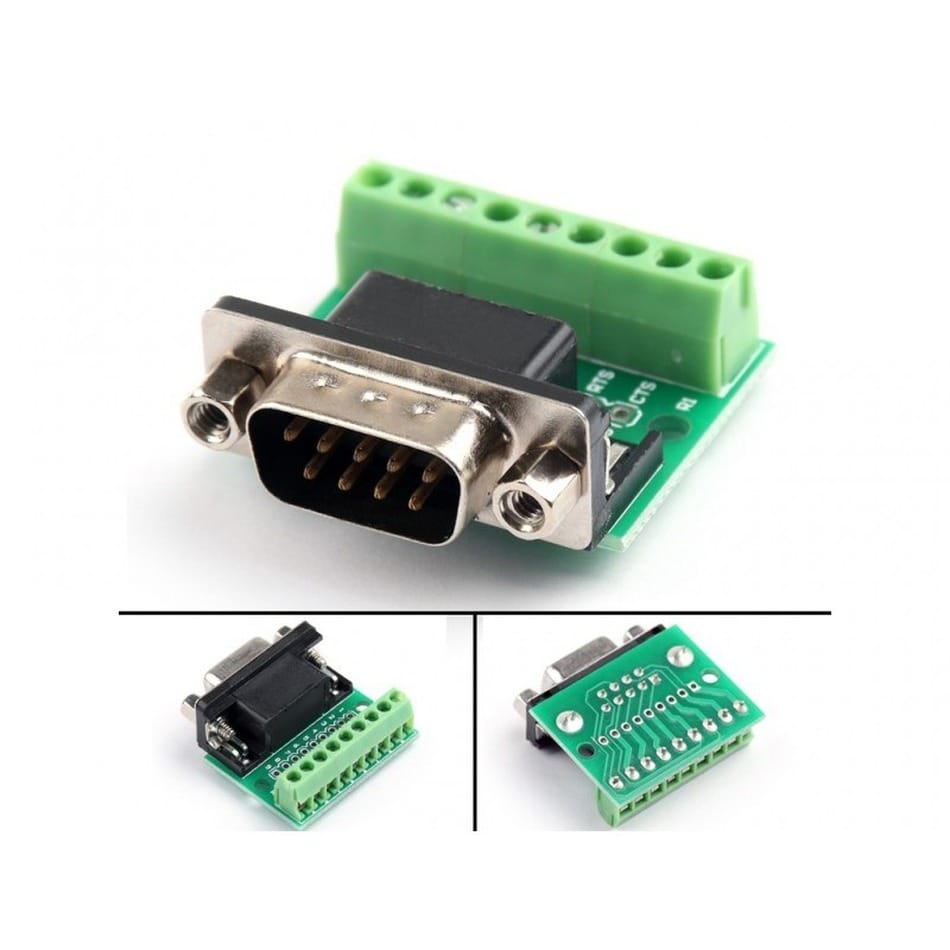
- DB9 to open leads for landing in a terminal block or a gateway
- One shielded twisted pair plus drain, or additional cores for a supply feed
- Screw-retained shells on both ends so vibration cannot back the plug out
- PVC jacket for cabinet runs, PUR where there is oil, coolant or washdown
Ordering checklist
- The pinout – or a photo of the existing connector faces
- Gender at each end and straight or right-angle
- Length, node count and the spacing between nodes
- Whether terminations are needed, and at which end
You May Also Need
Related Cable Ranges
Panel Mount Cable • Signal and Data Cables • Circular M8 M12 Cable
Frequently Asked Questions
What is DB9 RS485 Screw Cable for Modbus RTU Multi-Drop Runs used for?
Modbus RTU segments, drives, meters, remote I/O, HVAC plant.
Which connectors does DB9 RS485 Screw Cable for Modbus RTU Multi-Drop Runs use?
One end is DB9 / DE-9, straight or right-angle, male or female and the other end is DB9 / DE-9 or open leads.
What jacket material does DB9 RS485 Screw Cable for Modbus RTU Multi-Drop Runs use?
The jacket is PVC or PUR.
| Connector A | DB9 / DE-9, straight or right-angle, male or female |
|---|---|
| Connector B | DB9 / DE-9 or open leads |
| Interface | RS-485 balanced differential pair (TIA/EIA-485 electrical layer) |
| Protocol | Modbus RTU and other multi-drop serial fieldbuses |
| Retention | Screw-retained shell, #4-40 UNC class hardware – confirm per build |
| Conductors | 1 shielded twisted pair plus drain, extra cores on request |
| Jacket | PVC or PUR |
| Termination | Resistor value and placement to be confirmed against the device – specify at order |
| Application | Modbus RTU segments, drives, meters, remote I/O, HVAC plant |
Related products
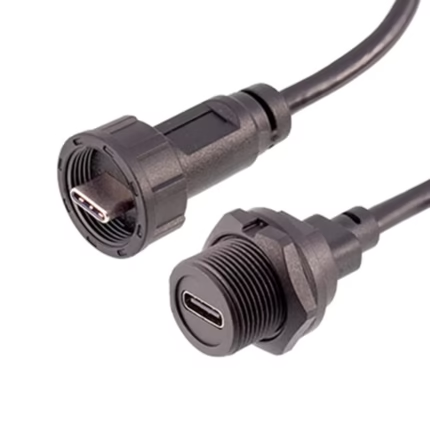
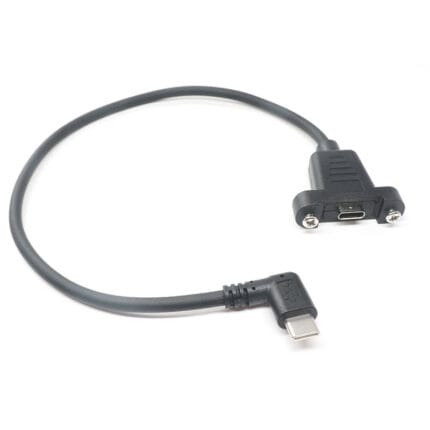
Right Angle Type C male USB Cable to Femal socket with screw-lock
Right‑Angle Screw‑Lock Type‑C Cable | Male to Female Extension Cord