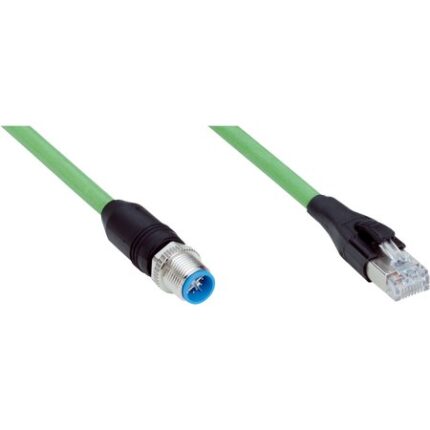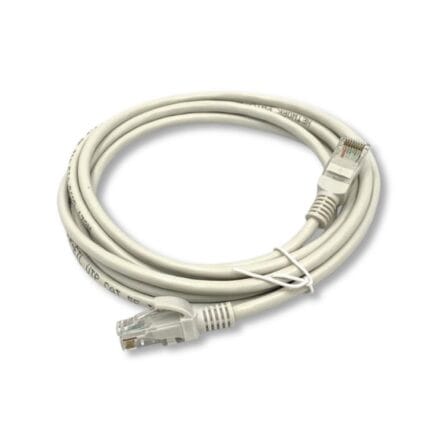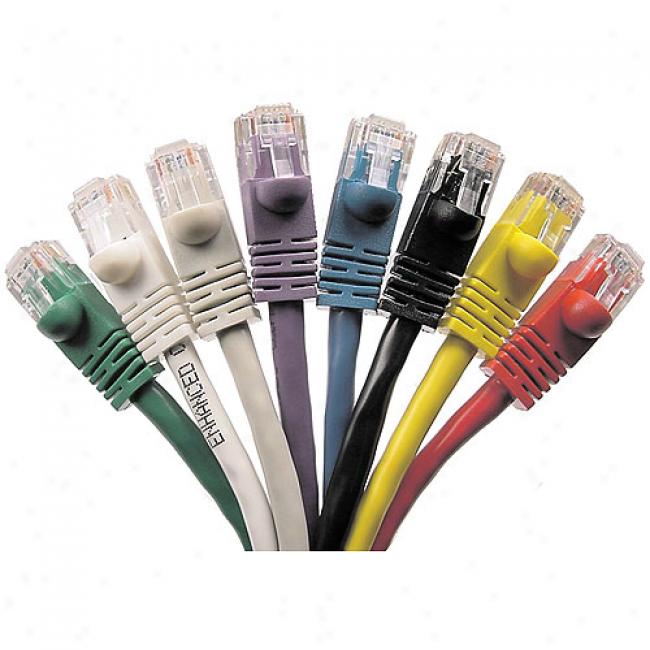
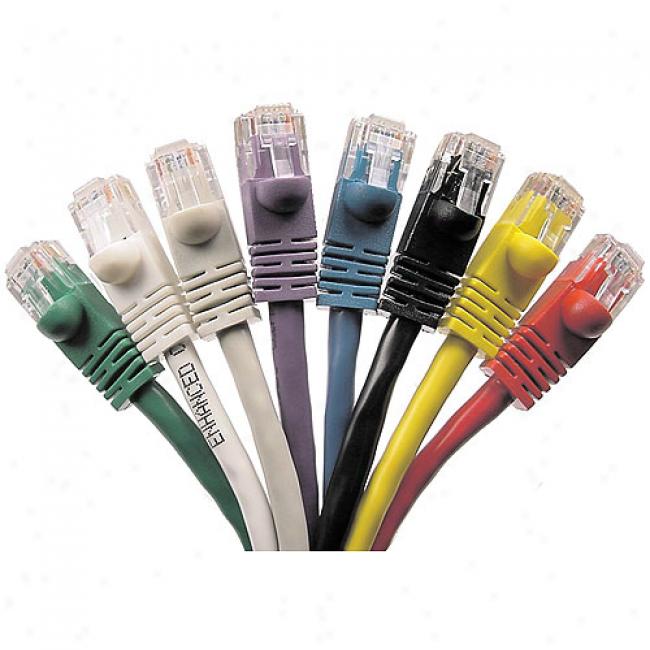
Cat5e UTP Snagless Patch Cord (350 MHz, 24 AWG Stranded, T568B, 4-Pair, 50u” Gold)
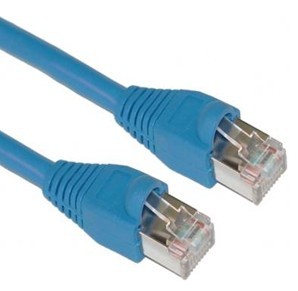
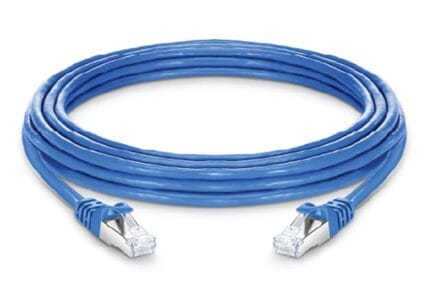
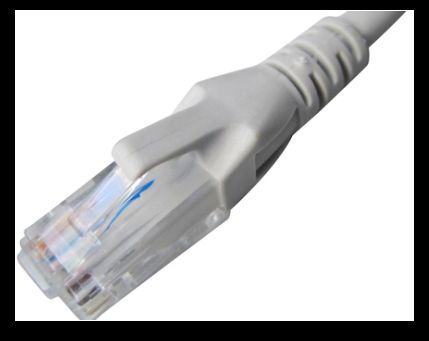
A cat5e utp snagless patch cord in stranded 24 AWG bare copper, T568B, 50 micro-inch gold RJ45, with a molded boot that stops the latch snapping in a full panel.
Overview
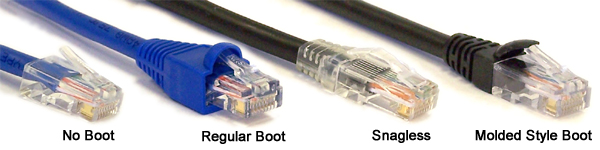
A cat5e utp snagless patch cord is the least glamorous cable in the building and the one that gets replaced most often, nearly always for the same reason: the latch snapped. The snagless boot is a molded ramp over the RJ45 latch that stops it catching on the cord beside it when you pull a patch out of a full panel. It costs almost nothing and it prevents the single most common patch cord failure there is.
Key Specifications
| Cable type | Cat5e UTP, 4-pair |
|---|---|
| Conductor | Stranded bare copper, 24 AWG |
| Connector | RJ45 8P8C, 50 micro-inch gold plating |
| Boot | Snagless, molded latch protection |
| Wiring | T568B straight through; T568A on request |
| Jacket | PVC standard; LSZH or plenum compound on request |
| Length | OEM build, stated per order |
| Category reference | ANSI/TIA-568 and ISO/IEC 11801 Class D, industry-general definition |
What the snagless boot actually protects
The boot does one job: it covers the latch so the latch cannot hook the neighboring cord, the edge of a horizontal manager, or the lip of the patch panel. It does not make the latch stronger. What it does is remove the sideways load that breaks it, which is a different thing and a more useful one.
Where latches break
Every one of these is a sideways or a held load on a piece of plastic that was never designed to take one.
| Situation | What breaks the latch | What actually helps |
|---|---|---|
| Pulling a cord from a dense panel | Latch hooks the adjacent cord | Snagless boot, or a short-body boot |
| Coiling a cord tight for storage | Latch pressed and held under tension | Coil loosely; cap the plug |
| Pulling cord through a tight hole | Latch catches on the edge | Pull on the plug body, not the cable |
| Repeated unplugging on a bench | Plastic fatigue over cycles | Treat patches as consumables; keep spares |
| Tying a cord off over the plug | Constant side load | Tie off the jacket, never over the plug |
The rest of the build matters more than the boot
Three choices decide how long the cord lasts and how well it behaves under load. Conductor material first: bare copper rather than copper-clad aluminum, because a CCA conductor runs hotter for the same current and that shows up in bundles carrying Power over Ethernet. Plating second: a patch cord is a wear item and thin plating wears through. Jacket third: it has to survive being dragged over a rack shelf and across a carpet. None of these are numbers we can quote for you generically — what your cord is built to is stated per order.
Typical applications for this cat5e utp snagless patch cord
- Patch panel to switch in any cabinet that gets re-patched
- Office LAN drops to desktops, printers and phones
- Wi-Fi access point and IP camera drops — see our Cat5e UTP LSZH Patch Cord for public buildings
- Workshop and classroom benches that get re-cabled every term
- Rental and event stock, where cords are coiled and uncoiled daily
How to specify your build
- Length — and remember patch cord length counts against the channel budget.
- Color, if you are color-coding by function or department.
- Wiring — T568B is the default; T568A on request.
- Conductor — bare copper, and say so if the run carries PoE.
- Jacket — PVC, LSZH, or CMP where the space requires it.
- Packaging — bulk, individually bagged, or labeled with your part number.
Workmanship and testing
Assembly and inspection follow IPC/WHMA-A-620 Class 3 workmanship criteria under our ISO 9001 quality management system, and every unit is 100% continuity and pinout tested before it is packed. Conductor range is 32 to 12 AWG. Latches are inspected for flash and burrs that would catch on the mating jack. Where a standard sets a limit for the category, the connector interface or the jacket, that is the industry-general definition of the rating. The values your assembly is built and verified to are the ones stated on your drawing, per order.
Every production run can ship with RoHS and REACH declarations and the electrical report agreed at quotation; see certifications and material declarations. UL styles and other named approvals are built to drawing: we source to the style you specify and document it, rather than asserting a listing we do not hold. Overmold tooling for this part is designed and cut in our own tool room under overmold tooling cut in our own tool room, so the tool belongs to your program and a revision is a machining job rather than a new negotiation. Related reading: what automation programs ask for.
Custom builds and ordering
On Cat5e UTP Snagless builds, prototype lots run from 1 to 50 pcs and leave in 3 working days; production runs of 500 pcs and up ship 14 working days after approval. Cat5e OEM and ODM shipments carry your part number and labeling, and material certificates plus first-article reports are available. New tooling adds about 10 working days, and we hold 100 sets of mold tooling in house.
Related Cat5e patch cords
- Cat5e UTP Patch Cord
- Cat5e UTP Short-Body Patch Cord for VoIP
- Cat5e UTP LSZH Patch Cord
- Cat5e FTP Shielded Patch Cord
- Flat Slim Cat6 / Cat5e UTP Patch Cord
- Cat6 UTP Patch Cord
Full range: Ethernet patch cord range.
Frequently Asked Questions
What does snagless actually mean?
A molded ramp over the RJ45 latch so it cannot catch on the cords around it. It protects the latch during installation and removal.
Is a snagless boot harder to unplug?
Slightly, in a very dense panel, because there is less room for your fingers. That is the trade for a latch that does not snap.
Can I get these in bulk without packaging?
Yes. Bulk, bagged, or individually labeled are all standard options.
Is this suitable for PoE cameras?
Yes with bare copper conductors. Tell us the current and the bundle size and we will build to it, with the rating stated per your drawing.
| Cable type | Cat5e UTP, 4-pair |
|---|---|
| Conductor | Stranded bare copper, 24 AWG |
| Wiring | T568B straight through; T568A on request |
| Connector | RJ45 8P8C, 50 micro-inch gold plating |
| Boot | Snagless, molded latch protection |
| Jacket | PVC standard; LSZH or plenum compound on request |
| Length | OEM build, stated per order |
| Category reference | ANSI/TIA-568 and ISO/IEC 11801 Class D, industry-general definition |