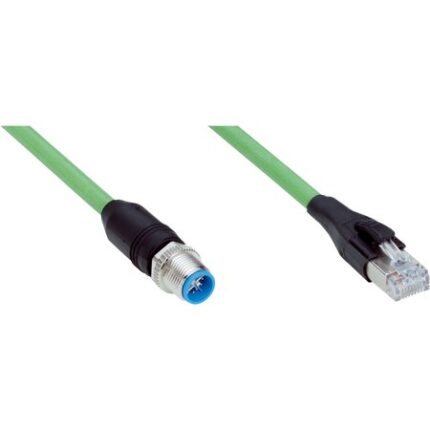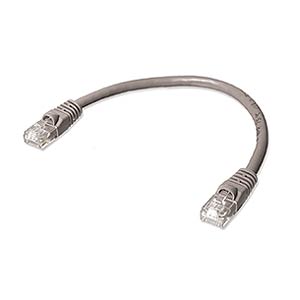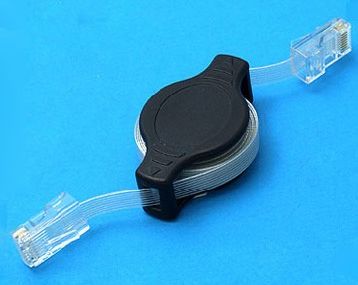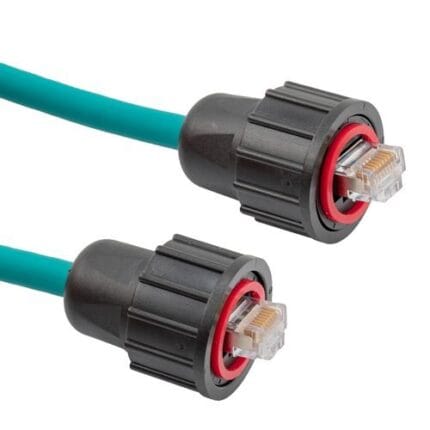
RJ45 Push-Pull Quick-Lock Cat6a Cable, IP67
This rj45 push pull cable seals an Ethernet port the fast way: the overmolded hood carries a quick-lock latch instead of a separate cap or screw ring, so an outdoor camera or wireless bridge connects in one motion and stays IP67 sealed.
Overview
This rj45 push pull cable seals an Ethernet port the fast way: the overmolded hood carries a quick-lock latch instead of a separate cap or screw ring, so an outdoor camera or wireless bridge connects in one motion and stays IP67 sealed.
Outdoor Ethernet usually means threaded caps or clip-on sealing boots, and both cost installation time. The quick-lock hood here seals around the mating plug as it latches, cutting the per-port install time dramatically on sites where hundreds of ports are terminated: IP cameras on poles, wireless bridges on rooftops and cabinet-to-field drops in washdown plants.
Key Specifications
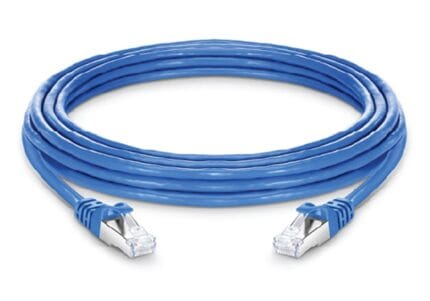
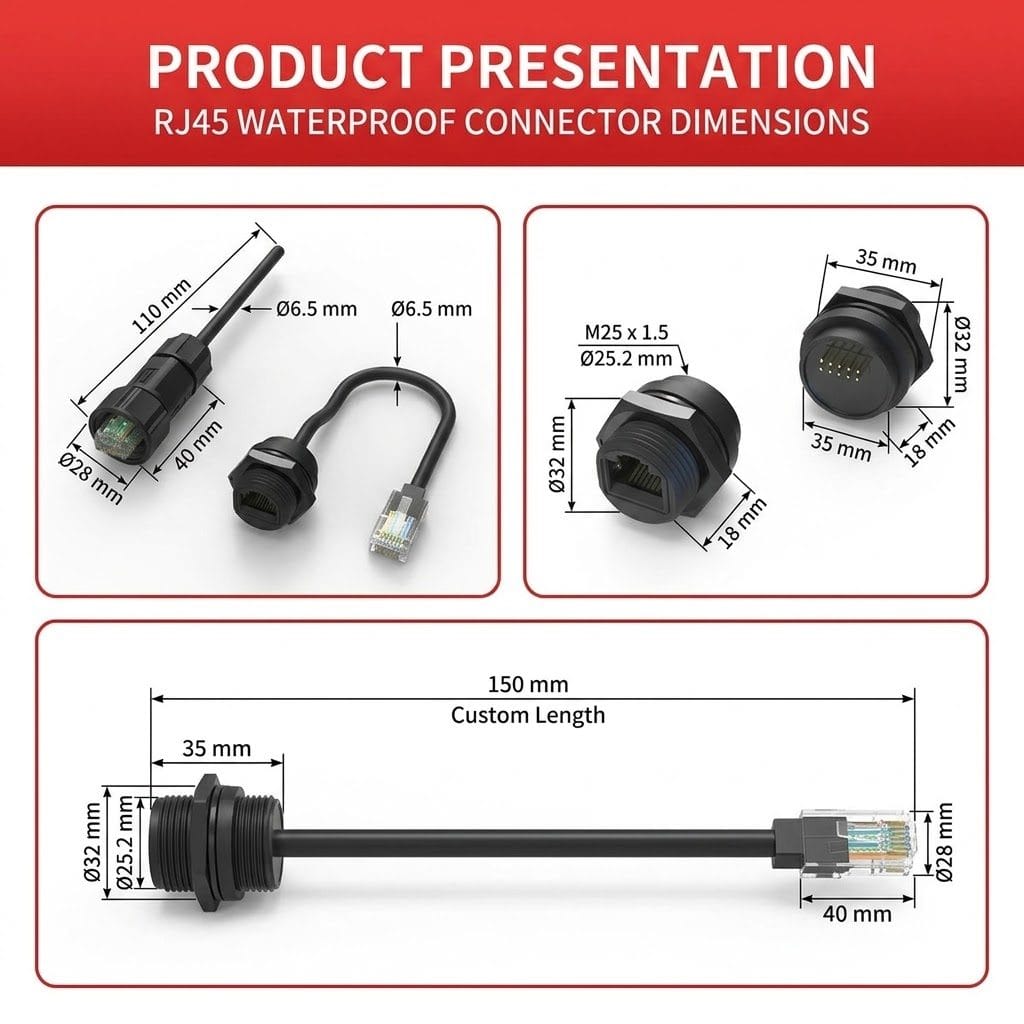
The table below lists the configuration shown in the product photo.
Why Quick-Lock Instead of a Threaded Cap
A threaded sealing cap solves the ingress problem and creates a human one. It has to be started square, turned through several revolutions, and then checked, because a cap that is left a half-turn loose looks seated and still lets water track down the thread. Do that on every port of a hundred-camera rollout, half of them from a ladder or a bucket, and the labor is no longer incidental to the job.
A push-pull latch trades that rotational work for axial work. The hood is guided onto the mating housing and locks as it seats, and it releases on a deliberate squeeze rather than a pull on the cable. The practical results are single-handed operation, no thread to cross or leave loose, and a connection the installer can confirm by feel and by sight from below.
The trade is worth stating plainly. A threaded coupling tolerates more abuse and pulls apart under far greater tension, so it stays the right answer for anything that will be dragged, snagged or load-bearing. Quick-lock belongs to ports that get made and broken often and by hand.
How the Seal Works
Sealing happens where the hood meets the receptacle housing, not at the RJ45 interface itself. An integral gasket in the overmold is compressed as the latch engages, so the latch and the seal are one action instead of two components that a technician could assemble in the wrong order. Because the hood is molded around the plug shell and gasket as a single piece, there is no separate boot that can be left behind on a bench or forgotten after a service call.
Shield continuity is carried through rather than stopped at the plug. The screen is terminated to the plug shell and continues through the metal parts of the hood, which keeps twisted pairs inside a continuous screen path all the way to the mating housing — the detail that matters when the port sits next to motor drives, radio equipment or lighting dimmers.
Construction and Materials
The plug is overmolded with an integral sealing gasket and a latching collar that grips the counterpart housing; shield termination is carried through the shell for EMI control on the Cat6a-class twisted pairs. The jacket is rated for outdoor exposure and the latch cannot be released by cable pull alone.
The hood is molded around the plug shell and gasket in one piece, so the seal cannot be left behind on the bench the way a separate boot can. Shield contact is made to the plug shell and carried through to the hood, and the release needs a deliberate squeeze rather than a straight pull on the cable.
Conductor and jacket classes are built to the run you describe, because the dominant stress is rarely the Ethernet traffic: it is ultraviolet exposure, moisture cycling, and the occasional strain event when equipment is moved. Tell us the environment and we choose accordingly.
Typical Applications
Surveillance is the largest single use. Fixed cameras on poles and building corners, PTZ units on mast arms, and enclosure-mounted cameras in car parks all need a sealed port that can be re-made in the field without a service van full of adapters. When a faulty camera is swapped, the connection is a push rather than a thread while the technician is holding the housing with the other hand.
Rooftop wireless bridges and point-to-point radio links are the second common install. These are usually aligned and terminated at height, often in weather and often with gloves on, which is precisely the condition under which threaded caps get left imperfectly seated.
Access control readers, intercom panels, ticket machines, parking kiosks and similar outdoor terminals use this style of cordset when the enclosure already provides a mating quick-lock receptacle. The same applies to pole-mounted enclosures for distributed small cells and to intelligent transportation cabinets along roadways, where sealing and fast field service both matter.
Inside factories the demand is different but related: quick-connect diagnostic ports on production lines, robot controller drops that get reconfigured between product runs, and mobile equipment that is unplugged on a schedule. Here the value is cycle time rather than weatherproofing.
Stage, event and rental production adopts these couplings because the entire business model is repeated assembly and breakdown. Lighting and control networks are made up and struck hundreds of times, and a fitting that saves a few seconds per connector across a large rig is a difference measured in crew hours.
Finally, field instrumentation and portable measurement equipment benefits from a sealed port that survives transport: mobile data acquisition units, temporary monitoring installations, and test sets that live in vehicles.
Where PoE Changes the Decision
Many of these installations power the far-end device through the same pairs that carry the data, so a single sealed run delivers both. That raises the stakes on contact quality at the coupling, since a marginal connection here shows up as a device that browns out or resets rather than merely losing bandwidth. Because the hood maintains a stable mechanical lock with the gasket under compression, the link stays put instead of working loose under vibration.
Compatibility and Fitment
The plug end works with standard RJ45 jacks; the quick-lock hood mates with matching quick-lock receptacle versions of the connector. Confirm which receptacle style your device carries, or pair the cordset with our matching panel-mount counterparts in the Panel Mount category.
This is the single most common spec error with quick-lock builds. The latch geometry is not universal, so a locking hood will mate only with the receptacle family it was designed against. Check the device end before ordering a quantity, or standardize on one panel-mount receptacle across the site and build every drop to it.
Installation and Handling Notes
Seat the hood until the latch audibly or visibly engages, and confirm by a light pull on the hood rather than on the cable. Do not use the cable as a handle during alignment; a straight pull on the jacket is deliberately not enough to release the lock and will only strain the termination.
Support horizontal runs so the cable weight does not hang off the coupling, and keep a drip loop below any downward-facing port so water runs off before reaching the seal.
Custom Builds and Ordering
Lengths and jacket classes are built to order, including gel-filled and armored variants for buried runs. Send the site schedule for a quote. Prototype and sample lots run from 1 to 50 pieces; production orders start at 500 pieces per part number.
Packaging and Shipping
Individually bagged; bulk boxes with site labels are available for installers.
Quality and Compliance
Each assembly is pair-mapped and shield-continuity tested, and the sealing gasket is inspected before packing. See the TIA-568 structured cabling standards for the governing interface specification.
Every production run can ship with RoHS and REACH declarations and the electrical report agreed at quotation; see certifications and material declarations. UL styles and other named approvals are built to drawing: we source to the style you specify and document it, rather than asserting a listing we do not hold. For the sealed version we follow the gasket path and overmold-to-jacket bond practices documented under IP-rated sealing validation. Related reading: our industrial automation work. Tooling is quoted separately, cut in-house rather than brokered out, and owned by you.
Frequently Asked Questions
Will this plug into an ordinary RJ45 jack? Yes. The Ethernet end is a standard RJ45 plug; only the locking and sealing hood needs a matching quick-lock receptacle.
Is it compatible with shielded twisted-pair cabling? Yes, and that is the intended pairing. Shield continuity is carried through the hood to the mating housing.
Can the cable be pulled out by accident? No. Release requires deliberately squeezing the latch; a straight pull on the cable will not disengage it.
What if my devices have plain jacks with no locking receptacle? Combine the cordset with a panel-mount counterpart that provides the matching bulkhead interface, or use a conventional outdoor boot instead.
Related Cable Ranges
Browse the related ranges: Ethernet Patch Cords Panel Mount Cables Signal and Data Cables.
For shielded runs inside plants rather than outdoors, compare the Cat6a PUR high-flex patch and the Cat7 SSTP patch cord.
Related push-pull quick-lock cable assemblies: MJ24 5-Pin Push-Pull Quick-Lock Cable, MJ20 3-Pin Push-Pull Quick-Lock Cable, MJ32 2-Pin Push-Pull Quick-Lock Cable, MJ32 3-Pin Push-Pull Quick-Lock Cable. Each shell size and contact count is built to print; pinout, cable length and rear seal are confirm per RFQ.
| Connector | RJ45 plug with quick-lock sealing hood |
|---|---|
| Locking | Push-pull quick-lock latch |
| Category | Cat6a-class, shielded |
| Ingress Rating | IP67 when mated |
| Application | Outdoor cameras, wireless bridges, IP ports |
| Construction | Overmolded, sealed coupling |