Mini HDMI to HDMI Cable
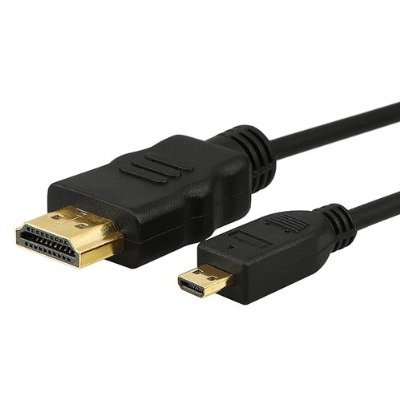
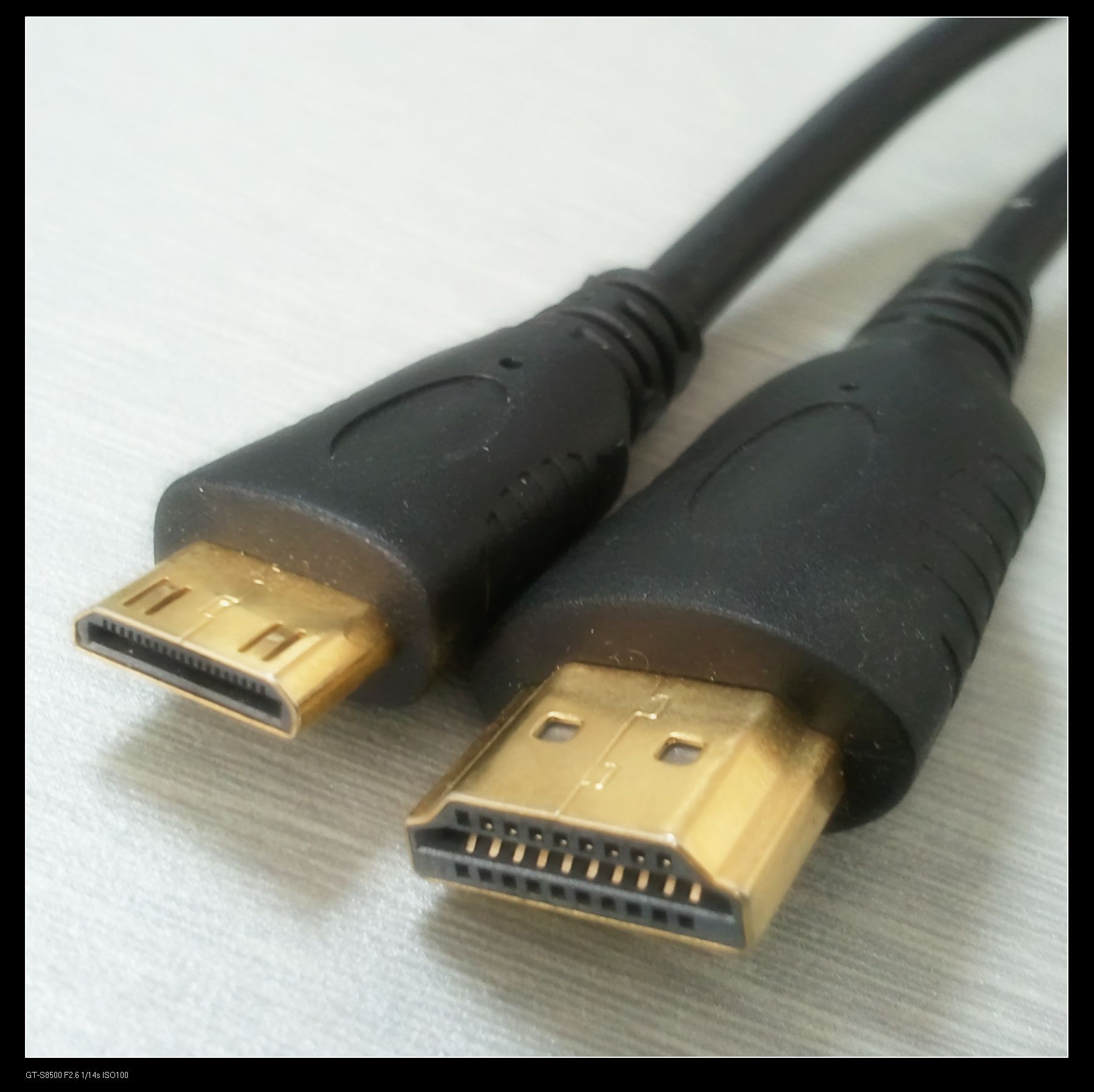
A mini hdmi to hdmi cable with a Type-C Mini HDMI plug on the device end and a Type-A Standard HDMI plug on the display end. Gold-plated contacts, foil plus braid shield, narrow overmold for recessed sockets. Length, exit angle and category to your build.
Overview
A mini hdmi to hdmi cable puts a Type-C plug on the device end and a
Type-A plug on the display end. Type-C, the Mini HDMI form factor, is the one that catches people out,
because it sits between two lookalikes: it is smaller than the Type-A socket on every television and
larger than the Type-D Micro HDMI socket on an action camera. Forcing the wrong plug into a socket
damages the socket, and the socket is soldered to the device. This build uses gold-plated contacts, a
foil-plus-braid shield and a narrow overmold at the small end so the plug reaches a recessed
socket.
Key Specifications
| Connector A | HDMI Type-C (Mini HDMI) male, gold-plated |
|---|---|
| Connector B | HDMI Type-A (Standard HDMI) male, gold-plated |
| Cable Length | Custom on request |
| Jacket | Black PVC |
| Application | Cameras, tablets and single-board computers to TV or monitor |
| Shielding | Foil plus braid over the signal pairs |
| Conductor | Stranded copper |
| Strain relief | Molded boot at each plug |
| Overmold | Black PVC, narrow body at the Type-C end |
| Build | Custom length and jacket color per your drawing |
Type C or Type D: reading the small HDMI socket
All four HDMI connector types carry the same 19 signals. They differ only in shell size, in how
they retain, and in what they are used on, which is exactly why a physical mismatch is easy to make
and expensive to undo. The
HDMI specification defines the
shells; this is how they sort out in the field.
| Type | Common name | Pins | Typical equipment | Retention |
|---|---|---|---|---|
| A | Standard HDMI | 19 | TVs, monitors, projectors, AV receivers | Friction only |
| C | Mini HDMI | 19 | Compact cameras, camcorders, some tablets, single-board computers | Friction only |
| D | Micro HDMI | 19 | Action cameras, a few slim tablets | Friction plus a latching shell on some builds |
| E | Automotive HDMI | 19 | In-vehicle head units and displays | Locking tab, keyed shell |
If the device is an action camera rather than a compact camera, you want
a hybrid link cable built around Type-D
instead. Adapters that step between the small types exist, but every adapter is a lever arm hanging
off a soldered socket, so specify the correct plug whenever the build allows it.
The device end is the end that fails
Almost every returned small-HDMI cable has failed at the device, not at the television. The reason
is leverage. A plug sticking 20 mm out of a camera body catches on a strap, a tripod plate or a cage,
and the moment arm snaps the socket off the board. Three things reduce that risk, and all three are
worth specifying up front.
- A short pigtail plus a longer extension. Put a 30 cm Type-C to Type-A pigtail on
the camera and run cheap, replaceable Type-A cable from there. The expensive socket never takes the
strain. - A right-angle plug at the device, where the enclosure allows it, so the cable
exits along the body instead of standing off it. - A strain-relief boot that is short and stiff. A long soft boot looks protective
and actually transfers more bending to the plug barrel.
Single-board computers: the awkward case
A development board is the hardest duty cycle a small HDMI lead ever sees. The board gets swapped
every few weeks, the lead is pulled out by the cable rather than by the plug, and the socket is often
the only thing holding the board still while the rest of the harness is connected. Two answers work.
Use a short Type-C pigtail that stays with the board and break the connection at the Type-A end, so
the socket is mated once. Or specify a plug with a latching shell where the socket supports it. If the
board turns out to have a full-size or a Micro socket instead, order that type; an adapter is the part
that eventually tears the socket off the board.
What bandwidth does the build have to support?
HDMI cable categories are named for the data rate they are verified against, not for a version
number printed on the box. High Speed covers the 10.2 Gbps era, Premium High Speed covers 18 Gbps with
4K at 60 Hz, and Ultra High Speed covers 48 Gbps for 8K and high-refresh 4K. A short camera-to-monitor
lead rarely needs the top category, but a boardroom or an
8K video wall does. Tell us the
resolution, refresh rate and color depth you have to hit, and the build is verified to the rate stated
on your drawing.
Where a mini hdmi to hdmi cable belongs
- Field monitoring for compact cameras and camcorders, straight into a monitor or recorder
- Drone and gimbal ground stations, where the cable has to be short and light
- Single-board computer development, where the board is swapped often and the socket takes the
wear - Older tablets with a Mini HDMI output feeding a projector in a fixed room
- Capture rigs built around a
machine vision camera
with an HDMI monitoring output
What to send when you order
- The device model, or a photograph of the socket face at actual size.
- Length, and whether the device end should be straight or right-angle.
- The resolution and refresh rate you need to pass, so the category is chosen on
performance rather than on price. - Whether the run goes through a wall or ceiling, which changes the jacket and the
pulling eye. - Quantity, and whether you need retail packing or bulk.
Mini HDMI builds are assembled and inspected to IPC/WHMA-A-620 Class 3 criteria, with ISO 9001 as the quality system over 32 to 12 AWG work. Every Mini unit is checked for continuity and pinout before packing, and seal checking is quoted whenever an ingress rating is on the drawing.
Custom builds and ordering
Mini HDMI prototype builds start from 1 to 50 pcs and are out in 3 working days. Production is quoted from 500 pcs at 14 working days after sample approval. Tooling not already held adds around 10 working days. Your part number and labeling go on OEM and ODM Mini shipments, and material certificates and first-article reports are on offer.
RoHS and REACH declarations are provided per project together with the agreed test reports; the documentation scope is listed under certifications and compliance. If your drawing specifies a UL style, we build to that drawing and supply the UL reference with the shipment instead of substituting an equivalent. The molded body is shot on our own presses; material choice and bond behavior follow the process described under overmolding and injection molding. More background: our broadcast and pro AV work. Any tooling we cut for this part stays yours, maintained in our own tool room under your part reference.
Related video assemblies
- Ultra High Speed HDMI Cable for 8K Video Walls
- Active Optical HDMI Cable for Boardrooms and Ceiling Runs
- VR Link Cable, 5 m Hybrid Fiber with 90 Degree Plug
- DP80 DisplayPort Cable with Latching Connector
- USB-C to DisplayPort Cable for High Refresh Monitors
- Car Dashboard Flush Mount USB + HDMI Extension
Full range: audio and video cable assemblies.
Frequently Asked Questions
Mini HDMI and Micro HDMI look nearly the same. How do I tell them apart?
Compare against a full-size HDMI plug. Mini is roughly the same width as the small end of that
plug; Micro is visibly narrower, closer to a Micro USB shell. If you are not sure, send a photo of
the socket and we will match it.
Will this work on a device that only has a Micro HDMI socket?
No. The shells are mechanically different and are not interchangeable. Order the Type-D build
instead.
Do I lose picture quality going from Type-C to Type-A?
No. All four types carry the same 19 signals, and the transition is purely mechanical. What limits
you at a distance is the cable category and the length, not the connector shape.
Can I have a right-angle plug on the camera end?
Yes, in either of the two exit directions. Tell us which way the cable has to leave the device and
we will tool it accordingly.
| Connector A | HDMI Type-C (Mini HDMI) male, gold-plated |
|---|---|
| Connector B | HDMI Type-A (Standard HDMI) male, gold-plated |
| Cable Length | Custom on request |
| Jacket | Black PVC |
| Application | Cameras, tablets and single-board computers to TV or monitor |
| Shielding | Foil plus braid over the signal pairs |
| Conductor | Stranded copper |
| Strain relief | Molded boot at each plug |
| Overmold | Black PVC, narrow body at the Type-C end |
| Build | Custom length and jacket color per your drawing |
Related products
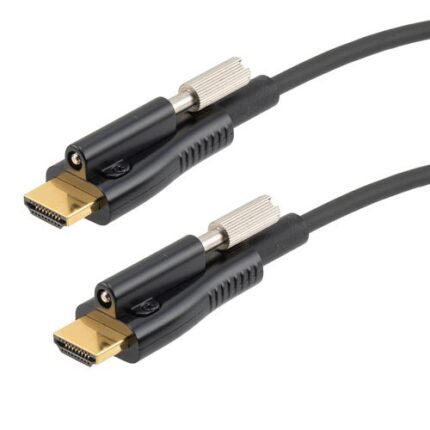
Active Optical HDMI Cable for Boardrooms and Ceiling Projectors
An active optical HDMI cable puts the high speed signal path onto fiber so a long boardroom or ceiling projector run stays slim enough to pull through conduit. Marked source and display ends, aramid strength member, hybrid copper for power and control. Tell us the route and we quote the length with a service loop.