Custom Magnetic Charging Cable – ODM Heads and Low-Cost Builds
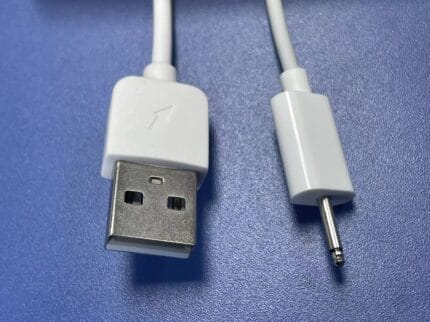
A custom magnetic charging cable built to the device drawing: choice of 2-pin head profiles, keying, length, color and packaging, with a fuse embedded in the USB-A plug. Indicative 1 m price about US$0.40 per unit at 10,000 pieces, FOB, confirm per RFQ.
Overview
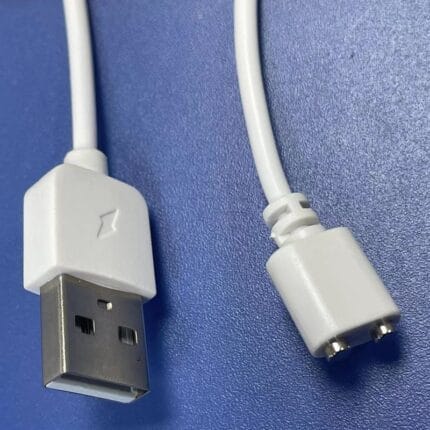
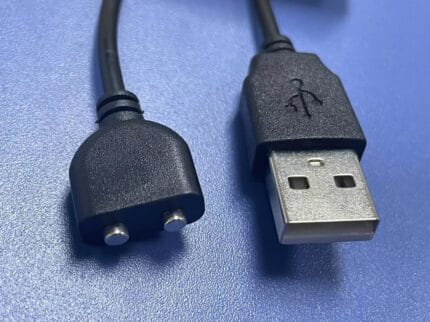
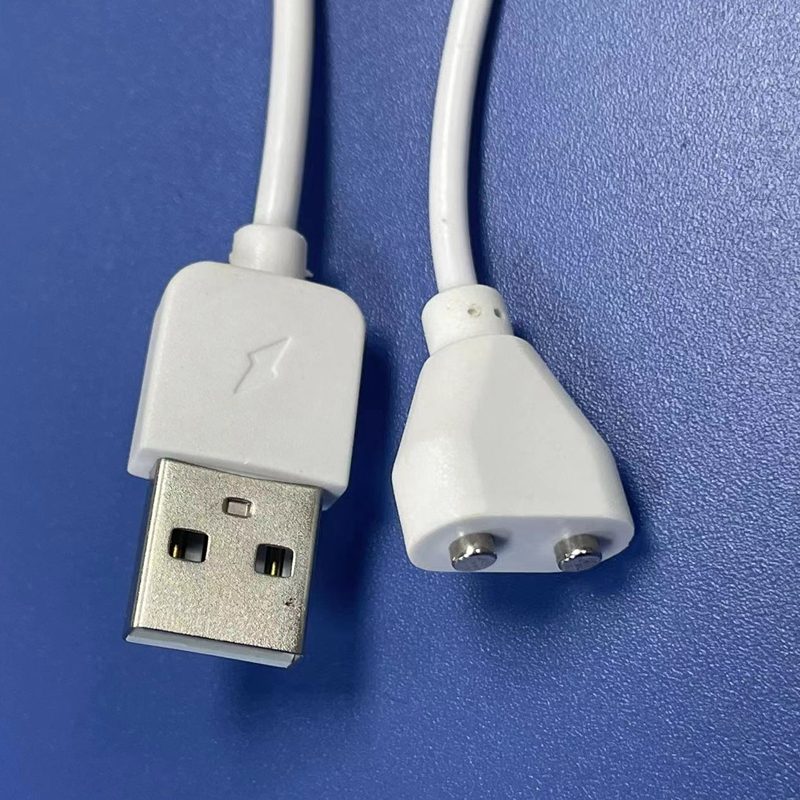
A custom magnetic charging cable is a charging lead whose head geometry, pin layout, length, color and packaging are set by the device it has to fit, not picked from a catalog. We build these as volume ODM parts for compact rechargeable products with sealed housings, with a fuse embedded in the USB-A plug and a two-pin magnetic head at the device end. The head is the part that varies most: this series has been tooled with round puck, teardrop, triangular fan, heart or kidney, and holder-base puck profiles. Indicatively, a 1 m reference build is about US$0.40 per unit at 10,000 pieces FOB, confirm per RFQ. This page explains how a custom magnetic charging cable is specified, which choices move the unit cost, and how a program moves from sample to repeat production.
What a Custom Magnetic Charging Cable Includes
Three things are fixed and everything else is open. Fixed are the USB-A male plug carrying the embedded fuse, the two-wire charging path, and the requirement that the head mate to the device contacts; open are the head shape, pitch, pin diameter, magnet polarity, keying, cable length, jacket compound, color, logo and packaging. The USB end follows the specifications published by the USB Implementers Forum, while the magnetic head is built to your drawing or an approved sample. Treating the head as a custom part rather than a standard one is what lets a sealed product avoid an open charging port. It also means the first article is the reference for every later order, so a repeat run does not need a new qualification cycle. A custom magnetic charging cable is quoted from the device side first.
Head Geometry Options We Have Tooled
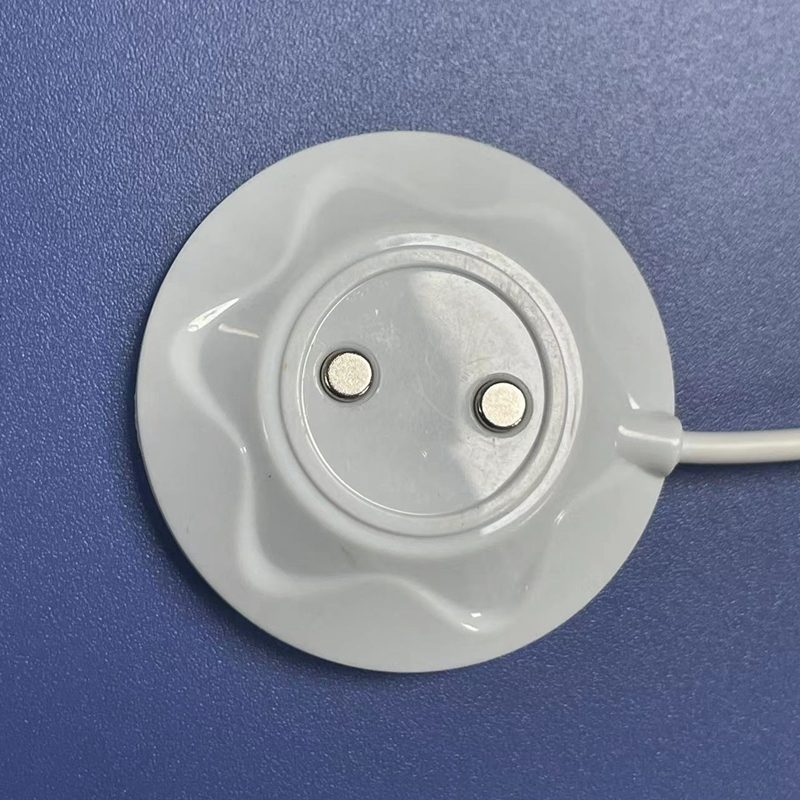
The shape of the head is usually dictated by the space available on the device and the look of the product. A round puck is the most compact and the easiest to seal against. A teardrop or dome profile gives a low edge that resists snagging. A triangular fan spreads the magnets for a more positive self-aligning pull on a flat surface. A heart or kidney profile keys the head so it can only seat in one orientation and gives the product a distinct visual detail. A holder-base puck lets the device sit in a cradle while charging. All of these carry two spring-loaded pogo contacts between two permanent magnets, and all can be built in white or black with a color-matched jacket. If your device needs a profile we have not tooled, our toolroom quotes a new mold and states the cost before any spend; 3,000+ tooling sets have been built since 2012 and 100+ molds remain active.
Custom Magnetic Charging Cable Specifications
The table below is the reference configuration behind the indicative price. Note that the electrical values are set on the drawing rather than published as fixed numbers, because a charger is matched to the device it feeds and to the conductor gauge of the chosen length.
| Item | Indicative figure |
|---|---|
| Reference build | 1 m lead, 2 pin magnetic head, USB-A plug with embedded fuse, bulk PE bag |
| Indicative price at 10,000 pcs | about US$0.40 per unit, FOB — confirm per RFQ |
| Prototype run (1–50 pcs) | quoted per sample, before a volume order |
| Other quantities and specifications | tiered, quoted per RFQ — not published as a fixed list |
| Public retail listings surveyed Oct 2026 | about US$2.20–5.00 per cable |
| Public B2B supplier listings surveyed Oct 2026 | about US$0.45–3.00 per cable at MOQ 1,000–5,000 |
Pitch, Polarity and Device Matching
Pitch is the center-to-center distance between the contacts, and it is the dimension most often quoted without being verified. It is not a universal standard. A head with the right pitch can still fail to seat if the magnet positions, the housing outline or the pin diameter differ. We work from one of three inputs: the device contact drawing, a physical sample of the existing charger, or the device itself. From any of those we measure pitch, pin count, pin diameter, magnet polarity and head outline, then produce a mating head that seats without wobble. Polarity is fixed in writing on the drawing, because a reversed charge pair can damage the product. Where a program spans several models, we can key the heads differently so the wrong lead cannot be attached, or standardize on one head across models to keep the unit price down. Sending the sample is always the fastest route.
Overcurrent Protection Built Into the Plug
Every lead in this series carries a fuse embedded inside the overmolded USB-A male plug housing. From the outside the connector looks like a standard USB-A plug: no inline fuse holder, no cylindrical bulge on the cable, no separate box. Hiding the protection inside the plug keeps the lead smooth and easy to clean, avoids a snag point, and keeps the magnetic head small enough for a compact sealed device. A magnetic head can land on keys or a metal table edge while live, and a crushed jacket can create an internal fault; the fuse opens the circuit before that fault delivers damaging energy. It is a standard part of the build, independent of the battery management inside the device. Its rating, breaking characteristics and any related approvals are set per project on the approved drawing and are confirm per build. The fuse is a built-in part of this series. Its rating, breaking characteristics and any related approvals are set per project on the approved drawing and are confirm per build; we do not publish a generic rating that would be wrong for half the programs we quote.
Indicative Volume Pricing and Tiers
We publish one concrete number: about US$0.40 per unit for the reference 1 m build at 10,000 pieces FOB. It is a planning figure so a buyer can decide early whether a program is worth quoting, not a standing offer. We do not publish a full price list, because every other tier depends on tooling, packaging and documentation that vary by program. Prototype runs of 1 to 50 pieces are quoted per sample; production runs from 500 pieces can be built where the tooling already exists; the volume tier that reaches the reference point typically starts at 10,000 pieces. Every figure is confirm per RFQ and is restated in the written quotation, which separates unit price, tooling, packaging and documentation. All prices on this page are indicative, quoted FOB, and must be confirmed per RFQ. Unit price varies with connector, length, jacket, packaging, tooling and the compliance documentation required for the destination market. Fuse ratings and test limits are specified on the drawing and confirmed in writing before production.
Market Price Context
In a survey of publicly listed prices in October 2026, single magnetic charging cables appeared at roughly US$2.20 to US$5.00 in retail listings and roughly US$0.45 to US$3.00 each in B2B supplier listings at minimum order quantities of 1,000 to 5,000 pieces. The lowest published B2B tier we found was around US$0.45 at 5,000 pieces. The indicative US$0.40 at 10,000 pieces therefore sits below the published tiers, which is what a committed volume run with reused tooling should achieve. These are observations of public listings at a point in time, not offers; they change with specification, packaging and market conditions. Catalog listings also rarely include a custom head or an embedded fuse, so use them as context rather than as a like-for-like benchmark.
What Drives the Unit Cost
Five factors dominate. Tooling is the largest one-off: reusing an existing head mold keeps the unit price down, while a new geometry carries a quoted tooling charge. Connector and pogo-pin count set the head piece cost. Length and wire gauge set the copper and jacket cost. Packaging moves from a bulk PE bag to a printed retail box. Compliance documentation and lot testing add engineering time. Design for manufacture is where the rest of the saving comes from: standard cut lengths, simplified overmolds, and fewer hand operations on the assembly line. None of it comes from reducing conductor size, skipping the electrical test, omitting the fuse, or substituting a material the drawing did not call for. If a cost-down option exists, we quote it as a separate line item so you can see exactly what changes.
Lengths, Compounds, Branding and Compliance
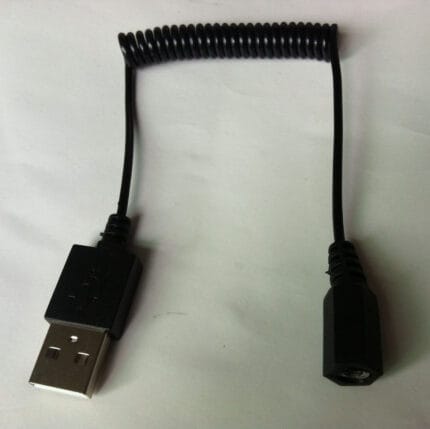
Length is cut to order; 1 m is the usual charging-lead length and the basis of the reference price, but 0.2 m to 5 m and coiled versions are available. Jacket compounds include PVC and TPE, with softer-touch, braided, low-smoke, halogen-free and cleaner-resistant alternatives quoted separately. Jacket and head color are matched to the device or the retail box, and a printed logo can be added to the overmold or the plug. USB-A is standard; USB-C is quoted as a separate build because the plug overmold and the fuse placement change. Head keying, custom magnet strength within the measured range, pin plating and packaging artwork can all be set for an ODM program. The more of these choices that are fixed before the first article, the more stable the repeat price.
These leads ship with products that are handled daily, held against the body and wiped down, so compound selection is part of the specification rather than a finishing detail. Material compliance documentation for the series, including California Proposition 65 testing for lead and phthalates, is available on request, with RoHS and REACH documentation assembled alongside it for the destination market. We do not claim that a certificate covers a build that has not been tested: coverage is matched to the exact compound, color, plating and head geometry of the order and confirmed in writing before production. If your market requires a warning label or a declaration in the retail box, send the artwork early so the quote and the production plan both include it.
Quality Control and Testing
Every assembly is checked for continuity, correct pin assignment, short circuits and an intact fuse path before packing, and the magnetic head is mated against a reference fixture to verify seating and pin travel. Lot records can include insulation resistance, hi-pot results, strain-relief pull-test data and a first-article inspection report when specified. For a custom head we recommend a dedicated fixture built from the approved device sample, since a generic two-wire continuity check cannot confirm that the head seats correctly or that the keying works. Test methods, fuse verification and acceptance limits are agreed in writing before production so the report matches the drawing. The approved first article then becomes the reference for every repeat order.
How to Request a Custom Build Quote
Send the device sample or contact drawing, the pin count and polarity, the head shape you want, the cable length, the target quantity, the destination market, the packaging requirement and any compliance documents you need. If you have an existing charger, include a photo or a physical sample; that removes most of the back-and-forth. We reply with a written quotation that separates unit price, tooling, packaging and documentation, states the lead time, and lists what has to be confirmed before production. All prices on this page are indicative, quoted FOB, and must be confirmed per RFQ. Unit price varies with connector, length, jacket, packaging, tooling and the compliance documentation required for the destination market. Fuse ratings and test limits are specified on the drawing and confirmed in writing before production. The RFQ preparation guide lists the same items in checklist form.
Frequently Asked Questions
Is the fuse visible on the cable? No. It is embedded inside the USB-A male plug housing, so the plug looks like a standard USB-A connector. Its rating is set per project and confirm per build.
Is the US$0.40 price fixed? No. It is an indicative FOB figure for a 1 m reference build at 10,000 pieces. All prices are confirm per RFQ and change with tooling, packaging and compliance requirements.
Can you match an existing supplier’s charger? Yes. Send the current part and we reverse-engineer the head, then quote a matched build with a first article for approval.
What is the minimum order? Prototypes of 1 to 50 pieces, production from 500 pieces with existing tooling, and the reference volume tier typically at 10,000 pieces.
Can you hold a price across repeat orders? Where the specification, packaging and tooling are unchanged, we quote a repeat-run price against the approved first article; material market movement is stated in the quotation.
Related Cable Ranges
This program sits in our Low-Cost Cable Assemblies line. For individual power leads see DC Plug Power Cables, and for build-to-print looms see Custom Wire Harnesses. The fused reference build is described on the fuse protected charging cable page, and the device-side requirements on the personal device charging cable page. Send the specification through the RFQ form to open a quote.
| Head Geometry | Round puck, Teardrop, Triangular fan, Heart or kidney, Holder-base puck, New mold on request |
|---|---|
| Pin Count | 2 spring-loaded pogo contacts |
| Pitch and Polarity | Set from device drawing or sample |
| Overcurrent Protection | Fuse embedded in USB-A male plug housing |
| USB End | USB-A male, USB-C quoted separately |
| Cable Length | 1 m reference, 0.2-5 m and coiled available |
| Jacket and Branding | PVC, TPE, Color matched, Logo print on request |
| Tooling | 3,000+ tooling sets built since 2012, 100+ active molds, New geometry quoted up front |
| Compliance | CA Prop 65, RoHS, REACH – confirm per build |
| Indicative Price | about US$0.40 / unit at 10,000 pcs, FOB, confirm per RFQ |