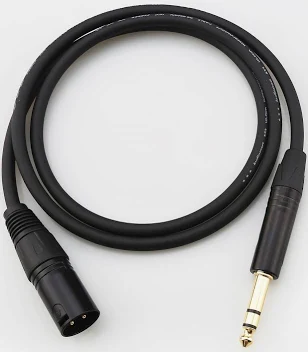
1/4 TRS to XLR Cable 6.35 mm Balanced Lead for Monitors
A trs to xlr cable covers the connection that comes up constantly in small studios and live rigs: a balanced 6.35 mm output feeding a three pin XLR input. Purpose-built lead, spiral and foil shielded, 0.3 to 6 m.
Overview
A trs to xlr cable covers the connection that comes up constantly in small studios and live rigs: a balanced 6.35 mm output on an interface, controller or mixer feeding an input that takes a three pin XLR. Active monitors, stage boxes and powered speakers all sit on that boundary. A purpose-built lead is tidier and more reliable than an adapter stacked on the end of a general purpose cable, and it removes one more mechanical joint that can work loose during a set.
Key Specifications
| Interface | 6.35 mm TRS male to 3-pin XLR male |
|---|---|
| Wiring | Balanced, tip and ring to XLR pins, sleeve to screen |
| Conductor | OFC, 22 to 24 AWG pending supplier confirmation |
| Shielding | Spiral screen plus foil layer |
| Contact finish | Gold plated TRS, nickel finished XLR |
| Strain relief | Molded, reinforced at both ends |
| Stock lengths | 0.3 m / 1 m / 3 m / 6 m |
The wiring, pin by pin
This is the balanced convention used across professional audio: the two signal legs of the 6.35 mm plug map to the two signal pins of the XLR, and the sleeve becomes the screen. Getting any one of these wrong does not usually produce silence — it produces a quiet, phasey signal, which is much harder to spot.
| 6.35 mm TRS | Signal | 3-pin XLR male |
|---|---|---|
| Tip | In phase (hot) | Pin 2 |
| Ring | Return (cold) | Pin 3 |
| Sleeve | Screen / chassis | Pin 1 |
What your source is actually putting out
Not every 6.35 mm socket is a balanced mono output, and this is the single most common reason a new lead sounds wrong.
| Source output | What you get through this lead | What to do |
|---|---|---|
| Balanced mono (TRS) | Full level, full common mode rejection | Nothing — this is the intended use |
| Unbalanced stereo (TRS) | One channel only, or a thin phasey signal | Use an unbalanced lead or a splitter instead |
| Unbalanced mono (TS) | Works, but with no noise rejection | Acceptable for very short runs only |
| Balanced XLR output | Not this cable | Use an XLR to XLR lead |
If you are not sure which your device presents, check the manual for the word balanced. Consumer interfaces and keyboards often use TRS sockets for stereo headphone or insert duties, which look identical.
Where it is used
- Audio interfaces with balanced 6.35 mm outputs feeding active monitors
- Mixer and controller outputs running to powered speakers
- Stage boxes and patch systems where the two formats meet
- Keyboard, drum machine and modeler rigs that need a balanced feed to front of house
Shielding and why two layers
The lead carries a spiral screen for coverage and a foil layer beneath it, because this cable usually lives within a meter of mains adapters, power strips and computer monitors. Spiral gives flexibility and good low frequency coverage, foil handles the higher frequencies a switching supply throws out, and together they keep the noise floor down without making the lead stiff enough to drag a monitor off a stand.
Lengths and finishes
| Length | Suits | Note |
|---|---|---|
| 0.3 m | Patching within a rack or across a desktop | Keeps a desk tidy and away from power supplies |
| 1 m | Interface to a near-field monitor | The usual desktop length |
| 3 m | Monitors on stands, small stage runs | Common for powered speakers |
| 6 m | Across a small stage or a room | Route clear of mains and lighting cable |
For fixed installs we can build to a specified length and label both ends, which saves the identification argument at the next service visit.
Typical applications for this trs to xlr cable
- Project and home studios feeding active monitors from an interface
- Live rigs running a keyboard or modeler to front of house, alongside our XLR microphone cable for the mic runs
- Stage boxes and patch systems where jack and XLR meet in the same rack
- Installed sound in meeting rooms and small venues
- Broadcast and podcast rigs, paired with our 6.35 mm TRS 90 degree audio cable where the plug has to sit flush
Confirm before ordering
- Conductor gauge and copper grade need supplier datasheet confirmation.
- Shielding coverage figures are taken from competitor listings, not measured by us.
- Published resistance and capacitance values are not yet verified.
- Whether you need XLR male or XLR female on the destination end.
Connector bodies are built to standard 6.35 mm and three pin XLR dimensions, so they seat and release normally on equipment from different makers.
Workmanship and testing
Build standard for 1/4 TRS builds is IPC/WHMA-A-620 Class 3 under ISO 9001, with terminations from 32 to 12 AWG. No 1/4 unit is packed until continuity and pinout check out, and seal checking is quoted whenever an ingress rating is on the drawing.
RoHS and REACH declarations are provided per project together with the agreed test reports; the documentation scope is listed under certifications and compliance. If your drawing specifies a UL style, we build to that drawing and supply the UL reference with the shipment instead of substituting an equivalent. Injection parameters for this part are developed against the jacket material using the approach documented under how we run the overmold press. Related reading: what stage and studio work demands. Any tooling we cut for this part stays yours, maintained in our own tool room under your part reference.
Custom builds and ordering
On 1/4 TRS builds, prototype lots run from 1 to 50 pcs and leave in 3 working days. Production runs of 500 pcs and up ship 14 working days after approval. Tooling not already held adds around 10 working days. 1/4 builds go out under your part number and labeling, and material certificates and first-article reports come with them on request.
Related audio leads
- XLR microphone cable, balanced three pin male to female
- 6.35 mm TRS 90 degree audio cable
- 3.5 mm TRS to 2x RCA cable
- 3.5 mm stereo Y splitter cable
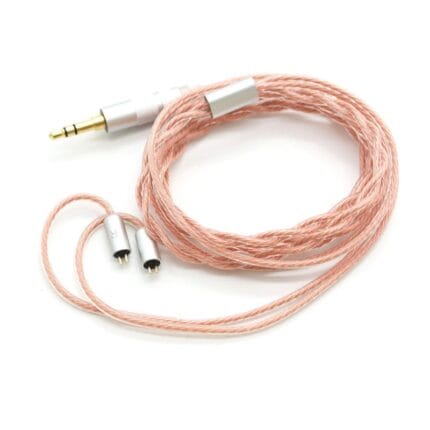
- Balanced IEM cable with detachable two-pin and MMCX
Full range: audio and video cable assemblies.
Frequently Asked Questions
Why is my signal quiet and hollow?
That is the classic symptom of feeding an unbalanced stereo TRS output into a balanced XLR input, or of a tip and ring swap. Check the output type on the source first.
Do you make XLR female versions?
Yes. The destination end can be male or female, and we build to whichever the equipment requires.
Can I use this for a microphone?
Only in the direction that makes sense: a microphone has an XLR output, so a mic run needs an XLR to XLR lead.
Do you publish the shielding coverage figure?
Not yet. The figure in competitor listings is what we quote today; ask for the supplier datasheet before a volume order.
| Interface | 6.35 mm TRS male to 3-pin XLR male |
|---|---|
| Wiring | Balanced, tip and ring to XLR pins, sleeve to screen |
| Conductor | Stated per your drawing |
| Shielding | Spiral screen plus foil layer |
| Contact finish | Gold plated TRS, nickel finished XLR |
| Strain relief | Molded, reinforced at both ends |
| Stock lengths | 0.3 m / 1 m / 3 m / 6 m |