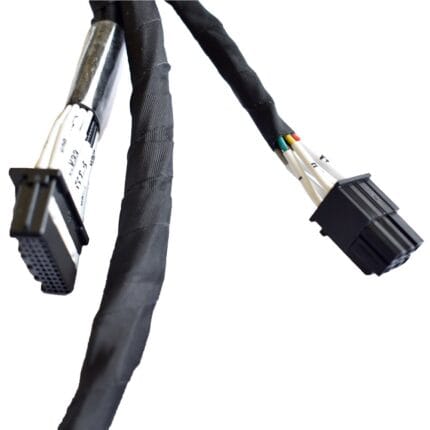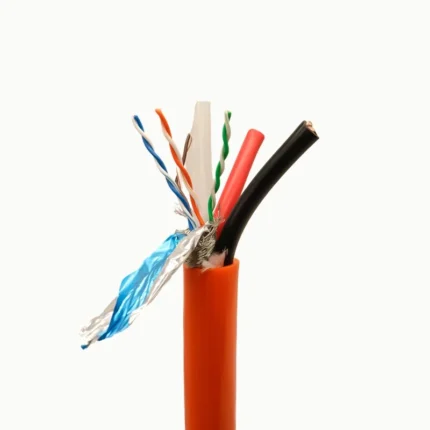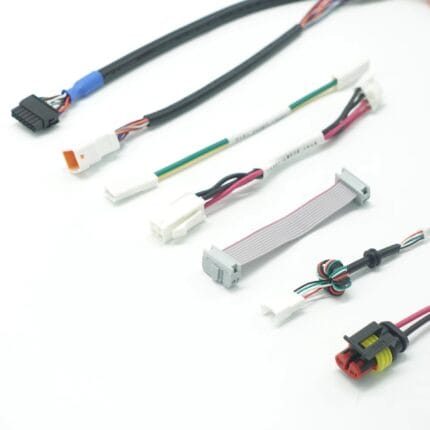
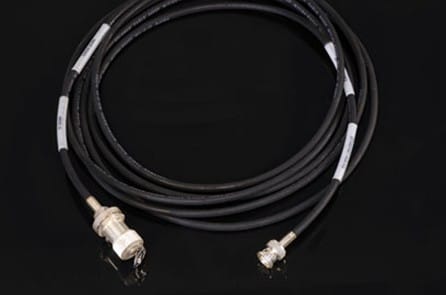
MIL-C-26482 Series I Military Cable Assembly
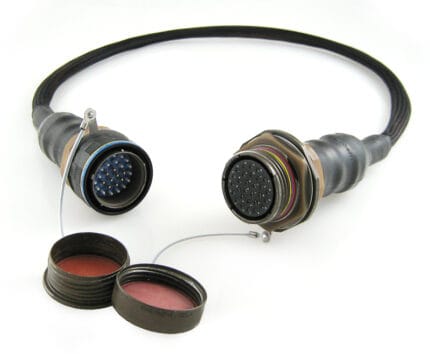
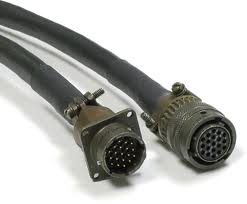
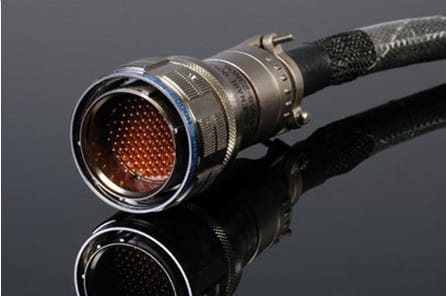
A military mil 26482 cable built on MIL-C-26482 Series I bayonet connectors, shell sizes 08 to 24, wired to the contact layout you specify. Gold-plated contacts, braid and foil shield, PUR or neoprene jacket.
Overview
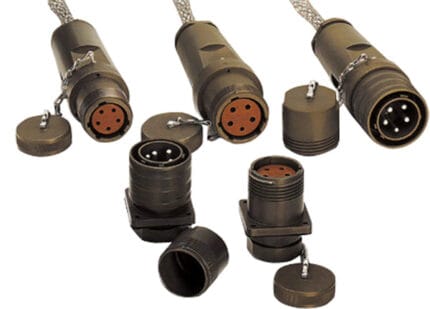
A military mil 26482 cable on MIL-C-26482 Series I is the general-duty circular harness that has been in service for decades and is still what most maintainers reach for. Series I is the bayonet member of the family: push, twist, and it locks with an audible and tactile click. Shell sizes run from 08 to 24 with contact layouts from two to sixty-one positions, so the same coupling covers everything from a two-way power feed to a dense signal bundle. It is not interchangeable with Series II or with 38999, and that is the single most common cause of a wasted purchase order on this family.
Key Specifications
| Connector Family | MIL-C-26482 Series I |
|---|---|
| Shell Sizes | 08, 10, 12, 14, 16, 18, 20, 22, 24 |
| Contact Layouts | 2 to 61 contacts |
| Shell Material | Aluminum alloy, olive drab cadmium |
| Contact Material | Copper alloy, gold plating 1.27 micron typical |
| Operating Temperature | -55 C to +125 C |
| Sealing | IP67 mated |
| Length | OEM build to required length |
Series I or Series II: same family, different hardware
Both are miniature bayonet connectors and both are covered by the same specification, which is exactly why they get confused. The differences are in the shell and in how the contacts come out, not in the electrical performance.
| Series I | Series II | |
|---|---|---|
| Coupling | Bayonet, the standard three-pin bayonet action | Bayonet, with a shorter and lighter shell |
| Scoop-proof | No | Yes – recessed pins in the plug |
| Contact release | Rear release on the classic builds | Front release, so a contact comes out without removing the shell |
| Typical heritage | The general-duty family used across airframes and ground equipment | Where weight and panel space are tighter |
| Mates with the other | No | No |
26482, 38999 or 5015: three families, three jobs
Picking a circular family is a decision about coupling, density and environment, in that order. This table is the short version of what installers learn the hard way.
| MIL-C-26482 | MIL-DTL-38999 | MIL-DTL-5015 | |
|---|---|---|---|
| Coupling | Bayonet | Tri-start threaded, self-locking | Threaded with a coupling nut |
| Shell sizes | 08 to 24 | 09 to 25 | Larger, heavier shells |
| Contact density | 2 to 61 | 3 to 128 | Lower density, larger contacts |
| Environment | General duty | The harsh-environment default | Heavy power and industrial heritage |
| Where it wins | Serviceability and installed base | Vibration, EMI and salt exposure | Current-carrying and rugged industrial work |
| Where it loses | Not scoop-proof in Series I | Cost and coupling time | Bulk and weight |
Why the bayonet still earns its place
A threaded coupling is objectively better under sustained vibration, and Series I is still on aircraft and ground equipment everywhere, because a maintainer wearing gloves can connect a bayonet in one motion and confirm it by feel. That is worth something. The failure mode to manage is loosening over time: inspect the springs, listen for the click, and if a connector has been coupled hundreds of times, treat it as a wear item rather than as a permanent joint.
Construction and what we need from you
- Series I shells in the size, plating and keying you nominate.
- Gold-plated copper alloy contacts, crimped on the correct die for the size.
- Braid and foil shielding where the signal mix needs it, with the drain dealt with at the backshell.
- PUR or neoprene jacket, chosen for the fluid and temperature exposure.
- Overmolded or clamped strain relief at each shell exit.
How to specify your build
- The full callout for both ends, including shell style, size and arrangement.
- Which series – and if you are not sure, a photograph of the mating receptacle.
- Contact count and which cavities are populated, with the pinout.
- Jacket and shielding, with the fluids and temperature range.
- Length and quantity, plus prototype or production.
Typical applications for this military mil 26482 cable
- Avionics and instrument bays where a harness has to come out for service regularly
- Ground support and test equipment, alongside a MIL-DTL-5015 circular power assembly
- Maintaining an installed base rather than designing new, paired with a 38999 high-speed harness on the new build side
- Vehicle and shelter interconnects, next to a railway rolling stock harness
- Dense signal bundles where a smaller connector is needed, with a Micro-D shielded jumper on the compact end
Workmanship and testing
For MIL-C-26482 Series I Military builds the line runs to IPC/WHMA-A-620 Class 3 under ISO 9001, terminating 32 to 12 AWG. Every MIL-C-26482 build gets a continuity and pinout check before it is boxed, and seal checking is quoted whenever an ingress rating is on the drawing.
RoHS and REACH declarations are provided per project together with the agreed test reports; the documentation scope is listed under certifications and compliance. If your drawing specifies a UL style, we build to that drawing and supply the UL reference with the shipment instead of substituting an equivalent. The molded body is shot on our own presses; material choice and bond behavior follow the process described under how we run the overmold press. More background: how we build and document first articles. Any tooling we cut for this part stays yours, maintained in our own tool room under your part reference.
Custom builds and ordering
MIL-C-26482 Series I Military prototype lots start from 1 to 50 pcs and ship in 3 working days. Production requires 500 pcs and runs 14 working days after sample approval. Tooling not already held adds around 10 working days. Your part number and labeling go on OEM and ODM MIL-C-26482 shipments, and material certificates and first-article reports come with them on request.
Related military harnesses
- MIL-DTL-5015 Circular Power Cable Assembly
- 38999 High-Speed Harness for Radar and Airborne Ethernet
- Micro-D Shielded Jumper, MIL-DTL-83513
- Nano-D Space Harness, MIL-DTL-32139
- Railway Rolling Stock Harness
Full range: custom wire harnesses.
Frequently Asked Questions
Can I use Series I where the drawing says Series II?
No. They do not mate. If the receptacle is already fitted, identify it from the shell and the insert before ordering; a photograph usually settles it.
What is the difference between this and 38999?
Coupling, density and environment. 26482 is bayonet and general duty; 38999 Series III is threaded, scoop-proof and specified where vibration and EMI are the design drivers.
Do you supply the connectors or do we?
Either. We normally build from components we source to the callout on your drawing, and we are happy to build from free-issued connectors when you have them.
Can you repair or extend an existing harness?
Yes, where the shell and contacts are serviceable. Send it in, or send the callout and the length you need added.
| Connector Family | MIL-C-26482 Series I |
|---|---|
| Shell Sizes | 08, 10, 12, 14, 16, 18, 20, 22, 24 |
| Contact Layouts | 2 to 61 contacts |
| Shell Material | Aluminum alloy, olive drab cadmium |
| Contact Material | Copper alloy, gold plating 1.27 micron typical |
| Operating Temperature | -55 C to +125 C |
| Sealing | IP67 mated |
| Length | OEM build to required length |
Related products