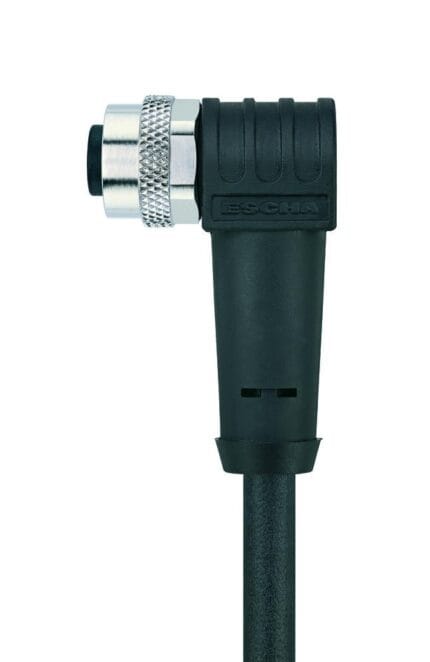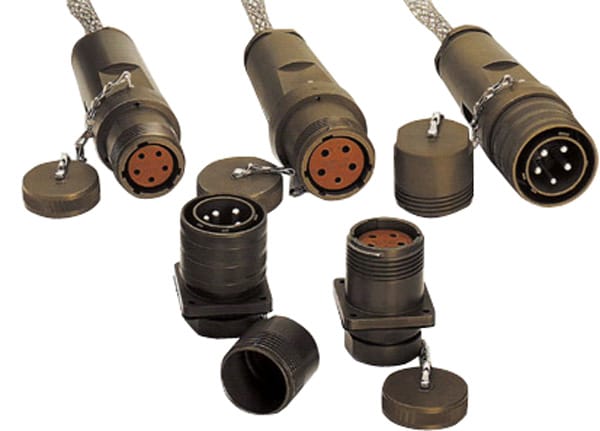
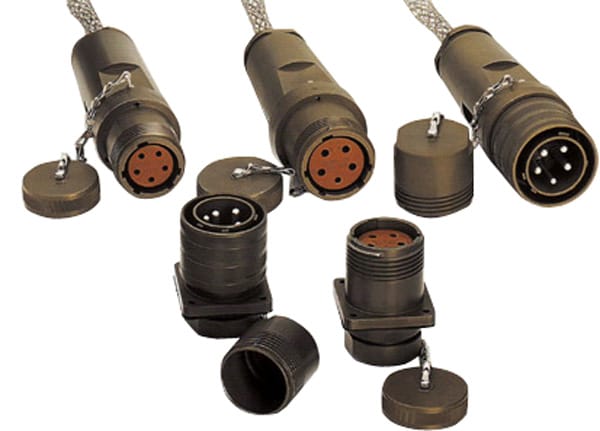
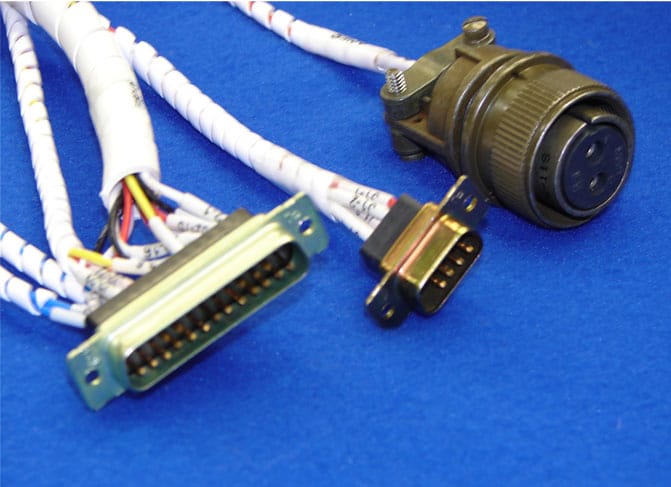
MIL-DTL-22992 Power Cable Assembly
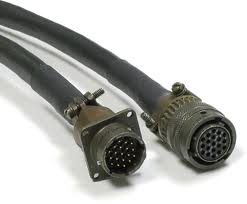
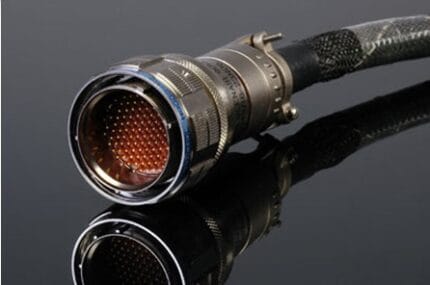
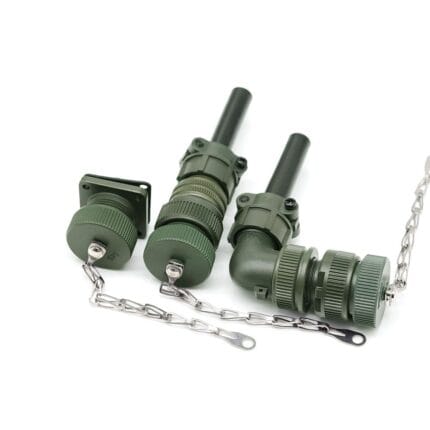
A military mil 22992 cable for heavy power distribution on MIL-DTL-22992 Class L or Class R connectors, shell sizes 28 to 64. Silver-plated power contacts, neoprene or PUR jacket, built to the arrangement you name.
Overview
A military mil 22992 cable is a power distribution assembly, not a signal harness. MIL-DTL-22992 covers the heavy connectors used to move real current: generator sets, shipboard shore power, shelters, field hospitals and anything else where a three-phase feed arrives on a connector you can couple in the rain. Shell sizes run from 28 to 64, and the family splits into Class L and Class R depending on whether you want single-pole power inserts or a mixed insert with power and control contacts together. Silver-plated contacts are the norm rather than gold, because at these currents the plating has to survive making and breaking under load.
Key Specifications
| Connector Family | MIL-DTL-22992 Class L / Class R |
|---|---|
| Shell Sizes | 28, 32, 44, 52, 64 |
| Contact Type | Power and control, silver plated |
| Current Rating | 40 A to 200 A |
| Voltage Rating | 250 V to 600 V AC |
| Contact Material | Copper alloy, silver plating 5 micron typical |
| Jacket Material | Neoprene or PUR |
| Length | OEM build to required length |
Class L or Class R: what the letter changes
Both classes use the same shells and the same coupling, so the choice is about what sits inside. Class L is the single-pole power arrangement used where phases are keyed and separated; Class R puts power and control contacts in one insert. If you are feeding a motor or a genset output, you almost certainly want Class L. If you need a pilot, an interlock or a neutral alongside the power contacts, Class R is usually the cleaner build.
| Class L | Class R | |
|---|---|---|
| Insert style | Single-pole power contacts in keyed positions | Multiple power and control contacts in one insert |
| Typical use | Polyphase power, generator outputs, shore power inlets | Equipment that needs control and interlock circuits with the feed |
| Keying | Keyed inserts so phases cannot be crossed | Keyed by arrangement; confirm the rotation on the drawing |
| What to watch | Phase rotation and the earth path before energizing | Mixing signal-level and power-level contacts in the same shell |
Heat is the design constraint, not the contact rating
A power connector does not fail because the catalog number was slightly low; it fails because a joint got hot, the plating degraded, the contact relaxed, and the joint got hotter. That is a feedback loop, and every input to it is something you can specify.
| What drives the temperature | Why it matters | What to specify |
|---|---|---|
| Conductor cross section | Sets the resistance of the run and the heat generated in it | Cross section from current and round-trip length, not from the shell size |
| Contact resistance | Every milliohm is heat at the mating face | Correct crimp die, correct plating, and a pull test on the termination |
| Termination quality | A cold crimp or a loose stud is a heater | Torque to the equipment manual value and re-check after a thermal cycle |
| Fill and derating | Contacts bundled together heat each other | State the ambient and the duty cycle so derating is real rather than assumed |
| Plating under load | Silver behaves differently to gold at these currents | Silver-plated power contacts, and a mating cycle count if it will be plugged often |
Salt, wash-down and the environment around the connector
These assemblies live outdoors, on decks and in plant rooms that get hosed down. The connector shell is the easy part; the hard part is the cable entry and the jacket. A sealed shell with an unsealed backshell is not a sealed assembly, and a jacket that swells in diesel will let water travel along the strands and into a contact. Where the build will see salt air, specify the salt spray exposure hours you need met, the jacket compound against the fluids it will meet, and a cable entry that is clamped rather than merely glued.
Construction
- MIL-DTL-22992 shells in the size and class you nominate, with the arrangement number from the drawing.
- Silver-plated power contacts crimped on a die matched to the conductor size.
- Conductor cross section selected from the current and the round-trip length.
- Neoprene or PUR jacket, chosen against oil, fuel and weather exposure.
- Sealed backshell with a clamped cable entry and strain relief into the shell.
What we need from you to quote
- Class and shell size, with the arrangement number.
- Current and voltage per contact, and the duty cycle.
- Conductor cross section, or the run length and current so we can size it.
- Jacket and fluids, plus the temperature and salt exposure.
- Length and quantity, and whether this is a prototype or a production order.
Typical applications for this military mil 22992 cable
- Generator set output leads and load bank connections
- Shipboard shore power and dockside distribution, alongside a MIL-DTL-5015 circular power assembly
- Shelter and field hospital power distribution, paired with an energy storage cabinet wiring harness
- Battery and generator hybrid systems, next to a BESS battery wiring harness
- Heavy vehicle and plant power feeds, with a custom industrial robot wire harness on the machine side
Workmanship and testing
IPC/WHMA-A-620 Class 3 is the workmanship bar for MIL-DTL-22992 Power builds, and ISO 9001 is the system behind the line, from 32 to 12 AWG. Every MIL-DTL-22992 build gets a continuity and pinout check before it is boxed, and seal checking is quoted whenever an ingress rating is on the drawing.
Every production run can ship with RoHS and REACH declarations and the electrical report agreed at quotation; see certifications and material declarations. UL styles and other named approvals are built to drawing: we source to the style you specify and document it, rather than asserting a listing we do not hold. Production runs on the same lines described under the assembly lines behind this build, where cutting, termination, molding and 100 percent electrical verification sit under one roof. Related reading: how we build and document first articles. Tooling is quoted separately, cut in-house rather than brokered out, and owned by you.
Custom builds and ordering
Five pieces is the prototype minimum for MIL-DTL-22992 Power builds, shipping in 3 working days. The production minimum is 500 pcs, delivered 14 working days after approval. Tooling not already held adds around 10 working days. MIL-DTL-22992 orders ship as OEM or ODM under your part number and labeling material certificates and first-article reports are available on request.
Related power and distribution harnesses
- MIL-DTL-5015 Circular Power Cable Assembly
- BESS Battery Wiring Harness for Energy Storage Racks
- Energy Storage Cabinet Wiring Harness
- BMS Communication Harness for Battery Packs
- 38999 High-Speed Harness for Radar and Airborne Ethernet
Full range: custom wire harnesses.
Frequently Asked Questions
Class L or Class R for a generator output?
Class L, almost always. It is the single-pole power arrangement with keyed inserts, which is what a polyphase feed wants.
Why silver-plated contacts rather than gold?
At these currents silver is the conventional choice for power contacts. Gold is for low-level signal contacts where fretting corrosion matters more than bulk conductivity.
How do I size the conductor?
From the current and the round trip, which is twice the one-way length. Give us the current and the run and we will size it with you; the shell size does not tell you the cross section.
Is the assembly sealed?
Mated, the shells are sealed. The assembly is only sealed if the backshell and the cable entry are part of the sealed path, so specify those too.
| Connector Family | MIL-DTL-22992 Class L / Class R |
|---|---|
| Shell Sizes | 28, 32, 44, 52, 64 |
| Contact Material | Copper alloy, silver plating 5 micron typical |
| Length | OEM build to required length |
| Contact Type | Power and control, silver plated |
| Current Rating | 40 A to 200 A |
| Voltage Rating | 250 V to 600 V AC |
| Jacket Material | Neoprene or PUR |
Related products