PoE Cat6a Patch Cable, 4-Pair Shielded, Molded Snagless Boot
A poe ethernet patch cable built for powered devices rather than data alone: shielded Category 6A pairs, a snagless molded boot and OEM lengths for cameras, access points and desk phones.
Overview
This poe ethernet patch cable is built for the one thing ordinary patch leads are not designed around: carrying supply and data over the same four pairs to a device that has no local power outlet. Access points, dome cameras, VoIP handsets and compact switches sit where a mains feed is expensive and an injector at the far end is the only sensible answer, and the drop cable between injector and device is what determines whether that arrangement behaves.
The build stays deliberately conservative where it matters. All four pairs are twisted to category geometry rather than treated as generic conductors, because the pairs are doing two jobs at once and any degradation in the channel shows up as retransmissions rather than as a visible fault. The molded boot at each plug carries that compromise properly instead of leaving the cable to flex at the point where the conductors are terminated.
Key Specifications
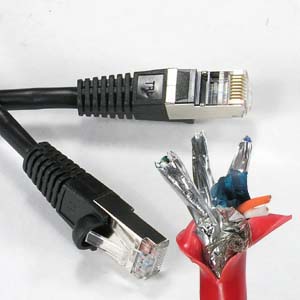
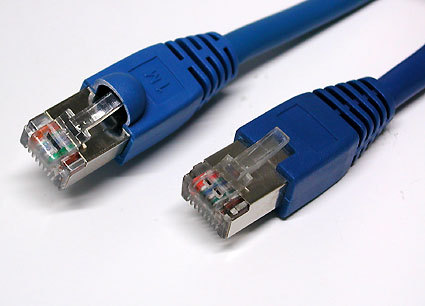
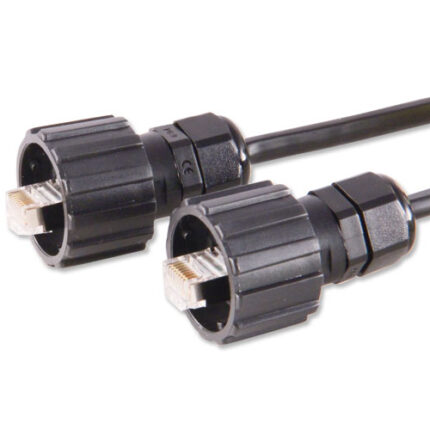
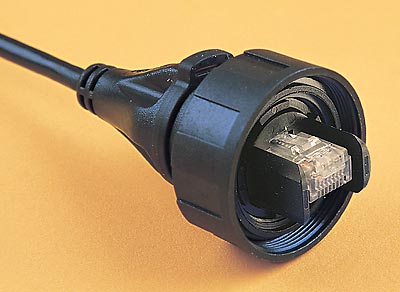
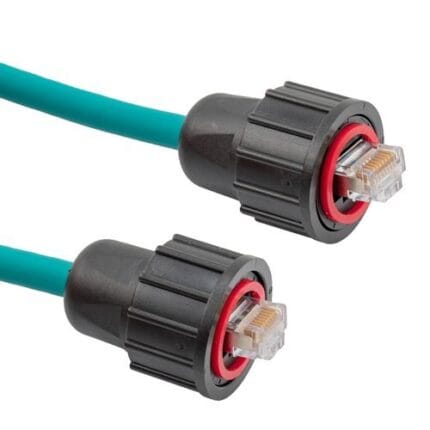
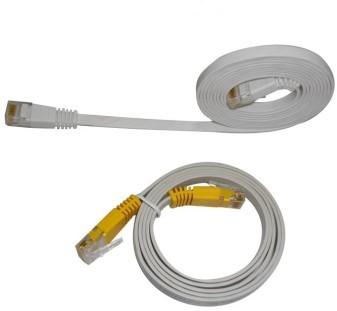
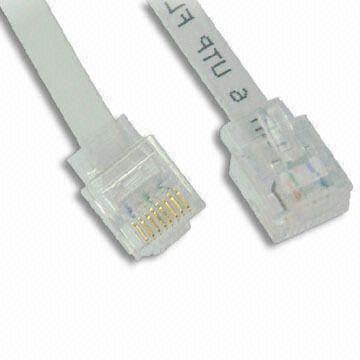
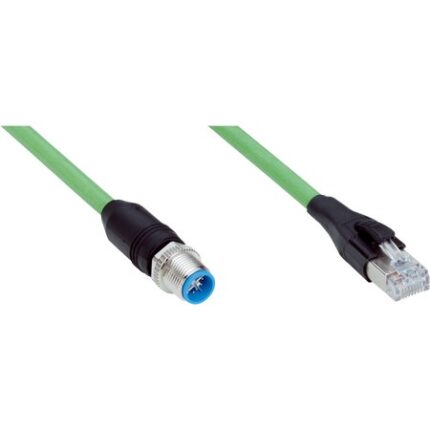
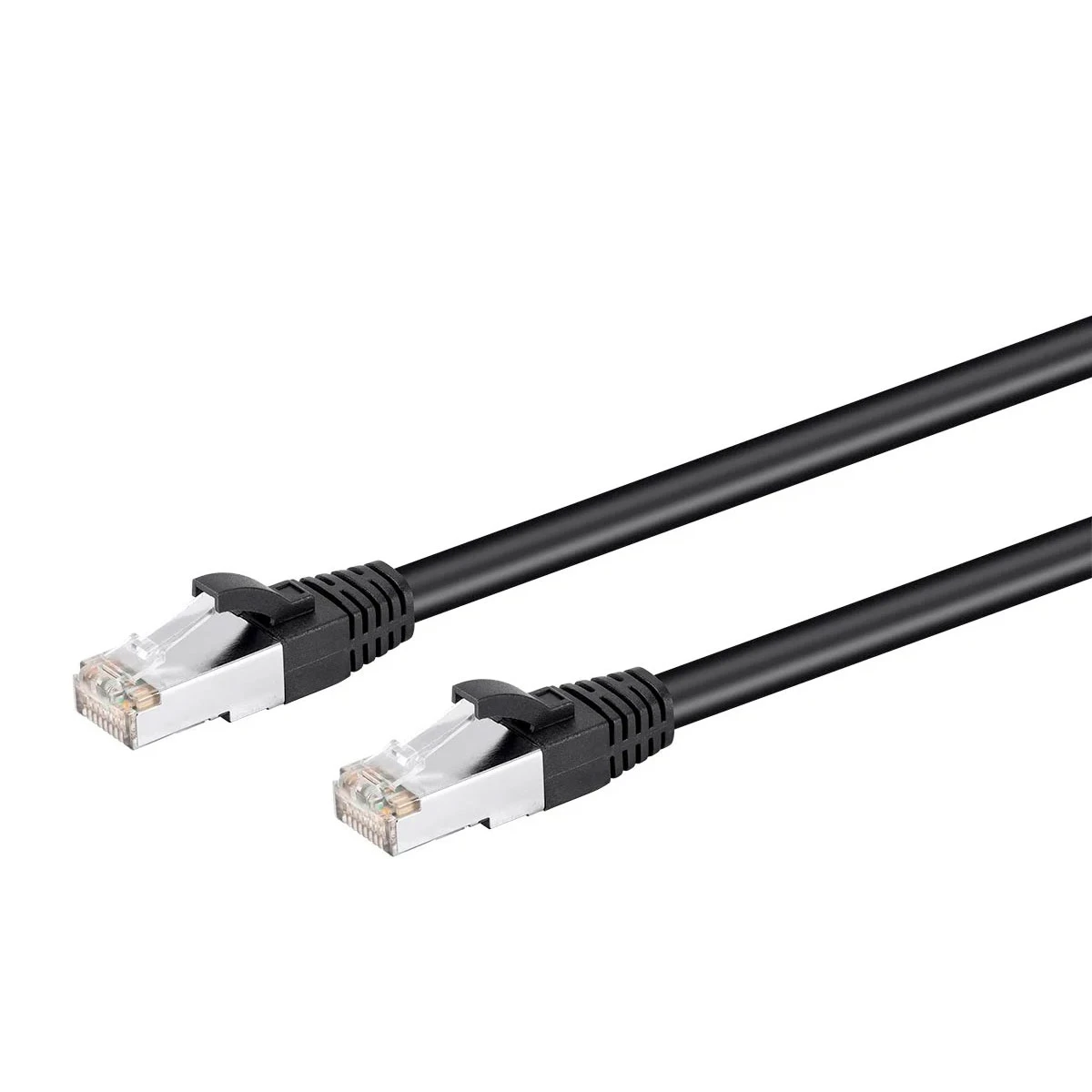
The table below lists the configuration shown in the product photo.
Why a PoE Ethernet Patch Cable Is Not an Ordinary Cord
A patch cord carrying data only has one failure mode worth worrying about: a corrupted frame that gets retransmitted, usually invisibly. Add supply current to the same conductors and two other effects appear. Current flowing through copper produces heat, and heat raises the insertion loss of the channel. Put many cables together in a bundle or a conduit and the heat from every cable raises the temperature of all of them, so the loss budget of the whole bundle shifts, not just of one cord.
That is the practical reason this product exists rather than simply being specified as an ordinary Cat6a cordset. The conductor size, the jacket, and how tightly the pairs are held at the plug are chosen with that thermal picture in mind, and the construction is documented so an installer can reason about it rather than guess.
What the Category Rating Does and Does Not Tell You
Category ratings describe channel performance: how the cable behaves at defined frequencies under defined test conditions. They do not describe what happens to that performance once the cable is warm, bundled twenty deep, and bent around a corner into a ceiling tile. Two cables with the same printed category can behave quite differently in that room.
So the honest way to read the specification table is as a starting point. Conductor size tells you how much of the supply voltage arrives at the far end and how hot the bundle runs; shielding structure tells you how well the pairs reject what is running next to them; jacket rating tells you where the cable may legally and safely be installed. Those three decisions matter more here than the headline category does.
Construction and Materials
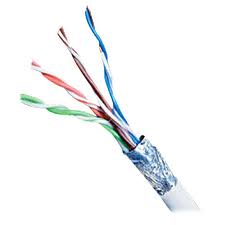
The four pairs are held to their twist through the termination and into the plug body, because opening the lay to make assembly easier degrades exactly the parameters a powered link depends on. The screen, where specified, is terminated to the plug shell so it has somewhere to go rather than ending in air, and its drain is kept short.
The boot is molded onto the plug rather than pushed on afterwards, which is a meaningful difference in service. A slip-on boot protects a joint it is not attached to; a molded one becomes part of the strain relief path, so a pull on the cable loads the molding rather than the crimp.
The snagless geometry is there for the other common failure: the latch. Standard plugs catch on everything on the way through a ceiling void or a cable tray, and a bent or snapped latch makes for a connection that looks seated and falls out later.
Typical Applications for a PoE Ethernet Patch Cable
Ceiling-mounted wireless access points are the classic install — one drop, no power outlet, and the cable sitting in insulation where ambient temperature is already elevated before any current flows.
Security cameras are the second group. Dome and bullet cameras on building perimeters often sit tens of metres from the nearest serviceable space, and running supply separately to each position is usually quoted and then abandoned.
VoIP handsets and small desktop switches use short versions of the same cordset, where the requirement is less about distance and more about keeping desks tidy with molded strain relief instead of loose service loops.
Point-of-sale terminals, digital signage players and intercom panels round out the list: every device where somebody decided the network cable could also be the power cable.
Length, Bundling and Heat
Two installation decisions dominate real-world behavior. The first is run length: voltage drop and insertion loss both accumulate with distance, and a powered drop has less margin than a data-only one. Keep the run as short as the layout allows and the rest of the problems mostly take care of themselves.
The second is bundling. A bundle of powered cables in a closed conduit has no easy path for heat to leave, and the accumulated temperature rise is what pushes marginal channels over the edge. Separate powered bundles where practical, avoid filling conduit completely, and do not run them alongside other heat sources.
Compatibility and Fitment
The RJ45 plugs are wired to standard pair assignment and work with conventional structured cabling ports, injector outputs and powered switch ports. Confirm what your power sourcing equipment expects at the device end before ordering, particularly where the run is long or shares a conduit with other circuits.
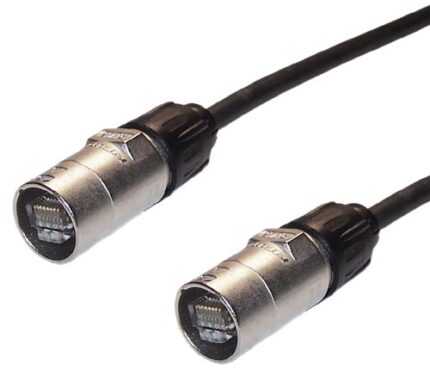
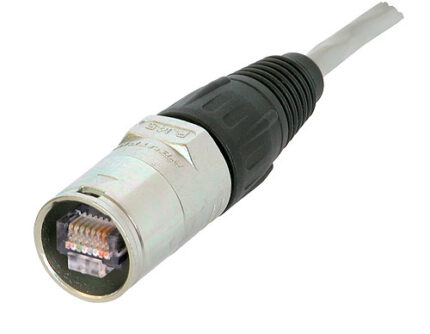
Where the drop leaves a controlled environment for a wet or dusty one, the office-standard latch stops being adequate and the port needs to be sealed instead.
Installation Notes
Do not dress powered bundles tightly. Tension plus heat is not a combination that improves anything.
Label both ends. When the same cordset carries supply and data, tracing it later is harder than tracing an ordinary patch lead.
Test after installation, not just after termination. A link that qualifies on the reel can fail once it is warm and bundled.
Custom Builds and Ordering
Lengths, jacket material, shielding class, boot color and labeling are built to order. Send the device schedule with the power class at each drop and we will quote the matching cordset mix; each poe ethernet patch cable is then built to the length, jacket and label text you list. Prototype and sample lots run from 1 to 50 pieces and ship in 3 working days; production orders start at 500 pieces per part number and ship 14 working days after approval, with new overmold tooling adding about 10 working days.
Packaging and Shipping
Each cordset ships coiled rather than folded and bagged individually; bulk packs with your labels are available for installers.
Quality and Compliance
Continuity and pair mapping are verified on every assembly, and each plug is inspected for full molded coverage over the strain relief. See the TIA structured cabling standards for the governing interface specification.
Material declarations against RoHS and REACH are issued per project, alongside the dimensional and electrical reports agreed at quotation; see certifications, compliance and material declarations. Where your drawing names a UL style or another approval, the build follows your drawing and ships with the supporting document rather than a claim of our own. Overmold tooling for this part is designed and cut in our own tool room under overmold tooling cut in our own tool room, so the tool belongs to your program and a revision is a machining job rather than a new negotiation. More background: cable assemblies for industrial automation and robotics.
Frequently Asked Questions
Can I use an ordinary patch cord for a powered device? Physically yes. Whether it behaves depends on conductor size, bundle heat and run length, which is what this build accounts for.
Does the cabling category guarantee supply performance? No. The category describes channel performance; conductor size decides how much voltage arrives.
How many of these can I bundle together? Fewer than you can of data-only cables. Keep powered bundles separated and avoid filling conduit.
Can lengths and colors be mixed in one order? Yes. Mixed lengths and colors are normal; every poe ethernet patch cable in the order is built to its own line item.
Related Cable Ranges
Browse the related ranges: Ethernet Patch Cords Signal and Data Cables Screw-Lock Molded Cable.
For higher-flex duty compare the Cat6a PUR high-flex patch and the screened Cat7 SSTP patch cord.
| Product type | Category 6A patch cord for Power over Ethernet, RJ45 to RJ45 |
|---|---|
| PoE support | IEEE 802.3af, 802.3at and 802.3bt over all four pairs |
| Category | Category 6A per ISO/IEC 11801 Class EA and TIA-568.2-D |
| Data rate | 10GBASE-T to 500 MHz |
| Conductor | 4 pairs, 26 AWG stranded bare copper – confirm per build |
| Shielding | S/FTP: foil per pair plus overall tinned-copper braid |
| Connector A | Shielded RJ45 8P8C plug with snagless molded boot |
| Connector B | Shielded RJ45 8P8C plug with snagless molded boot |
| Jacket | PVC standard; PUR, TPE or LSZH on request – confirm per build |
| Rated temperature | -40 to +80 C – confirm per build |
| Mating cycles | 750 minimum |
| Length | OEM build to the length you state; mixed lengths in one order |
| Typical applications | IP cameras, wireless access points, VoIP desk phones, PoE lighting, access control and edge compute nodes |
| Order quantity | Prototype 1 to 50 pieces; production from 500 pieces |