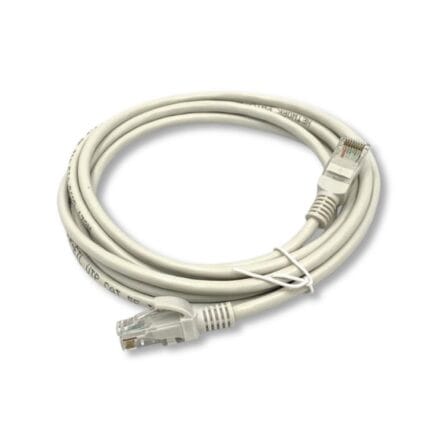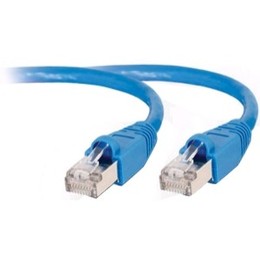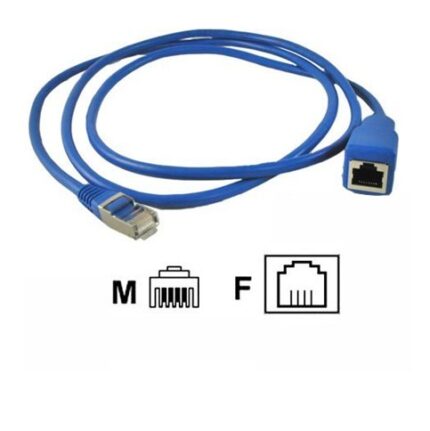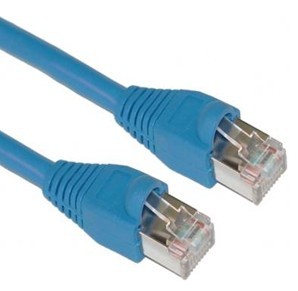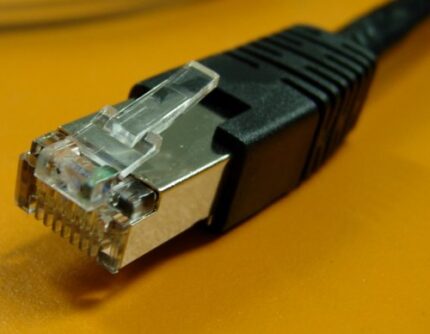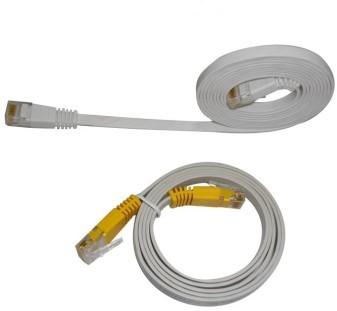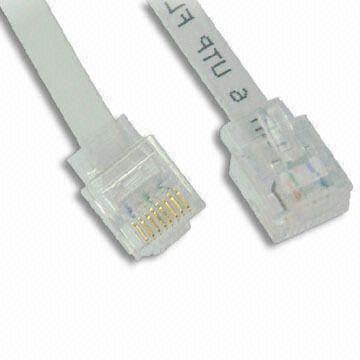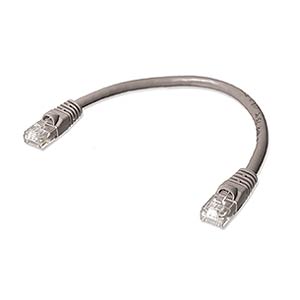
Cat5e UTP Crossover Patch Cord (T568A to T568B, 24 AWG Stranded, 100 MHz)
A cat5e utp crossover patch cord wired T568A on one end and T568B on the other, for direct links between two like devices on hardware with no Auto-MDIX.
Overview
A cat5e utp crossover patch cord is wired T568A on one end and T568B on the other, which swaps the transmit and receive pairs so two like devices can talk without a switch between them. It is a 10/100 Mbit/s solution that most modern gear no longer needs, because Auto-MDIX does the swap in silicon. Where it still earns its place is older equipment, lab benches, and the handful of links where you cannot afford to guess what the far end will do.
Key Specifications
| Cable type | Cat5e UTP crossover, 4-pair |
|---|---|
| Wiring | T568A one end, T568B the other |
| Conductor | Stranded bare copper, 24 AWG |
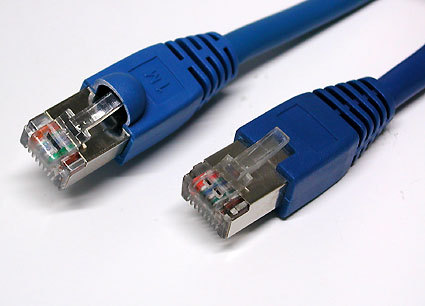
| Connector | RJ45 8P8C, 50 micro-inch gold plating |
| Boot | Snagless, molded |
| Jacket | PVC |
| Length | OEM build, stated per order |
| Category reference | ANSI/TIA-568 and ISO/IEC 11801 Class D, industry-general definition |
What a crossover actually swaps
In 10BASE-T and 100BASE-TX, one pair transmits and one receives, and both ends transmit on the same pins. Two computers back to back therefore transmit into each other. A crossover moves pairs 1-2 and 3-6 so each transmitter lands on the other receiver.
| Pin | T568A | T568B | Crossover result |
|---|---|---|---|
| 1 | White/green | White/orange | TX+ to RX+ |
| 2 | Green | Orange | TX- to RX- |
| 3 | White/orange | White/green | RX+ to TX+ |
| 4 | Blue | Blue | Unchanged |
| 5 | White/blue | White/blue | Unchanged |
| 6 | Orange | Green | RX- to TX- |
| 7 | White/brown | White/brown | Unchanged |
| 8 | Brown | Brown | Unchanged |
The pin assignments themselves are set out in TIA-568 as industry-general wiring standards. We wire to the scheme you put on the order; if your equipment expects a rollover or a non-standard pinout, send it and we build to that instead.
Where the crossover stopped being required
Auto-MDIX — automatic medium-dependent interface crossover — has been in the Ethernet standard since 1000BASE-T, and most 10/100 ports shipped in the last fifteen years have it too. Plug a straight cord between two Auto-MDIX ports and the PHYs negotiate the pair swap themselves. That is why a crossover is now a special-purpose item rather than a default: on modern hardware it is unnecessary, and it is also harmless, because the negotiation just works out the other way.
Where it is still the right call
- Direct PC-to-PC file transfer with older 10/100 adapters
- Switch-to-switch and hub-to-hub uplinks on legacy hardware with no Auto-MDIX
- Lab benches, test fixtures and burn-in racks where the far end is unknown
- Serial console and management ports on equipment that expects a rolled pair
- Training rooms and field service kits, where one cord has to cover every case
Identifying one on the bench
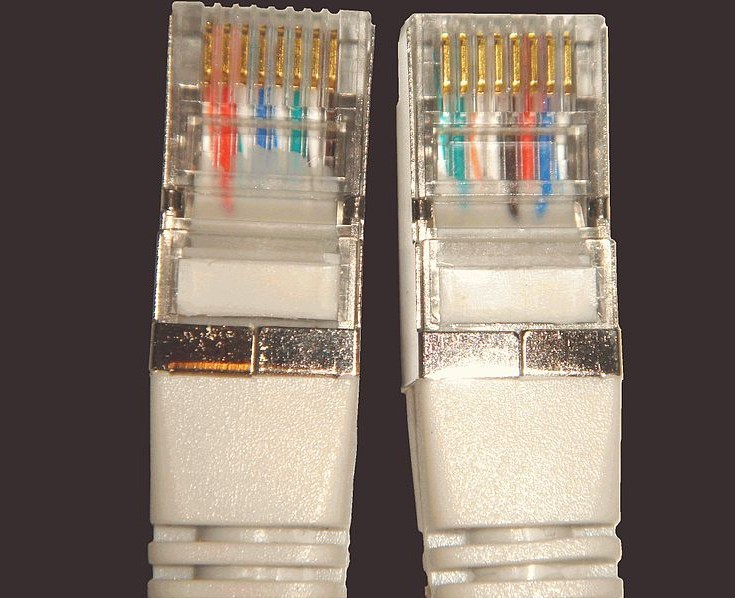
Hold the two plugs side by side, latch down, and read the wire colors left to right. If the order is the same at both ends, it is straight through. If one end starts white/green and the other starts white/orange, it is a crossover. A simple continuity tester does the same job faster and without the guesswork — every cord we ship is 100% continuity and pinout tested, so the result is on the record rather than in someone’s memory.
Typical applications for this cat5e utp crossover patch cord
- Legacy switch and hub uplinks in industrial panels
- Direct laptop-to-laptop transfer for imaging and forensics
- Bench setup for network test equipment
- Temporary links during commissioning, alongside our Cat5e UTP Patch Cord for the straight runs
- Kiosk and vending service ports where a technician plugs straight into the controller
How to specify your build
- Wiring scheme — T568A to T568B is the standard crossover. Other schemes on request.
- Length — these are usually short bench cords.
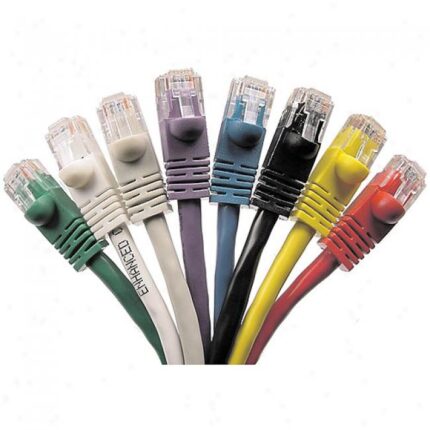
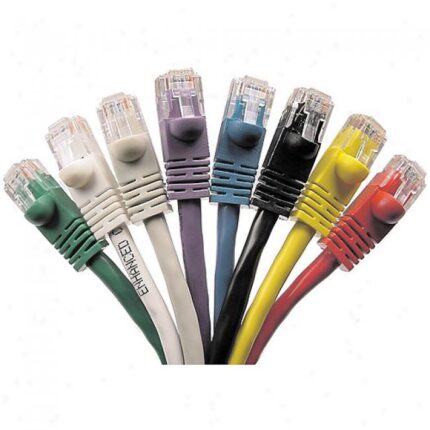
- Jacket and color — a distinct color stops the crossover being mistaken for a straight cord.
- Boot — snagless or standard.
- Labeling — printed or flagged as crossover so it does not end up in the wrong drawer.
- Quantity, prototype or production.
Workmanship and testing
Assembly and inspection follow IPC/WHMA-A-620 Class 3 workmanship criteria under our ISO 9001 quality management system, and every unit is 100% continuity and pinout tested before it is packed. Conductor range is 32 to 12 AWG. Every crossover is verified pin by pin against the scheme on the order. Where a standard sets a limit for the category, the connector interface or the jacket, that is the industry-general definition of the rating. The values your assembly is built and verified to are the ones stated on your drawing, per order.
RoHS and REACH declarations are provided per project together with the agreed test reports; the documentation scope is listed under certifications and compliance. If your drawing specifies a UL style, we build to that drawing and supply the UL reference with the shipment instead of substituting an equivalent. Production runs on the same lines described under our assembly lines in Longgang, where cutting, termination, molding and 100 percent electrical verification sit under one roof. Related reading: what automation programs ask for. Any tooling we cut for this part stays yours, maintained in our own tool room under your part reference.
Custom builds and ordering
A drawing is rarely needed — the scheme and the length are usually enough. Prototype builds start from 1 to 50 pcs and ship in 3 working days; production orders start at MOQ 500 pcs and ship 14 working days after approval. New tooling adds about 10 working days, and we hold 100 sets of mold tooling in house. OEM and ODM builds ship under your part number and labeling, with material certificates and first-article reports on request. Factory audits and video line tours of our Longgang, Shenzhen plant can be arranged through Alan Kang.
Related Cat5e patch cords
- Cat5e UTP Patch Cord
- Cat5e UTP Snagless Patch Cord
- Cat5e UTP Short-Body Patch Cord for VoIP
- Cat5e UTP LSZH Patch Cord
- Cat5e UTP Retractable Patch Cord
- Cat5e FTP Shielded Patch Cord
Full range: Ethernet patch cord range.
Frequently Asked Questions
Do I still need a crossover cable in 2026?
Almost never on modern hardware. Auto-MDIX handles the swap. Keep one in the kit for legacy 10/100 ports and for equipment with no negotiation.
Can a crossover cord break something?
No. Two Auto-MDIX ports negotiate around it and the link comes up normally. It is wasted only in the sense that a straight cord would have worked too.
Is this the same as a console cable?
No. Console cabling uses a rolled pinout and usually ends in DB9 or USB. Tell us the device and we will build the right one.
Can you make it in a different color so it stands out?
Yes. Red or orange is the usual choice so nobody mistakes it for a straight patch cord on a job.
| Cable type | Cat5e UTP crossover, 4-pair |
|---|---|
| Wiring | T568A one end, T568B the other |
| Conductor | Stranded bare copper, 24 AWG |
| Connector | RJ45 8P8C, 50 micro-inch gold plating |
| Boot | Snagless, molded |
| Jacket | PVC |
| Length | OEM build, stated per order |
| Category reference | ANSI/TIA-568 and ISO/IEC 11801 Class D, industry-general definition |